AI Agents Fail to Find New Maya Site in Mexico
A Google researcher used AI agents to scan lidar data for a Maya site in Mexico, only to find it was already documented in academic literature.
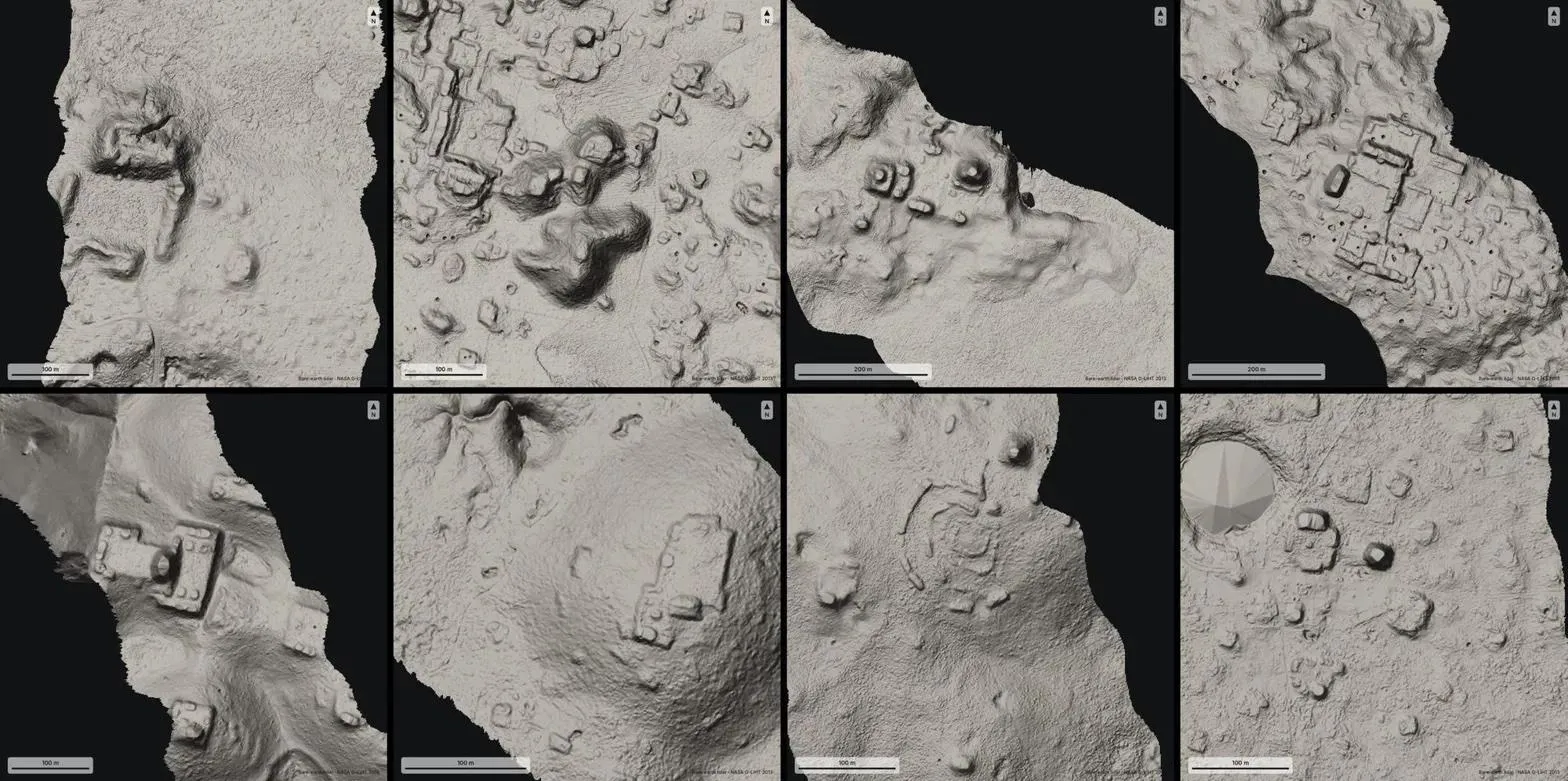
A recent claim by a Google researcher that a team of autonomous software agents uncovered a previously unknown Maya site in Mexico has highlighted growing tensions between amateur technologists and specialist researchers. Pietro Miotti deployed a network of 48 AI agents to comb through public laser-based mapping data, known as lidar, to locate undocumented historical sites. While the exercise initially generated excitement online, it quickly became clear that the location had already been discovered and published in an academic journal more than a year prior.
The project began as a personal side project for Miotti while traveling in Peru, where he wondered how historical explorers might leverage modern technology. Finding that public lidar coverage was limited in Peru, he shifted his attention to the Maya region. His agents flagged multiple promising areas, including a major village that appeared absent from official records. Miotti translated his correspondence into Spanish and reached out to Mexico’s National Institute of Anthropology and History (INAH), which confirmed it had no registered site at those coordinates. Miotti celebrated the quick response on his blog as a sign of an impending scientific revolution.
What it means for developers
For software engineers and developers building automated workflows, this incident highlights the critical gap between raw data processing and domain-specific context. While large language models and autonomous agents excel at scanning vast datasets quickly, they often struggle to perform comprehensive literature reviews or recognize peer-reviewed findings that lack centralized database entries. Developers looking to experiment with these capabilities can try top AI models cheaply through one API at https://apixoai.online. However, the Maya site episode serves as a cautionary tale: automated agents require deep integration with specialized verification steps to avoid overlooking existing human research.
Expert backlash and the limits of AI in science
Archaeologists quickly pointed out the oversight on social media. Sarah Parcak, an archaeology professor at the University of Alabama at Birmingham, stressed that an absence of a site in a government database does not mean it is unmapped, emphasizing the enduring necessity of peer review. Elizabeth Graham, a professor of Mesoamerican archaeology at University College London, noted that local communities are often already well aware of sites in their area, and that the primary bottleneck in archaeology is a lack of funding for excavation rather than a shortage of spotted mounds.
Ivan Šprajc, a coauthor of the paper that originally documented the site, expressed concern that amateurs wielding automated tools could overwhelm specialists with redundant claims. He also warned of the physical risks involved when unvetted coordinates are made public, which can inadvertently attract looters. Miotti acknowledged these shortcomings, noting that because archaeologists typically do not publish exact coordinates in papers, comparing images against figures is a difficult task for current AI tools that developers and researchers will need to address.
Source: No, AI agents did not discover a previously unknown Maya site — The Verge AI. Written by the Apixo team from that report.
One key for Claude, GPT, GLM, DeepSeek and more. Pay per token with crypto.
Get your API key