AI Job Apocalypse Unlikely as Economic Data Points to Market Risks Over Mass Displacement
Four years after ChatGPT's launch, broad productivity gains remain elusive. While companies cite AI for layoffs, economic evidence suggests market valuation risks outweigh job displacement.

Four years after the public launch of ChatGPT, widespread excitement around generative artificial intelligence has yielded significant stock market gains and massive infrastructure spending on datacentres. However, measurable productivity growth across the broader economy remains surprisingly sparse. This economic pattern mirrors the late 1990s dotcom boom, where heavy investments in fibre optics preceded actual economic returns. In 1987—four decades after the invention of early computers—Nobel laureate economist Robert Solow famously noted that the computer age could be seen everywhere except in productivity statistics. Although internet adoption eventually drove real productivity gains in the 1990s, those improvements proved temporary. Today, despite headlines linking corporate downsizing to artificial intelligence, economic data suggests that predictions of a widespread job apocalypse may be unfounded.
Dissecting corporate layoff claims
Recent announcements of large-scale job cuts at prominent companies—including National Australia Bank (NAB), Qantas, Canva, and Atlassian—have renewed fears about AI-driven automation. A closer examination of these decisions reveals alternative business motivations rather than direct technological displacement.
For instance, NAB officially denied that artificial intelligence played any role in its recent headcount reductions. The bank's history shows a consistent pattern of announcing mass layoffs in most years since 2010, yet its total employee count has remained unchanged over the long term as workers leave through retirement or voluntary departures. Similarly, airline operator Qantas attributed its decision to move 850 jobs to India to future AI replacement. However, transferring roles overseas ahead of planned automation appears to be a traditional offshoring strategy rather than a genuine shift to automated workflows.
The challenges facing software companies are more directly tied to shifting technology paradigms. Canva, which relies on a Software-as-a-Service (SaaS) model for accessible graphic design tools, faces competition from basic prompt-based image generation. Even if generated outputs are sometimes characterized as low-quality "AI slop," they satisfy basic needs for users who previously relied on simplified design software. Conversely, Atlassian's core products manage complex project workflows and organization-wide data. Because individual, piecemeal AI usage cannot easily replicate integrated enterprise management systems, Atlassian remains less immediately vulnerable, though the future possibility of AI-assisted software reverse engineering could present new challenges.
The squeeze on AI hyperscalers
The financial risks of the current AI boom extend to major model developers themselves, including OpenAI, Anthropic, Meta, and Alphabet. These hyperscalers are investing billions into infrastructure, yet they face rising competition from cost-effective open-weight alternatives.
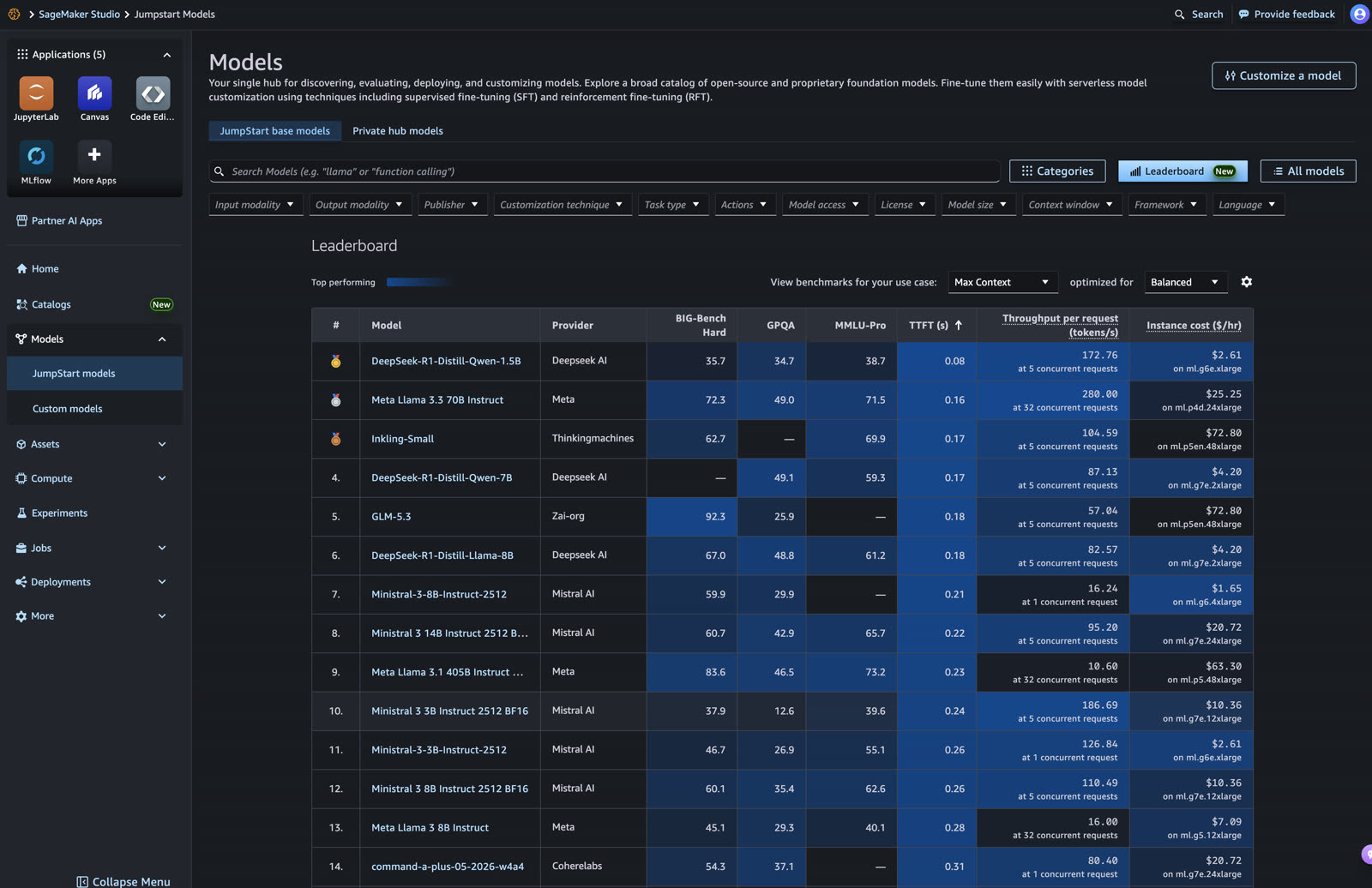
Models developed by international entities, such as DeepSeek in China and Mistral in France, are currently running only about a year behind frontline proprietary systems. Critically, these open-weight models have been developed at a tiny fraction of the capital expenditure incurred by market leaders. As University of Queensland economics professor John Quiggin points out, large language models (LLMs) may follow the path of email: becoming an indispensable tool for daily operations without generating direct, outsized corporate profits. Under this scenario, market corrections are more likely to hit inflated stock valuations than cause sweeping labor market collapses.
What it means for developers
For software engineers and technology leaders, these dynamics signal a shift in how software is evaluated and built. Rather than facing immediate industry-wide displacement, developers are navigating a market where user-facing SaaS tools are being challenged by rapid asset generation, while foundational backend and project systems maintain structural defense.
At the same time, the rapid rise of open-weight offerings like DeepSeek and Mistral is drastically reducing the cost of model inference and changing how teams integrate intelligence into applications. Developers seeking to evaluate different architectures can try top AI models cheaply through one API at https://apixoai.online, making it easier to test competitive models without committing to a single proprietary vendor.
Ultimately, as economic analysis indicates, the immediate disruption from generative AI is concentrated in corporate business models, shifting market valuations, and competitive infrastructure—not an abrupt end to technical and enterprise labor.
Source: Is the AI job apocalypse finally here? The evidence suggests otherwise — The Guardian AI. Written by the Apixo team from that report.
One key for Claude, GPT, GLM, DeepSeek and more. Pay per token with crypto.
Get your API key