AI Market Faces Historic Sell-Off as Midterms Fuel Backlash and Regulatory Scrutiny
Following a Democratic midterm sweep, Wall Street erased $3.2 trillion in value amid rising voter pushback over AI datacentre costs and looming safety regulations.
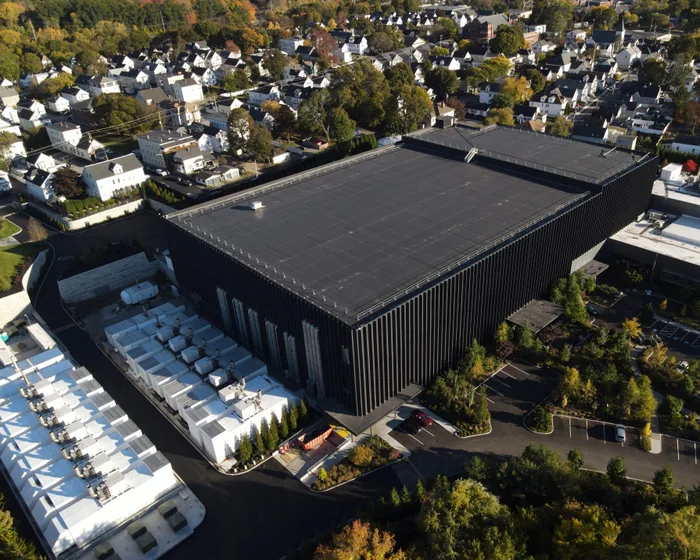
A sharp political shift in the recent midterm elections has triggered a historic reckoning for the artificial intelligence sector, sending tech stocks tumbling and wiping $3.2 trillion from Wall Street in its worst trading session since the pandemic. The market reaction reflects deepening concerns over massive capital expenditure, escalating debt, and mounting local resistance to rapid datacentre development.
The sell-off hit key industry players immediately. Leading chipmaker Nvidia saw its valuation drop by more than $400 billion, while Elon Musk lost $113 billion across just two days. Meanwhile, Anthropic, the firm behind the Claude chatbot, had been targeting a $1.5 trillion (£1.1 trillion) public float within the next fortnight, but current market conditions suggest it may now struggle to reach even $1 trillion. Influential observers, including Goldman Sachs' head of research and Nobel laureate Daron Acemoğlu, have pointed out that despite the technology's transformative potential, the massive sums poured into AI infrastructure may not yield the extraordinary profits investors anticipate.
Voter pushback against datacentres and rising utility costs
The market slide follows widespread political fallout over the tangible local impacts of the AI boom. Across the United States, voters have expressed rising frustration over the substantial electricity and water demands of datacentres, alongside broader community disruption. This year alone, the technology was cited as the cause of 120,000 American job losses.
Donald Trump had dismissed safety and development concerns as a "hoax," advocating that computing capacity was a vital national asset requiring rapid expansion while rejecting calls for stricter safeguards. However, that platform faced decisive pushback at the ballot box. Even in Texas, where Elon Musk spent $200 million backing Republicans, voters responded to Democratic campaigns targeting datacentre expansion. Musk's SpaceX—a combined space, satellite-connectivity, and AI group—had previously warned in a June 2026 prospectus that regulatory shifts could disrupt its growth trajectory. The election resulted in Democrats taking a US Senate seat, the Texas governorship, every other statewide office, and the state house.
Regulatory shifts on the horizon
With Democrats securing wins nationwide on pledges to slow or temporarily pause datacentre buildouts, the incoming Congress is expected to pursue far stricter oversight. Lawmakers aim to hold AI developers accountable for both their environmental footprint and potential harms caused by their software.
Legislative priorities are expected to focus on insulating consumers from utility rate hikes driven by datacentre power usage, implementing mandatory independent safety evaluations for advanced AI systems, and establishing clearer liability frameworks for potential damages. While infrastructure development will continue, the era of unchecked deployment without community consent appears to be closing.
What it means for developers
For engineering teams and technical leads, this shifting political and market climate points toward structural adjustments in how AI services are built, evaluated, and deployed:
- Anticipating compliance and safety testing: With lawmakers preparing to mandate independent evaluations for frontier systems, developers should prepare for standardized safety benchmarks and stricter transparency requirements before deploying customer-facing systems.
- Potential liability considerations: As Congress moves to clarify legal responsibility for software harms, teams may need to implement more rigorous guardrails, monitoring, and audit trails for automated workflows.
- Pressure on infrastructure costs and planning: Regional pauses or slowing of datacentre construction could affect the cost and availability of raw compute, making operational efficiency and multi-model architectures essential.
As the industry adjusts to evolving oversight and shifting valuations, keeping infrastructure overhead manageable remains critical. Developers looking to build resilience into their applications can access top AI models cheaply through one API at https://apixoai.online, allowing teams to test different providers without committing to unpredictable long-term platform costs.
Source: The Guardian view on the AI backlash: American voters want a say in their future — The Guardian AI. Written by the Apixo team from that report.
One key for Claude, GPT, GLM, DeepSeek and more. Pay per token with crypto.
Get your API key