AI Model Helps Decipher Decades-Old Math Proofs in Gödel's Manuscripts
Using Anthropic's Claude, researchers unlocked over 600 theorems hidden inside logician Kurt Gödel's shorthand notebooks, demonstrating a new methodology for academic research.
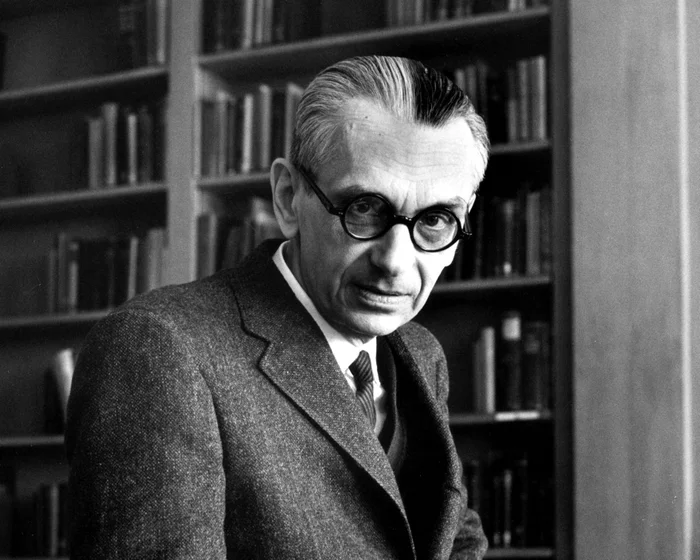
For years, logicians struggled to decipher 1,009 pages of dense mathematical notes left behind by Kurt Gödel, the Austrian logician whose 1931 incompleteness theorems reshaped modern mathematics and laid foundational concepts for computing. Written during the early 1940s in Gabelsberger—an obsolete German shorthand—the manuscripts were being analyzed at a painstaking pace of roughly one page per week. That changed when Finnish logician Jan von Plato integrated the AI model Claude into his research workflow.
Unlocking 1,000 Pages of Obsolete Shorthand
Since 2017, von Plato has led a research project at Helsinki University backed by a €2.5 million grant from the European Research Council. Because Gabelsberger shorthand is understood by only about six people globally, interpreting Gödel's workbooks proved extraordinarily difficult. At an August conference in France focused on AI and automated theorem proving, computer scientists suggested that von Plato test Claude to accelerate the work.
Upon returning to Helsinki in September, von Plato supplied the model with his manual transcriptions of the workbooks, six books he had previously authored on Gödel, and additional secondary literature. Within a couple of days, Claude generated a 650-page breakdown of the entire archive. Von Plato noted that while human researchers process documents line by line and struggle to retain cross-references across thousands of pages, the AI model was able to analyze Gödel's writings simultaneously as an interconnected whole.
Missing Mathematical Proofs Verified
The AI-assisted synthesis revealed that Gödel had formulated far more logic than previously known. Von Plato asked the model to extract every theorem in the workbooks where Gödel had completed, sketched, or outlined a proof structure. Claude identified 663 distinct theorems.
To verify the results, von Plato tested the extracted theorems using Coq, an automated proof assistant program. The verification showed that approximately 400 theorems were correct as written, around 200 required minor adjustments or added assumptions, and about 50 were false—matching marginal notes where Gödel himself had written "falsch!" (incorrect) or "schlecht!" (bad).
The analysis also provided clarity on a historic mathematical debate. In 1966, American mathematician Paul Cohen won the Fields Medal for proving the independence of the continuum hypothesis and the axiom of choice. Gödel had claimed at the time that he had established the proof in the 1940s but could not reconstruct it from his notes. Claude helped reconstruct Gödel's framework, revealing he was only one definition away from completing the proof. When processed through Coq, the reconstructed proof passed verification.
What it means for developers
This project demonstrates the practical value of large language models when applied to large-scale context processing and technical synthesis. Rather than replacing domain expertise, LLMs can ingest thousands of pages of complex, unstructured domain material to spot implicit patterns and structural connections that exceed human memory constraints.
For developers building complex document analysis or computational research tools, leveraging multiple foundation models can significantly speed up domain-specific pipelines. Engineers interested in integrating diverse model providers into their applications can experiment with top AI models cheaply through one API at https://apixoai.online.
Furthermore, the workflow highlights a powerful pattern: combining generative AI with deterministic validation tools. While LLMs excel at processing text, synthesizing notes, and offering architectural drafts, pairing them with formal verification engines like Coq ensures strict accuracy and eliminates potential hallucinated outputs.
Historical Perspectives and Next Steps
The findings have drawn attention from the broader logic community. Joel David Hamkins, a professor of logic at the University of Notre Dame, noted that while the discovery shows Gödel was on the path toward the proof, evaluating where Gödel's work ends and Claude's reconstruction begins remains an important task for historians. Hamkins added that given Gödel's historical impact, finding groundbreaking ideas inside his unpublished notes is expected.
Beyond the identified theorems, the workbooks contain 14 logic themes that have remained unexplored for over eight decades, along with dozens of results that anticipated discoveries later made in the 1970s and 1980s. With the logic workbooks largely analyzed, von Plato plans to turn his attention to Gödel's unexamined notebooks on physics and cosmology.
Source: ‘Ahead of his time’: AI helps unlock discoveries hidden in notebooks of man who transformed maths — The Guardian AI. Written by the Apixo team from that report.
One key for Claude, GPT, GLM, DeepSeek and more. Pay per token with crypto.
Get your API key