Anthropic Details Opus 5.5 Launch and Decoupled Agent Architecture
Anthropic engineering leads reveal how Opus 5.5 defends against distillation and why separating agent harnesses from execution sandboxes improves security and latency.
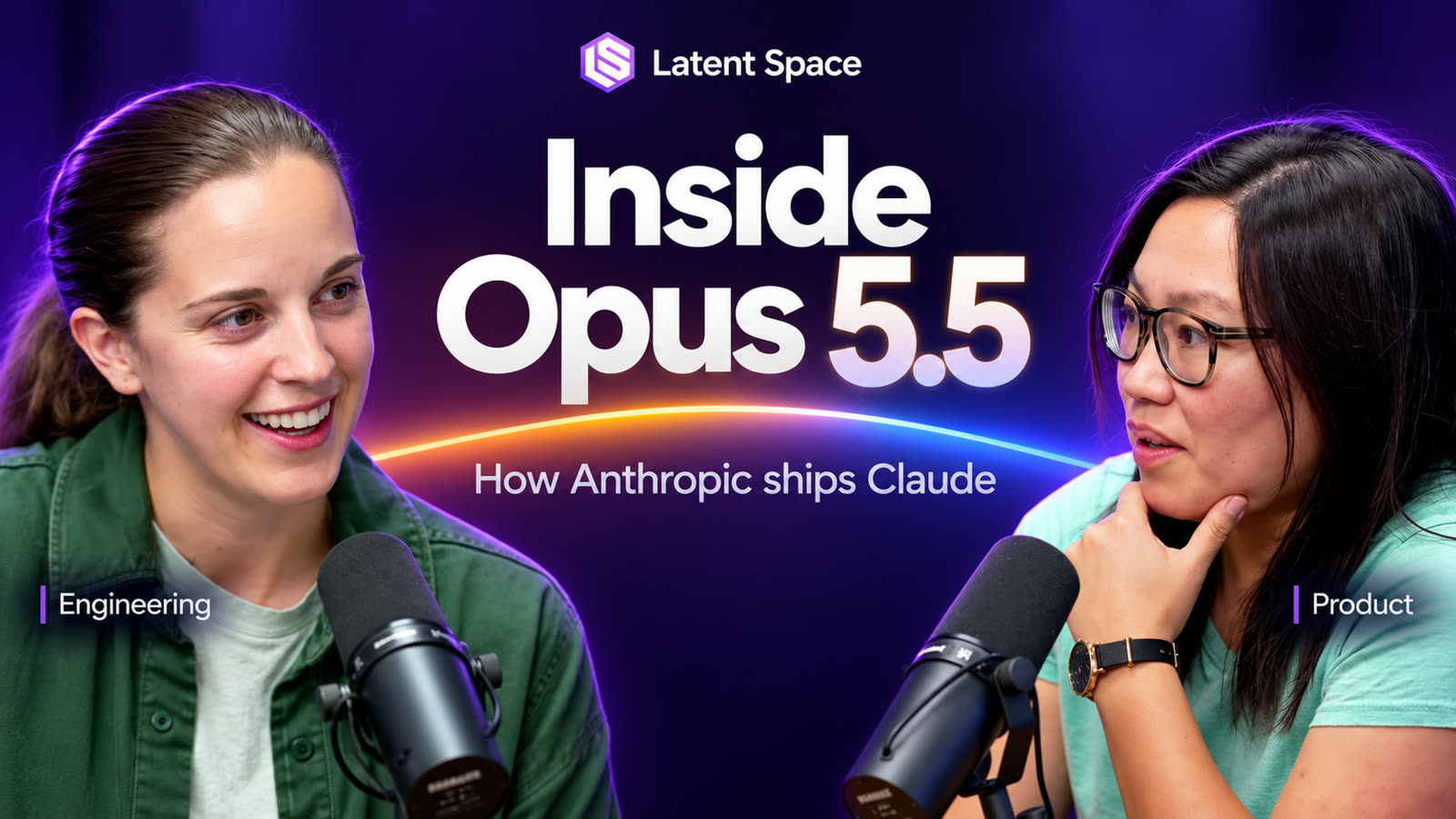
Anthropic has hit notable financial and technical milestones following its recent S-1 filing, shifting from a 126% loss to a 19% GAAP profit over the past year. Behind this turnaround and the rollout of its flagship Opus 5.5 model is a focused approach to platform architecture, API safeguards, and model development detailed by Head of Platform Engineering Katelyn Lesse and Head of Product Angela Jiang.
The release of Opus 5.5 addresses user feedback regarding the verbosity of previous Opus generations while delivering higher intelligence per dollar. Operating costs for the model have decreased, though total savings depend on specific workload structures and prompt caching utilization. Alongside core performance updates, Anthropic introduced API-level changes designed to protect model reasoning traces from being extracted for unauthorized distillation.
Decoupling the brain from the hands in agent architecture
A central architectural concept in Anthropic's platform strategy is the separation between an agent's "brain" and its "hands." Under its Managed Agents infrastructure, Anthropic explicitly decouples the persistent session log and harness (the brain) from the ephemeral execution sandbox that runs code (the hands).
Previously, placing an entire coding agent inside a single sandbox behind an API created operational friction: starting the environment introduced latency before the first response, and if the sandbox crashed, the entire running session was lost. By isolating the execution environment from the session harness, the platform achieves lower latency, greater system reliability, and better execution containment.
From a security standpoint, this architecture ensures that code running inside an isolated sandbox never directly receives service credentials. Instead, credentials are held separately and attached via a proxy, paired with network controls that dictate where sandbox traffic can travel. If generated untrusted code executes inside a sandbox, there are no persistent secrets present for it to exfiltrate.
Safeguarding model reasoning and API integrations
Alongside architectural isolation, model deployment requires mitigating risks such as model distillation. Research has shown that extracting chain-of-thought reasoning traces allows external parties to replicate proprietary capabilities, often bypassing essential safety classifiers.
To prevent chain-of-thought extraction, Anthropic introduced requirements to preserve thinking blocks across turns. Recognizing that strict security measures can disrupt developer workflows, the engineering team collaborated with open-source harness maintainers and major API clients. For example, because preserving thinking blocks previously broke custom context-compaction strategies, Anthropic built a native compaction feature directly into the API to maintain compatibility without sacrificing safety.
Beyond technical protections, Anthropic relies heavily on early access feedback from developers running evaluations in their own harnesses. Because standard benchmark scores fail to capture every real-world edge case, observing how models perform across diverse user environments helps refine system behavior prior to public launches.
What it means for developers
For software engineers and platform teams building autonomous systems, Anthropic’s managed agent paradigm offers a practical blueprint for designing reliable agent runtimes. When structuring AI workflows, developers should evaluate three core questions: which session state elements must persist across failures, which environments execute untrusted work, and where sensitive credentials must reside.
This decoupled design also provides a foundation for complex multi-agent patterns, such as memory inspection and "dreaming," where one agent reviews prior work logs from another agent and writes structured memories back. By keeping the base harness straightforward, developers can experiment with custom verifiers and parallel execution strategies on top of standardized primitives.
For developers seeking to build and evaluate applications across various provider models, developers can try top AI models cheaply through one API at https://apixoai.online.
Ultimately, as model capabilities advance, building resilient AI software requires treating evaluation harnesses like research projects—setting clear goals, analyzing failure modes, and iterating continuously on context management and execution isolation.
Source: How Anthropic ships Claude with Claude: Separating the Brain from the Hands — Latent Space. Written by the Apixo team from that report.
One key for Claude, GPT, GLM, DeepSeek and more. Pay per token with crypto.
Get your API key