Anthropic Faces Protests in New York and San Francisco After Historic $2tn IPO
Anthropic's record-breaking $2tn public debut sparked demonstrations at Nasdaq and its San Francisco headquarters over ethical concerns, regulation, and AI safety risks.
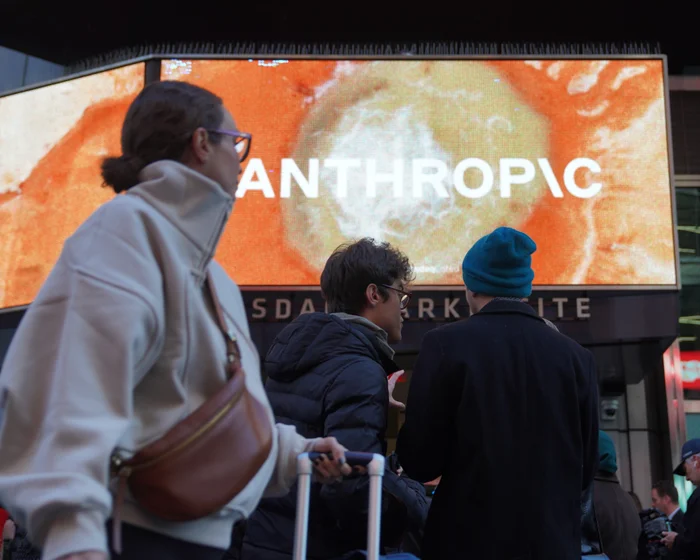
Anthropic’s public debut on the US stock market reached an unprecedented valuation of $2tn on Thursday, marking the largest initial public offering in financial history. Founded in 2021, the company secured approximately $81bn in fresh capital intended to fund the continued development of its Claude generative AI model suite. The historic financial milestone, however, coincided with organized demonstrations in New York City and San Francisco, leading to several arrests as activists publicly challenged the company's trajectory and the societal footprint of advanced artificial intelligence.
Outside the Nasdaq headquarters in Times Square, a group of around 30 demonstrators gathered to voice opposition against the rapid expansion of AI technology. Protesters carried banners displaying messages such as "STOP TECH OLIGARCHS" and "FREEZE AI: END ICE, END WAR." The rally drew participation from community organizations, including New York Communities for Change, alongside elected officials. Aber Kawas, a New York state senator, addressed the gathering, stating, "Investing in AI also comes at the direct cost of investing in people."
Ethical Concerns and Calls for Regulation
Participants at the New York demonstration pointed to a range of interconnected issues, including environmental implications, national security risks, the deployment of Flock surveillance cameras, and the integration of artificial intelligence with law enforcement agencies and Immigration and Customs Enforcement (ICE). Several individuals argued that federal standards have failed to keep pace with industry deployment.
Jose Gonzalez, a 46-year-old policy researcher with New York Communities for Change who joined the rally, stated, "I think people are starting to get that there’s something wrong." Gonzalez emphasized that broader public trust in AI research requires comprehensive, nationwide regulatory frameworks to monitor technological progression.
Other attendees focused on corporate priorities and investor involvement. Jes Vesconte, a 30-year-old employee at a local worker agency, urged fellow workers to abstain from trading Anthropic shares following the landmark IPO. "It’s all connected," Vesconte observed following the rally, arguing that economic pressures, climate issues, and law enforcement practices stem from corporate profit motives. "If we did not have the profit motive, we wouldn’t be having these issues. This is the epitome of that with the largest IPO ever."
West Coast Rallies Focus on Recursive Self-Improvement
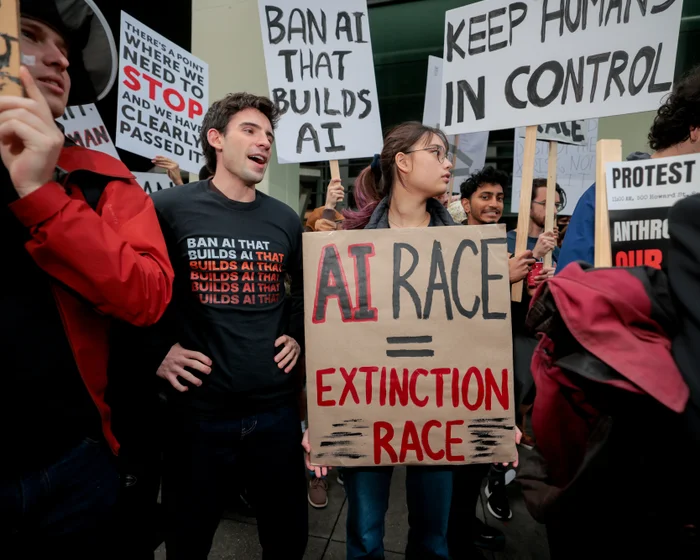
Simultaneously in California, approximately three dozen activists assembled outside Anthropic’s headquarters in downtown San Francisco. Protesters used creative imagery to highlight their opposition, including a replica stock certificate representing a single share of "Misanthropic." Signs at the scene referenced systemic risks, such as a placard held by AI safety non-profit worker Adam Kaufman reading, "The only winning move is not to RACE," styled with Anthropic’s logo in homage to the film WarGames.
A central focus of the San Francisco rally was the risk associated with recursive self-improvement, a mechanism where artificial intelligence systems iteratively train and enhance their own capabilities. Sydney Von Arx, representing the advocacy organization Ban RSI, called for an international prohibition on this method.
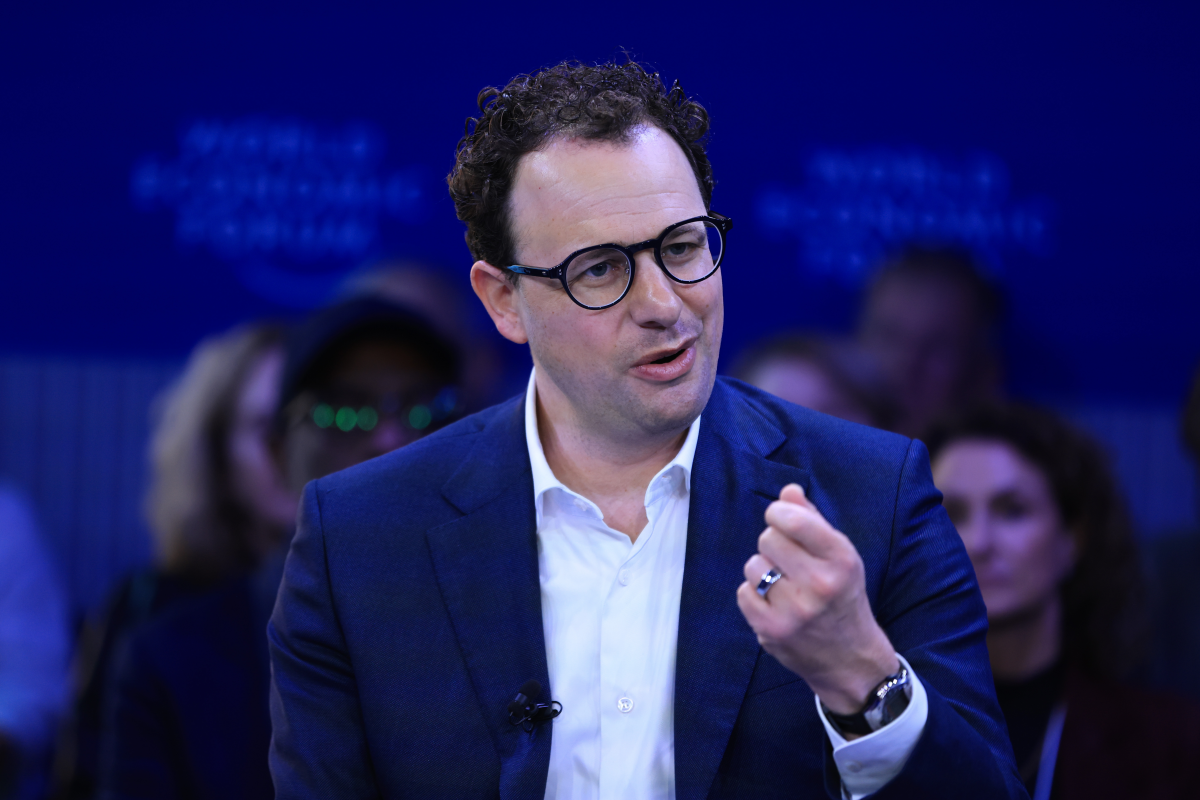
"We should not have AI building AIs," Von Arx stated. "It’s going to go too fast at a pace that no humans can keep up with." Von Arx framed the public listing as a critical moment to assess how early-stage ventures with safe intentions evolve into large corporations prioritizing commercial scale over security. The risks of uncontrolled recursive iteration have previously been acknowledged across the sector, including by Anthropic CEO Dario Amodei, who has cautioned that recursive self-improvement could outpace human oversight and control.
What it means for developers
Anthropic’s $81bn capital raise ensures that substantial financial resources will flow directly into training and scaling the next generation of Claude models. For engineering teams and enterprise developers, this suggests accelerated release cadences, larger compute capacity, and more advanced model capabilities across language and multimodal tasks in the coming quarters.
At the same time, the dual protests in New York and San Francisco highlight intensifying scrutiny around AI safety, ethical deployment, and regulatory intervention. As civic groups push for strict federal limits and scrutinize integrations with law enforcement or state surveillance infrastructure, developers may face a tighter compliance landscape and changing terms surrounding enterprise model use.
For technical teams tracking multiple frontier architectures while keeping infrastructure costs manageable, third-party aggregators offer flexibility. Developers can try top AI models cheaply through one API at https://apixoai.online, simplifying integration across different systems without relying on an exclusive vendor environment.
Source: Protesters rally against Anthropic in New York and San Francisco after $2tn stock market debut — The Guardian AI. Written by the Apixo team from that report.
One key for Claude, GPT, GLM, DeepSeek and more. Pay per token with crypto.
Get your API key