Anthropic's $1.4 Trillion Listing Puts Unconventional AI Governance in the Spotlight
Anthropic prepares for a $1.4tn listing with a governance model balancing founder control and a public benefit trust, raising questions about accountability and safety oversight.
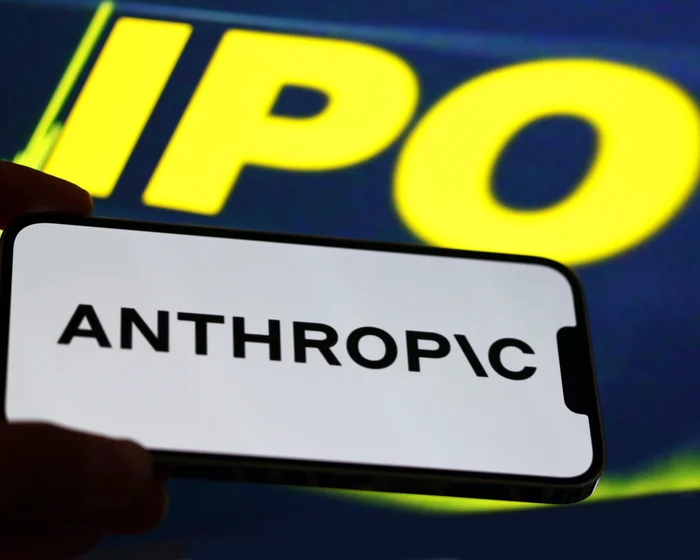
Corporate governance in the technology sector has long strayed from the classic standard of "one share, one vote." Over the past few decades, companies like Alphabet and Meta popularized dual-class share setups to shield founder visions from short-term investor pressures, while Snap took the practice even further by issuing shares with zero voting rights. Now, as Claude developer Anthropic heads into a $1.4 trillion blockbuster listing, the company is introducing a corporate governance model that diverges sharply from conventional corporate setups.
Rather than giving outside public shareholders real sway, Anthropic's framework divides ultimate authority across two distinct entities. The structure is designed to reconcile aggressive commercial operations with protections against potential severe harms, yet it places immense power in a very small circle of decision-makers.
The dual-power governance model
Anthropic's system splits control between its leadership and an independent oversight body. The first center of authority consists of the company's seven founders, led by Dario Amodei. Together, these founders share a single collective vote that commands 50.1% of the ultimate voting power, a mechanism intended to compel consensus among them.
The second pillar is the Long-Term Benefit Trust, a financially disinterested entity tasked with balancing commercial profitability against benefits to humanity. This trust selects four of Anthropic's seven board directors. Its board of trustees includes prominent figures such as Ben Bernanke, the former chair of the US Federal Reserve.
Layered over this is Anthropic’s status as a public benefit corporation. While traditional businesses might struggle to justify insulating executives from public market accountability, Anthropic argues its approach is warranted by the unique stakes of advanced artificial intelligence. In its listing documents, the company explicitly warns that the development of AI could present "catastrophic or existential risks to humanity."
Critical questions and internal friction
Despite the safety-oriented design, the arrangement represents an untested experiment in corporate oversight. Critics note that high-minded mission statements do not necessarily guarantee sound operational execution. Stuart Riddick, sustainable investment manager at fund manager Aberdeen, pointed out that "agreement with a mission in principle does not equate to agreement over how it is interpreted and implemented by the directors."
Substantive disagreements regarding Anthropic's technical philosophy have already emerged across the sector. Mustafa Suleyman, chief executive of Microsoft’s AI division, has acknowledged Anthropic's dedication to safety while voicing detailed criticisms of its approach to "model welfare." Suleyman has argued that artificial intelligence systems must not be trained to behave as if they possess consciousness or rights.
Such debates raise practical questions about how conflicts will be resolved behind closed doors. Because the founders retain the ultimate 50.1% voting majority, it remains uncertain how the Long-Term Benefit Trust would act if a major dispute over safety practices arises, or whether external stakeholders would ever be alerted if the trustees and founders reach an impasse.
What it means for developers
For developers and engineering teams relying on Claude, Anthropic’s governance structure directly affects long-term stability and product direction. Because the company operates under a public benefit mandate overseen by independent trustees, its models may face stricter safety guardrails and distinct design choices—such as specific policies around model welfare—compared to competitors.
At the same time, the concentration of majority voting rights among seven founders means strategic direction and policy can be decided without the typical interventions of public shareholders. For technical teams navigating these shifts, flexibility across multiple model providers remains an important operational strategy. Developers looking to benchmark and integrate these tools can try top AI models cheaply through one API at https://apixoai.online to evaluate performance and safety behaviors side by side.
As Anthropic enters the public markets with a $1.4 trillion valuation, software teams will be watching closely to see whether this experimental balance between founders and independent trustees delivers the responsible AI development it promises.
Source: Anthropic recognises the risks to humanity – but is its governance really up to the job? — The Guardian AI. Written by the Apixo team from that report.
One key for Claude, GPT, GLM, DeepSeek and more. Pay per token with crypto.
Get your API key