Apple Sets Daily Siri AI Limits Tied to Paid iCloud+ Storage Tiers
Starting with iOS 27.3 in December, Apple will introduce daily usage limits on advanced Siri AI and Apple Intelligence features, scaling access based on iCloud+ subscription plans.
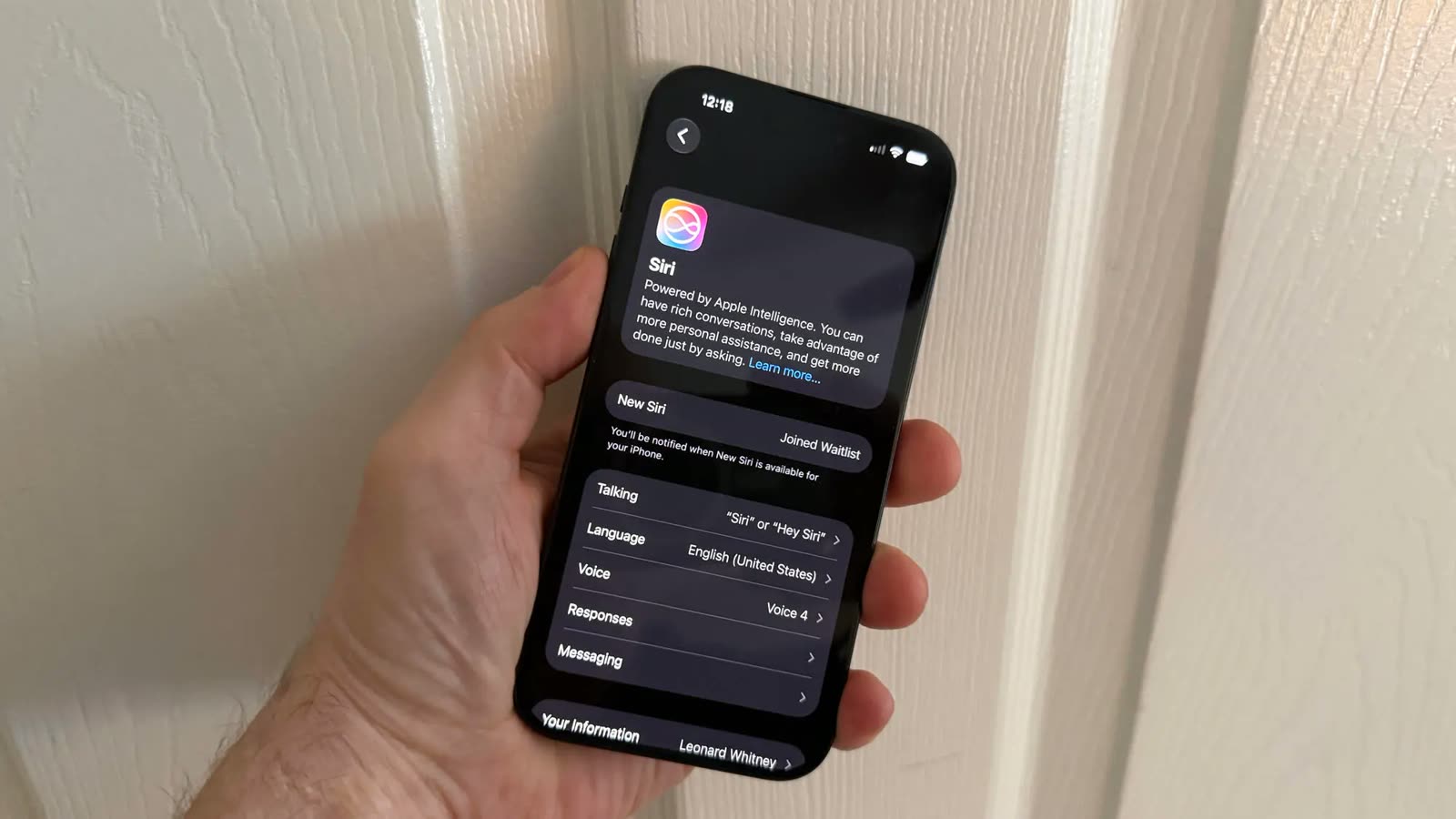
Apple is introducing daily access caps on Siri AI and Apple Intelligence features, with the restrictions set to take effect alongside the release of iOS 27.3 in early December. The limits specifically target complex, server-side processing, while simpler tasks managed entirely on hardware will continue without restriction. To receive higher daily allowances, users will need to subscribe to higher-priced iCloud+ tiers.
How iCloud+ tiers determine AI capacity
The new policy links generative and multi-step capabilities directly to an account's iCloud+ subscription level. Users who do not pay for iCloud+, as well as those on the baseline 50 GB plan priced at $0.99 per month, will be assigned what Apple designates as a "Standard Device Limit."
Subscribers paying for larger storage tiers will receive proportional increases in their daily quotas:
- The 200 GB plan at $2.99 per month provides twice the standard allowance.
- The 2 TB plan at $9.99 per month grants up to five times the standard limit.
- The 6 TB plan at $29.99 per month raises the ceiling to 10 times the baseline.
- The 12 TB tier at $59.99 per month offers the maximum allocation of up to 20 times the standard limit.
Apple has structured these caps on a per-device basis rather than per user account. Because quotas do not aggregate across an entire profile, users operating an iPhone, iPad, Mac, Apple Watch, Apple TV, and Vision Pro under a single account can use their daily allocations independently on each separate piece of hardware without draining a shared pool.
On-device processing vs. server-side workloads
The reason behind the tiers lies in the computational infrastructure required for different queries. Routine tasks handled locally on the hardware—such as setting timers, configuring alarms, or sending standard text messages—do not hit remote data centers and will remain free and unlimited.
In contrast, advanced workloads require offloading to server infrastructure, where heavy traffic can create operational strain. The tasks subject to the daily quotas include:
- Multi-step queries relying on personal context, such as extracting details from an email to update calendar schedules.
- Image generation and editing via Image Playground as well as Photos features like Clean Up, Extend, and Spatial Reframing.
- Shortcuts configured to access Apple Foundation Cloud and Cloud Pro Models.
- Interactions within third-party applications that connect to Apple Foundation Models through Private Cloud Compute.
When an individual exhausts their quota in a specific feature category, Apple sends a system notification. While advanced queries are paused until the counter resets the following day, basic Siri features remain fully functional.
What it means for developers
For developers building within the Apple ecosystem, the inclusion of third-party applications under the Private Cloud Compute umbrella introduces new operational considerations. Apps that rely on Apple Foundation Models will be directly constrained by the individual end user’s iCloud+ plan. If a user on the free or 50 GB tier reaches their daily standard limit, server-dependent features in third-party apps will be paused until the next day, potentially affecting user experience regardless of the application's own architecture.
Developers must therefore design software that gracefully handles notification states and quota pauses when advanced capabilities are cut off. For teams building AI-driven workflows outside Apple's ecosystem, alternative backend routing can provide more direct control over resource allocation. For example, developers can try top AI models cheaply through one API at https://apixoai.online to manage model calls without relying on end-user operating system tiers.
As iOS 27.3 rolls out in early December, application performance will become increasingly tied to consumer subscription choices, making it essential for software creators to test how their integrations perform when users encounter their standard device caps.
Source: Apple reveals daily limits on your Siri AI use – here’s how much you’ll have to pay — ZDNet AI. Written by the Apixo team from that report.
One key for Claude, GPT, GLM, DeepSeek and more. Pay per token with crypto.
Get your API key