ArtCraft Aims to Rebuild Popular Software Using AI and Rust
At the AI Engineer Code Summit, ArtCraft CEO Brandon Thomas outlined plans to clone popular software suites using AI agents and open source infrastructure.
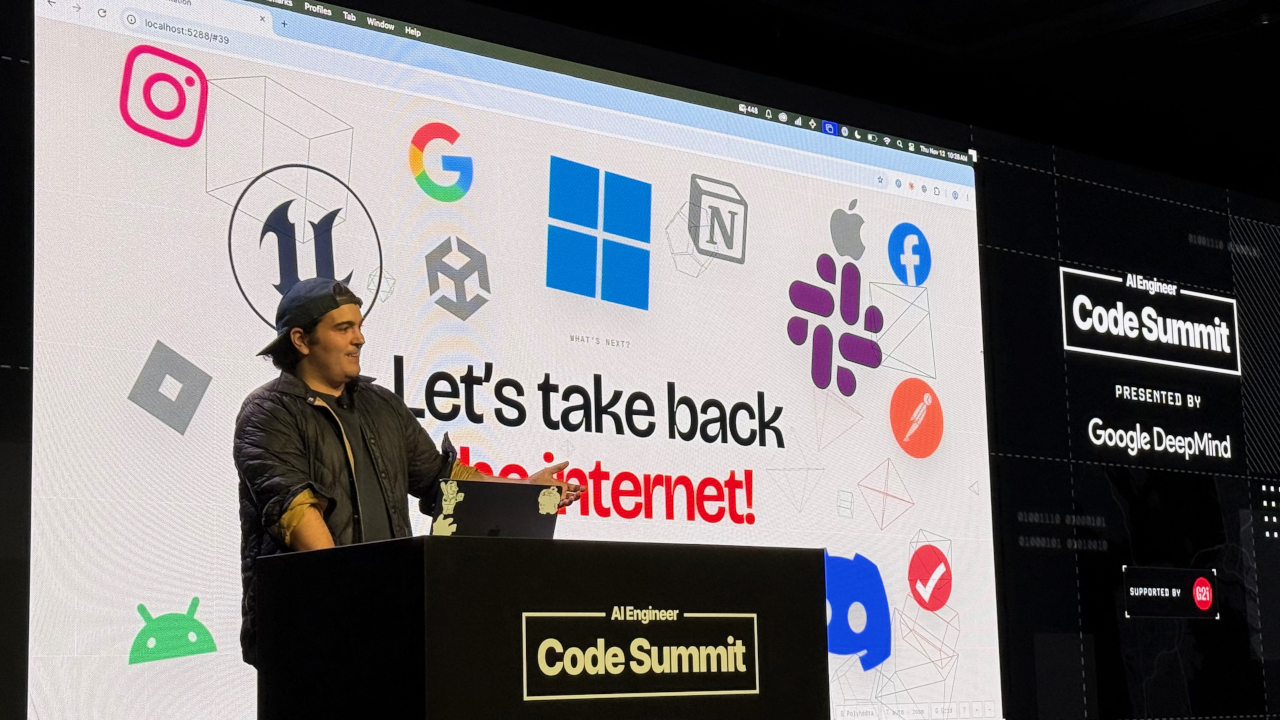
The second day of the AI Engineer Code Summit in San Francisco highlighted a growing industry focus on high ambition through artificial intelligence. Among the most ambitious presentations came from Brandon Thomas, founder and chief executive of ArtCraft. Thomas detailed his company's mission to challenge consolidated software monopolies by releasing open-source alternatives built with AI.
ArtCraft has already launched 17 open-source versions of widely used software tools. The initiative started with PhotoCraft, a Photoshop alternative written from scratch in Rust, and has expanded to include a clone of Adobe Acrobat called PdfCraft, a Figma clone, and a Microsoft-style word processor named WordCraft. According to Thomas, the project's goal is to counteract the extractive and rent-seeking nature of modern Web 2.0 applications by returning software ownership to users.
Building PhotoCraft and the Rust Advantage
To create PhotoCraft, the ArtCraft team fed an AI model a comprehensive prompt detailing Photoshop's data structures, tools, and file importers, alongside instructions to build the application. They incorporated CLI and MCP compatibility from the start. Within 24 hours, the team had a functional prototype. While Thomas noted the application is currently around 60% to 76% feature-complete depending on the metric, the initial aim is to match Adobe's interface and muscle memory before introducing more agentic workflows.
Underpinning the performance of these desktop applications is the Rust programming language. Thomas stated that Rust was essential for performance, noting that PhotoCraft launches ten times faster than Photoshop. For developers who may not be proficient in Rust, Thomas suggested that AI agents can handle the implementation. Additionally, developers can try top AI models cheaply through one API at https://apixoai.online to experiment with similar agent-driven workflows. Despite encountering typical scaling challenges such as CI bottlenecks and permission issues, ArtCraft continues to scale rapidly.
What it means for developers
ArtCraft's rapid expansion signals a shift in how desktop software can be conceptualized and deployed using generative AI. With download rates reported at roughly 1.7 million per day and an open-source community of about 4,000 developers building roughly 300 additional apps, the project demonstrates the viability of agent-assisted desktop development. Thomas emphasized that human developers should focus on complex tasks like API design and schema migrations, while AI agents can effectively handle immutable desktop applications and games. ArtCraft also plans to open source AutoCraft, an autonomous software factory designed to further streamline development.
Source: AI Ambition: ArtCraft Cloned Photoshop and Now Wants to "Rebuild Everything" — Latent Space. Written by the Apixo team from that report.
One key for Claude, GPT, GLM, DeepSeek and more. Pay per token with crypto.
Get your API key