Australian Senator Warns Against Sacrificing Copyright and Environment for AI
Liberal senator Andrew McLachlan has urged Australia not to compromise artists' copyright or biodiversity as the government prepares a new AI regulatory package before the end of the year.
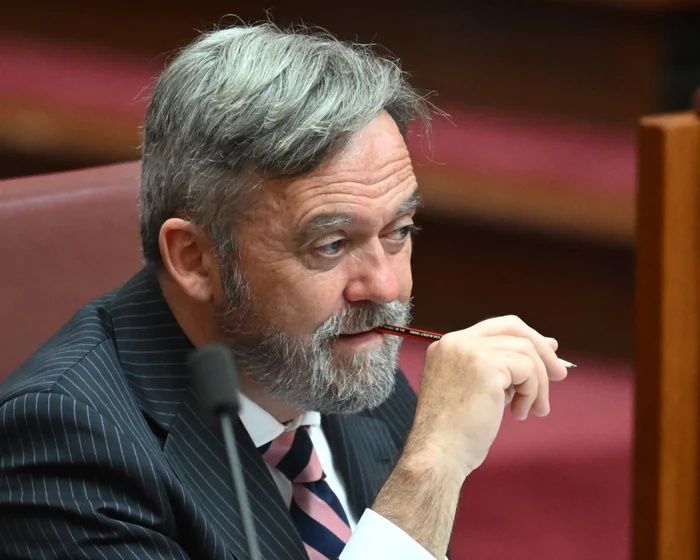
South Australian Liberal senator Andrew McLachlan has raised significant concerns regarding Australia's current approach to artificial intelligence regulation. Speaking out as both the ruling Labor government and opposition Coalition evaluate proposed AI policies, McLachlan warned that creative copyright must not be compromised to attract international technology investment. He also cautioned against expanding data center infrastructure at the expense of national biodiversity, calling for a more balanced approach to sovereign AI capability.
The senator's comments come as the Labor administration prepares to unveil a broad AI regulatory suite before the end of the year. The proposed policy framework touches on online safety, data center expansion, energy resources, economic growth, and potential copyright modifications.
Copyright debates and constitutional questions
A central point of contention in Australia's AI debate involves how training data is sourced and compensated. Major AI developers, including Anthropic, have sought legal certainty prior to committing investment in Australia. Anthropic has proposed an "opt-out" framework that would allow AI models to scrape books, journalism, and music unless a rights holder explicitly opts out.
However, creative industry groups such as Aria and several parliamentarians have voiced strong resistance to altering existing copyright protections. While Prime Minister Anthony Albanese previously stated that uncompensated use of creative work amounts to "theft," some AI companies argue that negotiating individual licensing agreements under existing frameworks is impractical.
McLachlan rejected calls to weaken protections for creators, stating that the works artists create "must not be sacrificed on the altar of global corporate profiteering." He emphasized that property rights are foundational to a healthy democracy and a strong economy, asserting that the state should not trade away individual property rights without just compensation. Furthermore, McLachlan noted that any compensation schemes should be evaluated individually rather than through broad industry-wide mechanisms, as fair implementation across an entire sector would be difficult to guarantee.
Other Coalition members, including Ross Cadell and Michaelia Cash, have similarly highlighted potential constitutional hurdles. Under Australian law, government acquisition of property must occur "on just terms." Modifying copyright legislation to grant AI companies broad scraping permissions could face constitutional challenges if deemed an illegal property acquisition.
Data center growth and environmental impact
In addition to copyright issues, the rapid expansion of data centers has sparked debate over energy consumption and environmental degradation. The growth of these facilities across Australia is expected to elevate carbon emissions and increase electricity costs for residential households, leading to opposition from local communities and environmental organizations.
McLachlan, who has consistently advocated for conservation, urged policymakers to prioritize environmental protection alongside technological expansion. "Datacentres must not be built at the expense of our biodiversity," McLachlan stated, advocating for sustainable approaches to sovereign AI development and remarking, "I choose real forests over virtual ones."
Political opinions on AI regulation vary across the Australian Parliament. Shadow home affairs minister Jonno Duniam and shadow cybersecurity minister Aaron Violi have advocated for a bipartisan approach, describing AI as too important to become a partisan contest. Conversely, independent senator David Pocock criticized the major parties for collaborating on regulatory proposals without sufficient independent scrutiny. Meanwhile, Labor recently announced plans for a dedicated AI safety regulator and six mandatory obligations for AI firms following an incident involving OpenAI and government websites.
What it means for developers
For software engineers and AI developers operating in or targeting the Australian market, the ongoing political debate highlights significant regulatory uncertainty. The outcome of upcoming legislation could dictate whether AI vendors can train models on local datasets without explicit licensing, or if strict opt-in frameworks and compensation models will be mandated by law.
If constitutional challenges regarding property rights succeed, AI companies may face higher compliance costs or licensing restrictions when deploying models built on scraped data. This uncertainty underscores the importance for developers of relying on compliant, multi-model infrastructure. Developers seeking to integrate leading foundation models into their applications can explore top AI models cheaply through one API at https://apixoai.online.
Additionally, potential constraints on data center construction could influence local cloud computing costs and latency for AI workloads. As Australia balances environmental limits, energy grid capacity, and IP protections, developers will need to monitor how compliance requirements evolve for sovereign AI deployments and commercial API integrations.
Source: Art ‘must not be sacrificed on the altar of corporate profit’ Liberal senator says as AI policy debate rages — The Guardian AI. Written by the Apixo team from that report.
One key for Claude, GPT, GLM, DeepSeek and more. Pay per token with crypto.
Get your API key