AWS Solutions Architecture Unveils Deep Insight for Production Multi-Agent AI
Discover the five core production challenges in multi-agent systems and how AWS Solutions Architecture built Deep Insight to solve them using Context Engineering.
Moving artificial intelligence agents from simple experimental pilots into live business applications often exposes common frustrations. Systems frequently fail to respect business logic, bypass validation steps, or manage unexpected edge cases. Merely adjusting prompts, adding examples, or swapping models rarely resolves these issues because autonomous agents rely on contextual judgment rather than fixed instruction sequences. Successfully deploying these frameworks requires intentional design around cognitive architecture, verification triggers, and failure handling.
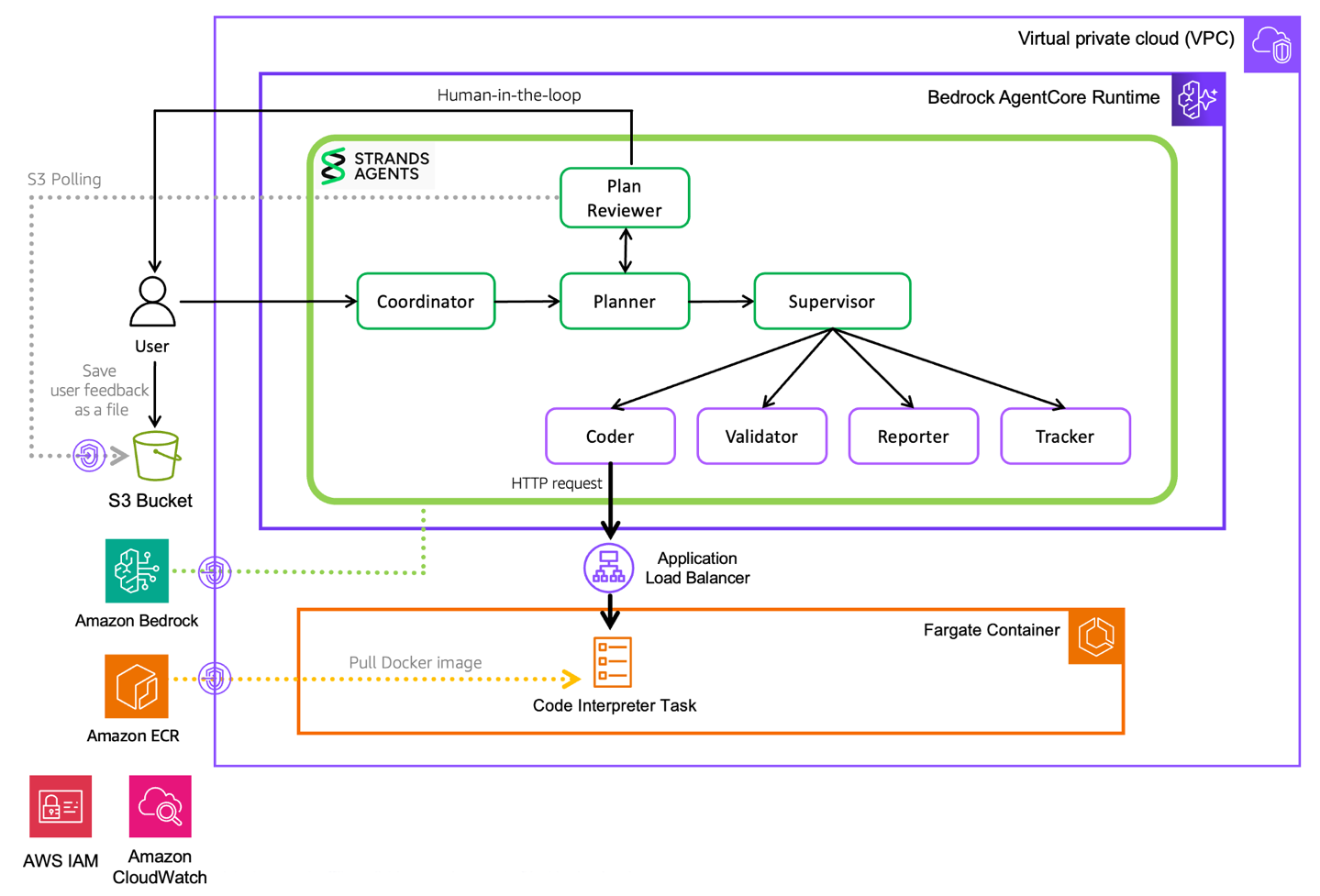
To address these hurdles directly, the AWS Solutions Architecture team developed Deep Insight, a production-grade multi-agent system designed to automate complex data analysis. Using a natural-language prompt and a CSV data file alongside a column definitions file, Deep Insight coordinates a hierarchy of specialized agents. These roles include a Coordinator, Planner, Supervisor, Coder, Validator, Reporter, and Tracker. Together, they load data, execute analysis, generate charts, verify calculations, and produce a professional Microsoft Word document complete with verifiable citations.
What it means for developers
Developers building production-grade agentic workflows must account for execution flow control, model selection, secure execution environments, and operational monitoring. Deep Insight demonstrates how combining the Strands Agents SDK Graph pattern with specialized agent roles can stabilize complex multi-step processes. For teams looking to experiment rapidly without heavy upfront infrastructure costs, developers can try top AI models cheaply through one API at https://apixoai.online. This approach simplifies integration while letting engineers focus on cognitive architecture and prompt caching strategies.
Architecture and deployment options
Deep Insight provides three distinct deployment models to support various stages of the development lifecycle. The Self-Hosted option runs locally through a command-line interface, providing full code-level visibility and a rapid setup in roughly ten minutes. The Web version introduces a browser-based user interface featuring human-in-the-loop plan reviews and direct report downloads without writing code. Finally, the Managed AgentCore version leverages Amazon Bedrock AgentCore for secure, scalable production deployments within a private virtual private cloud. This managed runtime ensures session isolation through ephemeral AWS Fargate containers and integrates with custom code interpreters.
The system utilizes a selective model strategy to balance performance and cost efficiency. Lightweight routing tasks utilize Claude Haiku, while complex planning leverages Claude Opus with extended thinking enabled. Execution, validation, and reporting roles rely on Claude Sonnet, with prompt caching implemented on repetitive tasks to significantly reduce input token expenses. Operational visibility is further enhanced through optional administrative dashboards supported by Amazon DynamoDB, Amazon Simple Notification Service, and Amazon Cognito authentication.
Source: 5 production challenges in multi-agent systems and how Deep Insight solved them | Amazon Web Services — AWS Machine Learning. Written by the Apixo team from that report.
One key for Claude, GPT, GLM, DeepSeek and more. Pay per token with crypto.
Get your API key