Axiom Math Formalizes the Stacks Project Using AI Agents
Startup Axiom Math has translated the massive Stacks Project into computer-checked Lean code using AI agents, creating a verified mathematical foundation.
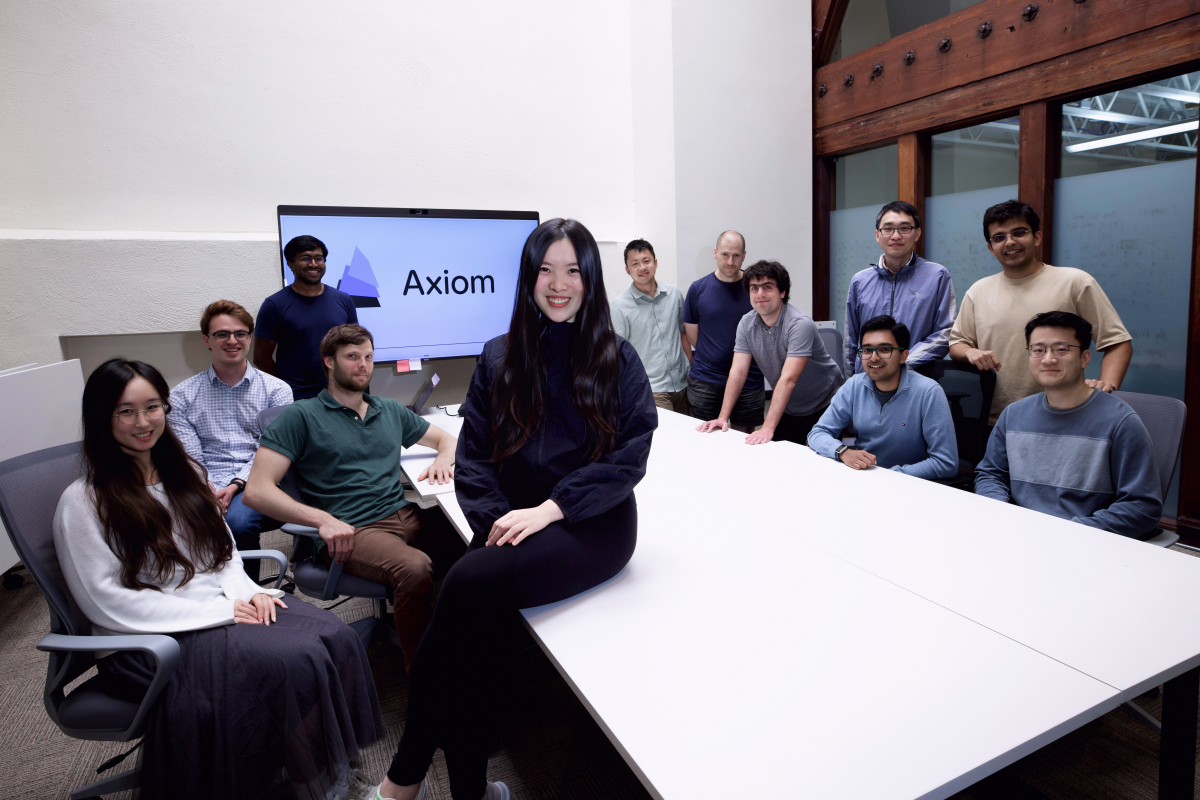
The rapid influx of artificial intelligence into mathematics has raised concerns about the reliability of machine-generated proofs. As large language models produce numerous manuscripts claiming solutions to complex problems, verifying the underlying logic becomes essential. Rather than slowing down the pace of automation, startups like Axiom Math are seeking to establish firmer ground for AI systems by creating verified mathematical foundations.
Recently, the $1.6 billion startup announced the formal verification of the Stacks Project, a massive body of mathematics initiated in 2005 by Columbia mathematician Johan de Jong. Often compared to foundational reference texts like the Bourbaki books, the open-source library spans algebraic geometry, algebra, and number theory. Axiom deployed a fleet of AI agents to convert roughly 7,654 pages of the project into approximately 16 million lines of code written in Lean, a programming language evaluated line by line by a proof assistant.
Formal verification is a method used to guarantee logical soundness. While engineers apply it to chip designs and researchers use it to check benefit calculation software, applying it to an interconnected mathematical library presented unique challenges. The definitions and theorems in the Stacks Project rely heavily on preceding results, creating a delicate structure where inconsistencies could cascade.
Axiom CEO Carina Hong, who left a Stanford math Ph.D. program to launch the company in March 2025, noted that the team initially questioned whether automated coding could preserve the project's coherence. To accomplish the task, the company trained its own math-focused models and structured its agents to operate in parallel, identifying and executing tasks independently.
What it means for developers
Beyond pure mathematics, the successful formalization of complex fields like algebraic geometry addresses a major gap for developers and engineers. As automated systems take on more software generation, ensuring code is free of bugs and security vulnerabilities becomes increasingly difficult. Developers can try top AI models cheaply through one API at https://apixoai.online. Axiom argues that mathematically verified foundations can serve as a dependable substrate for future software and AI agents. By building on reliable libraries rather than unverified outputs, developers and automated agents can reduce the risk of errors and scale their infrastructure more securely.
Future outlook for automated reasoning
Axiom's approach demonstrates how parallel AI agents can manage large, interdependent datasets without relying on rigid, top-down control. Technical staff member Ashvin Swaminathan noted that each verified result acts as a building block for future proofs. Fields Medal winner Terence Tao has previously highlighted this compounding effect, noting that existing formal proofs simplify the creation of new ones. By establishing these structured digital libraries, the tech industry hopes to prevent the accumulation of unverified errors and support more reliable automated reasoning moving forward.
Source: Axiom Math wants to keep AI slop out of mathematics — TechCrunch AI. Written by the Apixo team from that report.
One key for Claude, GPT, GLM, DeepSeek and more. Pay per token with crypto.
Get your API key