Bharat Semi Secures $24M Seed Round to Develop AI-Powered Image Sensors
Indian chip startup Bharat Semi has raised $24 million in seed funding to engineer all-in-one AI image sensors, aiming to slash edge vision costs by at least 70%.
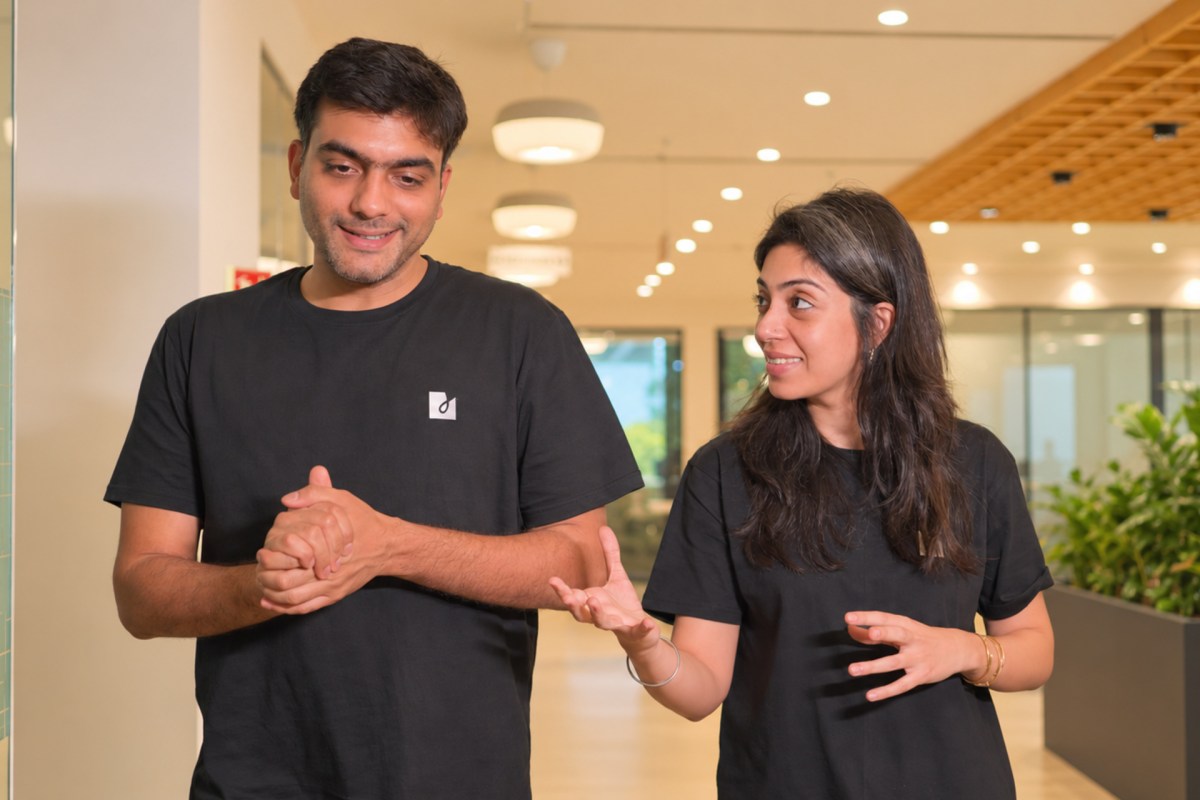
Indian semiconductor venture Bharat Semi has secured $24 million in an all-equity seed financing round to advance the development of AI-enabled image sensors. Headquartered in New Delhi, the pre-revenue company is setting its sights on international adoption, particularly in the United States, as global demand rises for specialized silicon designed to manage localized machine learning workloads.
Even though commercial production is slated for 2027, the startup has already recorded design wins with American defense technology firm General Atomics alongside India's Kaynes Semicon. The investment round was led by Info Edge Group, South Park Commons, and Indus Bridge Ventures, with additional participation coming from Micromax, Valour Capital, Gaingels, and private angel investors. Bharat Semi plans to direct the proceeds toward engineering recruitment, product development, and eventual commercial launch.
Unifying image capture and AI on single-die silicon
Bharat Semi was founded in late 2021 by Vrinda Kapoor, a South Park Commons fellow with a background in healthcare tech, and Vinayak Dalmia, an executive with prior experience at McKinsey and in private equity. The engineering roadmap is spearheaded by Chief Technology Officer Boyd Fowler, who previously served in the same capacity at image sensor manufacturer OmniVision.
Rather than relying on conventional architectures that separate the image sensor, the image signal processor (ISP), and a standalone system-on-chip (SoC), Bharat Semi is building programmable image sensors that integrate sensing, processing, and AI tasks onto a single die. Co-founder Vrinda Kapoor stated that this consolidation aims to shift hardware "from sensors to sense-making solutions," noting that bypassing the need to transmit raw visual feeds to external compute units can reduce bill-of-materials costs by at least 70%.
The company is directing its technology toward smart home appliances, industrial automation, surveillance, and aerospace systems. As practical examples, Kapoor cited air conditioning units capable of automatically detecting when a room is vacant without external sensors, as well as drones capable of processing visual signals on-device without needing costly secondary computing hardware.
Bharat Semi's first-generation sensors are currently undergoing prototyping. A second iteration featuring more sophisticated onboard AI is slated to reach prototype status by mid-2027, with customer shipments anticipated before the end of that year.
Scaling international operations under a fabless model
Bharat Semi operates a fabless model, choosing to keep focus on silicon architecture and software while contracting out physical chip fabrication. While the company announced plans in 2024 for an Indian manufacturing facility in partnership with the U.S. Space Force, Kapoor confirmed that the fabrication project is separate from the image-sensor business, is being developed with domestic partners, and is not funded by this seed round.
The venture currently employs approximately 75 workers across India and the United States, including a 10-to-12-person hub in Santa Clara focused on engineering and business development. Bharat Semi expects to expand its U.S. headcount to roughly 20 by mid-2027 while actively adding engineering talent across Europe to sustain its hardware pipeline.
What it means for developers
For embedded systems engineers and machine learning practitioners, Bharat Semi's approach reflects a broader trend toward bringing inference directly to the physical interface of data collection. If single-die architectures can reliably execute visual inference at 70% lower system costs, developers working in robotics, IoT, and autonomous navigation will face fewer bandwidth bottlenecks, lower latency, and reduced thermal envelopes on low-power devices.
At the same time, developing modern vision pipelines increasingly requires pairing on-device edge processing with sophisticated cloud-based language and reasoning models. While hardware startups work through multi-year silicon manufacturing cycles, developers can try top AI models cheaply through one API at https://apixoai.online to prototype multimodal systems, benchmark prompt logic, and integrate state-of-the-art vision models today.
Source: Indian chip startup Bharat Semi lands $24M seed round as it eyes global AI sensor market — TechCrunch AI. Written by the Apixo team from that report.
One key for Claude, GPT, GLM, DeepSeek and more. Pay per token with crypto.
Get your API key