Blackstone AI Lead Dismisses Systemic Risk Concerns Over Surging Neocloud Debt
Blackstone's Jas Khaira addresses market fears over mounting AI compute debt, highlighting strong hyperscaler backing despite recent headwinds for neocloud providers like CoreWeave.
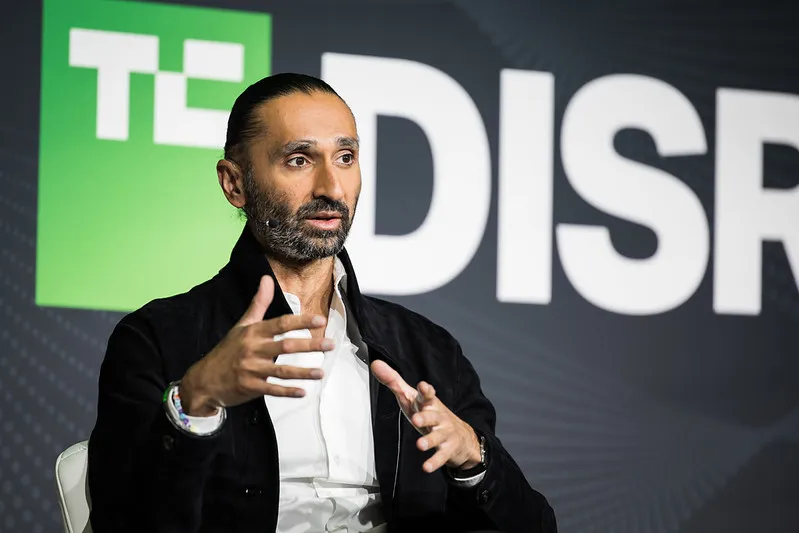
Private equity firm Blackstone is taking a prominent position in the artificial intelligence transition, committing capital across data center infrastructure, specialized hardware, and enterprise AI deployment. Speaking at TechCrunch Disrupt, Jas Khaira, who leads the firm’s San Francisco-based AI hub Blackstone N1 (BXN1), addressed rising market anxieties surrounding the substantial debt burdens accumulated by AI infrastructure providers, arguing that systemic financial risks remain overstated.
Massive capital requirements and the rise of neocloud debt
Unlike previous tech cycles like mobile or SaaS that expanded on moderate budgets, scaling artificial intelligence requires staggering upfront capital. Blackstone, which manages $1.3 trillion in assets under management, has positioned itself as the largest compute owner outside of traditional hyperscalers. To fund this expansion, the firm pioneered creative lending structures for "neoclouds"—specialized cloud providers renting out GPU infrastructure—by evaluating committed customer contracts alongside GPUs pledged as collateral.
This debt strategy began in 2023 with a $2.3 billion loan to CoreWeave. At the time, CoreWeave generated roughly $30 million in revenue, but held backing from Nvidia and high-value contracts with major customers like Microsoft. Blackstone has since backed other major compute initiatives, including a $5 billion investment commitment to Crux AI to commercialize Google's custom TPUs, equity in chip startup Etched, and co-leading a $10 billion credit facility for Australian GPU provider Firmus alongside Coatue.
Market headwinds and credit concerns
In recent weeks, financial pressure on neocloud operators has drawn sharp scrutiny. CoreWeave’s total debt load has expanded to approximately $50 billion, contributing to a drop of over 20% in its equity value. Meanwhile, Firmus recently scrapped a planned public listing in Australia that targeted a $30 billion valuation. Altimeter Capital founder Brad Gerstner recently pointed out that relying strictly on GPU hardware as collateral is no longer sufficient for securing cheap credit.
Khaira acknowledged that credit markets are feeling friction from rising interest rates, persistent inflation signals, widening credit spreads, and a dense volume of infrastructure debt offerings. Higher borrowing premiums are currently affecting even well-funded tech giants like Meta and Microsoft. However, Khaira rejected assertions that the accumulation of AI infrastructure debt could spark a 2008-style financial crisis, noting that the majority of data centers serve hyperscalers with the strongest credit profiles in the corporate world.
Enterprise adoption and uneven returns
In addition to hardware and data center loans, Blackstone is backing enterprise software deployment. Through a $1.5 billion joint venture named "Ode with Anthropic"—formed alongside Anthropic and Hellman & Friedman—the organization supplies forward-deployed engineers to integrate AI technologies directly into Blackstone's 280 portfolio companies.
When evaluating whether enterprises are deriving concrete value from AI integrations, Khaira acknowledged that while return on investment is occurring, adoption remains uneven. He described technology integration as following a sawtooth pattern, where heavy compute investments can briefly appear to outstrip enterprise demand before operational integration catches up.
What it means for developers
For software engineers and product teams, the continuous flow of capital into compute infrastructure ensures that raw processing power will remain widely available, even as specialized cloud providers adapt to shifting interest rates. The financial market's emphasis on creditworthy corporate contracts means that top-tier hardware and model infrastructure remain tied to major tech platforms.
As data centers expand and alternative chip architectures gain traction, managing diverse model access can become structurally complex. To streamline development workflows, developers can try top AI models cheaply through one API at https://apixoai.online, providing a unified endpoint to access multiple LLMs without navigating fragmented compute agreements.
Overall, Khaira's analysis indicates that while credit spread widening and higher interest rates may create short-term hurdles for neocloud valuations, underlying compute demand remains robust. As enterprise adoption steadily progresses through its current cycle, developers can expect ongoing investment in foundational infrastructure and integration tooling.
Source: Blackstone’s Jas Khaira says fears over AI-buildout debt are overblown — TechCrunch AI. Written by the Apixo team from that report.
One key for Claude, GPT, GLM, DeepSeek and more. Pay per token with crypto.
Get your API key