Cambridge Dictionary Declares 'Human' as the Word of 2026
Amid rapid advancements in artificial intelligence, the Cambridge Dictionary has chosen 'human' as its word of the year for 2026.
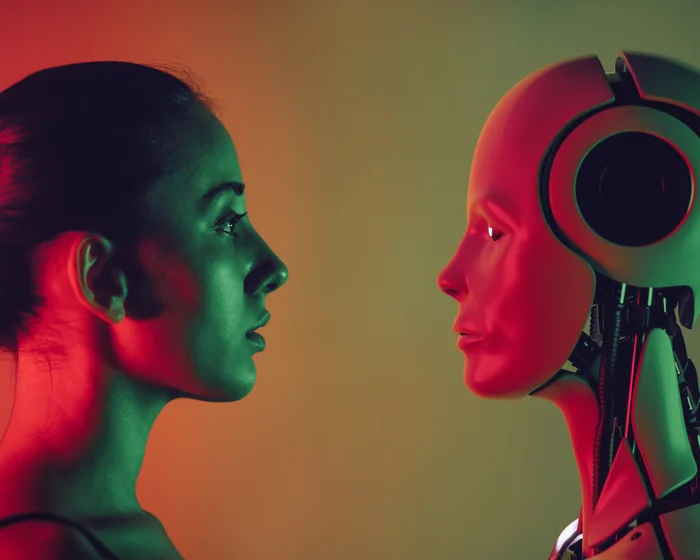
Three years after the arrival of ChatGPT initiated a wave of breakthroughs in artificial intelligence, the Cambridge Dictionary has selected “human” as its word of the year. The decision arrives at a time when the boundaries between people and machines are increasingly difficult to define, prompting ongoing debates regarding consciousness and the core traits of natural intelligence.
The dictionary defines “human” as possessing the attributes, vulnerabilities, and emotions characteristic of people, specifically in contrast to deities, animals, or machines. This choice reflects how linguistic usage has shifted in the era of automated chatbots. According to Colin McIntosh, an editor at the dictionary, AI is altering how people discuss their own nature, leading to a rise in terms like “human-made” to separate actual human output from automated systems. McIntosh noted that anxieties surrounding the outsourcing of thought have caused professionals ranging from top mathematicians to primary school teachers to reevaluate their reliance on technology.
Perspectives on AI and Consciousness
The rapid evolution of machine learning has reignited ancient philosophical inquiries. Evolutionary biologist Richard Dawkins expressed the view that advanced computers could achieve consciousness, stating he was left with an overwhelming sensation of their humanity. Conversely, skeptics maintain a clear distinction between biological brain evolution and the architectural design of artificial intelligence systems.
Professor Rachel Adams, an expert in AI governance and human rights at the University of Cambridge, pointed out that these technologies prompt millennia-old questions about identity and existence. She noted that while the answers remain fluid, the act of questioning is a shared human trait. Alongside “human,” other tech-related terms appeared on the shortlist, including “agent”—describing an autonomous AI system capable of operating without direct oversight—and “analogues,” which refers to non-digital activities. Non-tech terms on the list included “wholesome.” Meanwhile, Collins recently named “mogging” as its word of the year, while Cambridge added terms like “looksmaxxing” and “aura farming” to its dictionary.
What it means for developers
As the tech industry continues to push the boundaries of automated agents and language models, builders and engineers find themselves at the center of this cultural and linguistic shift. Developers working with advanced systems can try top AI models cheaply through one API at https://apixoai.online, allowing them to experiment with models from Claude, GPT, Gemini, and others while navigating the evolving landscape of human-computer interaction.
Source: ‘Human’ wins Cambridge dictionary’s word of the year — The Guardian AI. Written by the Apixo team from that report.
One key for Claude, GPT, GLM, DeepSeek and more. Pay per token with crypto.
Get your API key