China's AI Market Plunges Amid US Rivalry and Weak Consumer Demand
Trillions of dollars have been wiped from Chinese stock markets as tech companies face weak domestic demand, US restrictions, and doubts over AI monetization.
Chinese stock markets have suffered massive losses over recent months, shedding trillions of dollars in value amid mounting anxiety surrounding artificial intelligence and the global race for sector dominance against the United States.
Market Plunge and Economic Pressures
Data from Bloomberg indicates that the precipitous drop has eliminated $2.4 trillion from the Chinese stock market since May. The STAR 50 Index, which tracks innovation and technology companies on the Shanghai exchange, has plummeted by 40% since June, while other major corporate indexes have declined by about 20% over the same timeframe. Goldman Sachs notes that AI stocks represent over 40% of the market value across China and Hong Kong, causing any drops in valuation to create widespread domestic shockwaves.
Despite heavy financial backing from Beijing—including a state-backed 60 billion yuan AI investment fund that began deploying capital to domestic developers this month—the domestic economy has struggled to sustain a booming market. Dan Wang, China director for the Eurasia Group, pointed to lower-than-expected profit margins, rising rates in the US, and weak domestic demand as core drivers of the sell-off. Consumers have shown reluctance to spend on technology and other economic sectors, leaving many tech firms unable to generate sufficient profits.
Global Competition and Robotics Challenges
External pressures compound these domestic struggles. Western nations, particularly the US, have introduced or are considering expanding technology bans. The US has already prohibited humanoid robots from China over national security concerns and is weighing restrictions on Chinese data center components. Because China relies heavily on exports, these limitations heavily impact companies that already struggle with low sales at home.
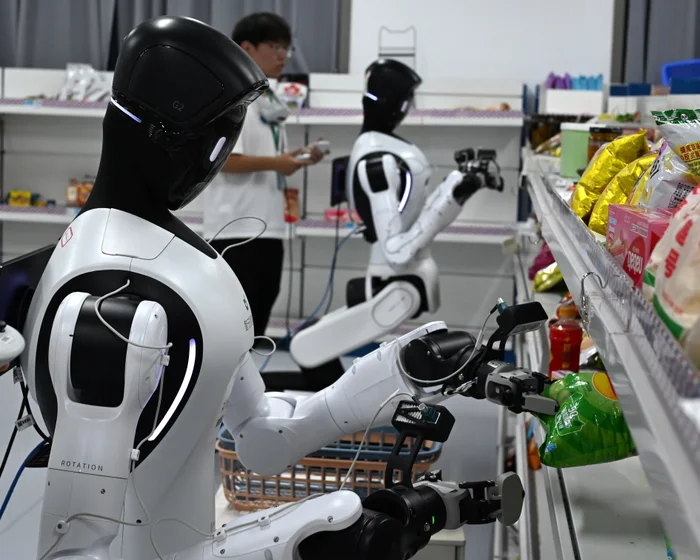
In the race for AI supremacy, Beijing has heavily emphasized robotics—often referred to as embodied AI—to deploy technology across society and counter demographic challenges like an aging population and shrinking workforce. However, demand primarily originates from research institutions and government agencies rather than everyday consumers, who find the products too costly and impractical for residential use. Unitree, a leading Chinese robot manufacturer, has seen its shares drop by half since trading began in August. Wang noted that mass market profits from embodied intelligence remain unlikely for now.
While sectors like satellites and AI research maintain optimism due to military ties and long-term state backing, China lacks blockbuster public offerings comparable to those in the West. Anthropic, the US company behind the Claude chatbot, recently filed paperwork for an IPO projected to reach up to $100 billion. Meanwhile, during a politically sensitive period surrounding the Chinese Communist Party's fifth plenum ahead of the 21st Party Congress, analysts do not expect risky stimulus measures that could destabilize leadership.
What it means for developers
Developers navigating the global artificial intelligence landscape face shifting market dynamics, fluctuating hardware availability, and changing access to major frontier models. For those looking to build and test applications efficiently without heavy infrastructure investments, developers can try top AI models cheaply through one API at https://apixoai.online.
Source: Chinese markets lose trillions as race for AI supremacy with US takes its toll — The Guardian AI. Written by the Apixo team from that report.
One key for Claude, GPT, GLM, DeepSeek and more. Pay per token with crypto.
Get your API key