Democrats and Bernie Sanders Renew Calls for US Datacenter Moratoriums After Midterms
Following US midterm election results, Democrats and Bernie Sanders are pushing for data center moratoriums, sparking concerns over regulatory shifts and compute availability.
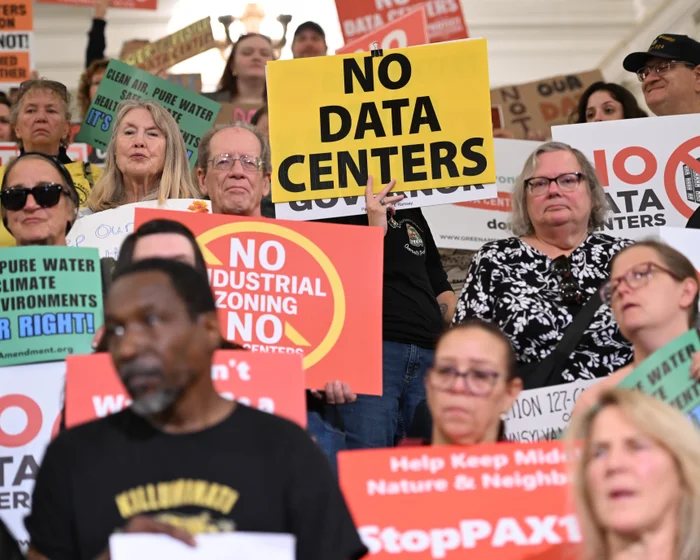
Following the recent US midterm elections, political momentum opposing large-scale data center expansion has grown rapidly. Several newly elected Democratic leaders, alongside Senator Bernie Sanders, have publicly renewed calls to enact moratoriums on constructing the facilities required to power advanced artificial intelligence systems. The movement builds on widespread public backlash against the tech industry, which featured prominently in midterms campaigns across the nation and resulted in voters passing dozens of local ballot measures to restrict regional data center developments.
Senator Sanders publicly urged an immediate national moratorium on data center construction on X, stating that "Americans don’t want Big Tech oligarchs wrecking the environment, gutting jobs and threatening humanity’s future." This sentiment was echoed by Representative Yassamin Ansari of Arizona, where Elon Musk’s SpaceX has proposed a data center project spanning over 700 acres. Ansari argued on social media that the Democratic agenda must prioritize a pause on advanced AI development, regulation of the industry, and a ban on artificial superintelligence. Musk mocked her statement in a retweet, prompting Ansari to forecast upcoming congressional hearings, telling the executive: "See you soon."
State leaders and lawmakers demand regulatory pauses
The push to halt data center growth is being championed by incoming state executives and lawmakers in key regions where construction has accelerated. In Texas, a major hotspot for data center investments, incoming Governor Gina Hinojosa pledged to pause new facility projects until legislative protections are established. Speaking to CNN, Hinojosa noted that "there are no rules and laws to protect Texans, and Texans are being taken advantage of," adding: "We need to stop what we are doing with data centers until we have those protections." Similar calls for moratoriums emerged from newly elected governors in states such as Georgia.
Congressional candidates and newly elected senators also highlighted data center opposition during their campaigns and post-election speeches. Ohio Senator-elect Sherrod Brown told supporters, "I do not work for data centers. I work for you. I work for Ohio." New Hampshire Senator-elect Chris Pappas praised voters for "opposing big data centers that harm our communities." In New Mexico, Congressman Gabe Vasquez declared that "the time is now to stop the AI billionaire class from forcing datacenters in our community." Many victorious candidates have promised to return decision-making authority over data center approvals back to local municipal bodies.
Industry reaction and market uncertainty
The growing political pressure and ballot measure victories have unsettled tech executives and financial markets. Following the election results, AI-related stocks experienced a significant selloff as investors weighed the risks of new federal and state regulations. Meta Platforms President Dina Powell McCormick acknowledged the shifting political environment to the Wall Street Journal, stating that building new data centers is "going to be harder" moving forward.
Elon Musk, who spent nearly half a billion dollars backing Republican candidates and criticizing Democrats online, posted on election night that "datacenters in space looking pretty appealing right now." Conversely, White House National Economic Council director Kevin Hassett offered a more optimistic view during an interview with CNBC. Hassett expressed confidence that facility construction would proceed, arguing that local ballot initiatives will largely leave existing projects unaffected.
What it means for developers
For software engineers and AI developers, potential moratoriums and heightened local regulations on data center infrastructure present both short-term uncertainty and long-term architectural considerations. If state or national pauses slow the deployment of new physical compute resources, cloud providers could face localized capacity constraints, potentially impacting infrastructure pricing and compute allocation for training and inferencing workloads.
As physical infrastructure projects face regulatory scrutiny across states like Texas, Georgia, and Arizona, relying on flexible API access becomes increasingly important for software teams. Rather than managing infrastructure dependencies tied to specific cloud regions, developers can try top AI models cheaply through one API at https://apixoai.online to maintain reliable access to leading LLMs.
Additionally, if Congress or state legislatures enact stricter rules around advanced AI development—such as the pauses or bans proposed by incoming lawmakers—teams building AI-driven products may need to prepare for tighter compliance standards, data governance mandates, and local environmental reporting requirements. Navigating these policy shifts will require developers to remain adaptable while maintaining access to resilient, multi-model AI access layers.
Source: Several Democrats renew calls for datacenter pauses after blue wave — The Guardian AI. Written by the Apixo team from that report.
One key for Claude, GPT, GLM, DeepSeek and more. Pay per token with crypto.
Get your API key