DOJ Unseals Indictment in $129M AI Executive Impersonation Fraud Scheme
Three foreign nationals face US federal charges for using AI-generated executive voices and images to steal over $129 million from global companies.
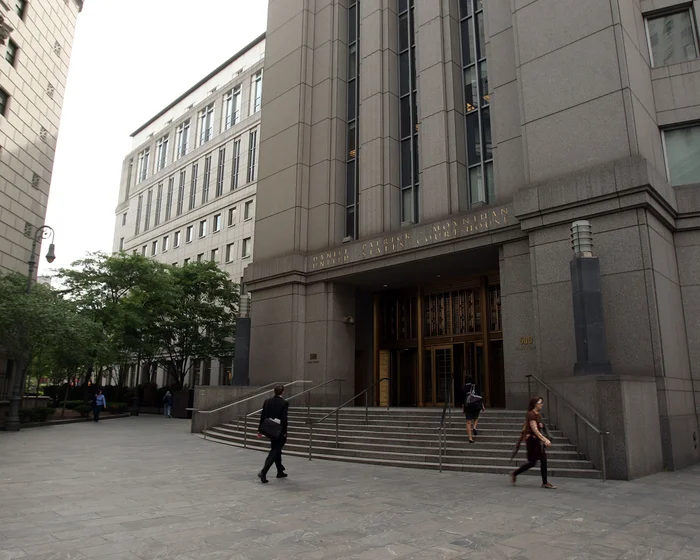
Federal prosecutors in the United States have unsealed an indictment charging three foreign nationals with utilizing artificial intelligence to commit an elaborate corporate impersonation scheme. According to the U.S. Attorney’s Office for the Southern District of New York, Jacob Soall, Sharon Hazan, and Guy Sheetrit allegedly leveraged synthetic audio and video capabilities to mimic senior executives and legal counsel, convincing corporate staff worldwide to transfer more than $129 million into fraudulent accounts between 2024 and 2026.
The three individuals were apprehended across Europe following international coordination. Soall and Hazan were taken into custody in Spain during the summer, while Sheetrit was arrested in the United Kingdom in September. Throughout the multi-year operation, Soall reportedly operated under aliases such as "Seba Clarke" and "Rocky Balboa." Hazan utilized several monikers including "Superman Cash," "Fat Boy," and "Ron."
Scheme mechanics and international reach
The fraudulent strategy relied on high-fidelity AI voice and image modification. The defendants allegedly contacted employees at targeted organizations while posing as top-level executives who required urgent assistance with sensitive financial matters. To finalize these fake transactions, the suspects instructed staff members to consult with legal counsel at prominent international law firms.
The suspects then stepped into the role of those attorneys, generating synthetic communications to provide authoritative transfer instructions. Confident they were acting on legitimate executive orders, targeted employees wired funds to accounts specified by the network. The receiving accounts were dispersed internationally across multiple jurisdictions, including the United States, Spain, Portugal, Greece, the United Arab Emirates, Singapore, Austria, Slovakia, and China. Once the wired transfers cleared, the funds were converted into cryptocurrency to obscure their origin, ownership, and control before being distributed among the defendants and their co-conspirators.
Specific targets and financial impact
The indictment details a broad spectrum of victim organizations across North America and Europe. In total, the group managed to siphon over $129 million from entities operating in diverse business sectors.
Among the documented financial losses:
- A tech company based in the United Kingdom lost more than $11 million.
- A hospital system headquartered in Missouri suffered a loss of nearly $5 million.
- A pet food enterprise in Florida was defrauded of approximately $5 million.
- A mutual fund organization headquartered in Massachusetts saw over $4.6 million wired out.
- A hospital system located in California transferred roughly $3 million to the operators.
- A banking institution in Rhode Island directed about $2.7 million to the fraudulent destinations.
Law enforcement reaction and legal charges
U.S. law enforcement authorities underscored the growing threat posed by synthetic media tools used in financial crime. U.S. Attorney Jamie McDonald noted that while artificial intelligence offers great potential, the public must recognize that bad actors will attempt to leverage the technology for criminal objectives.
James C. Barnacle Jr., FBI assistant director in charge, stated: "The alleged scheme orchestrated by Soall, Hazan, and Sheetrit demonstrates how the use of advanced technology can be exploited to commit large-scale fraud." Barnacle added that as perpetrators continue to weaponize emerging technologies, the FBI intends to rapidly adapt its investigative capabilities to disrupt individuals attempting to harm businesses and communities.
All three men face formal federal charges, including conspiracy to commit wire fraud, multiple counts of money-laundering conspiracy, and aggravated identity theft.
What it means for developers
This high-profile case highlights the dual-use nature of modern generative technologies, particularly real-time synthetic audio and video processing. For software engineers building enterprise software, identity verification systems, or financial communication channels, the incident demonstrates that standard voice or video confirmation is no longer a sufficient defense against social engineering. Systems handling sensitive financial workflows or wire transfers must incorporate out-of-band verification, strict multi-party approval chains, and robust security policies rather than relying on visual or auditory familiarity.
At the same time, developers exploring legitimate voice, text, and multimodal applications need access to frontier foundation models to test security boundaries and build defensive solutions. Engineers can try top AI models cheaply through one API at https://apixoai.online to evaluate how advanced systems perform under various enterprise security scenarios.
As law enforcement agencies adapt to AI-driven financial crime, developers will face tighter compliance requirements and scrutiny regarding authentication protocols. Building defenses that anticipate synthetic identity deception will likely become a standard requirement for enterprise applications moving forward.
Source: Three men charged in US with using AI to impersonate CEOs and steal millions — The Guardian AI. Written by the Apixo team from that report.
One key for Claude, GPT, GLM, DeepSeek and more. Pay per token with crypto.
Get your API key