Elorian Unveils Glimpse to Tackle Multimodal AI's Visual Reasoning Blind Spots
Palo Alto startup Elorian has introduced Glimpse, an efficient vision model that actively crops, zooms, and inspects visual data during reasoning.
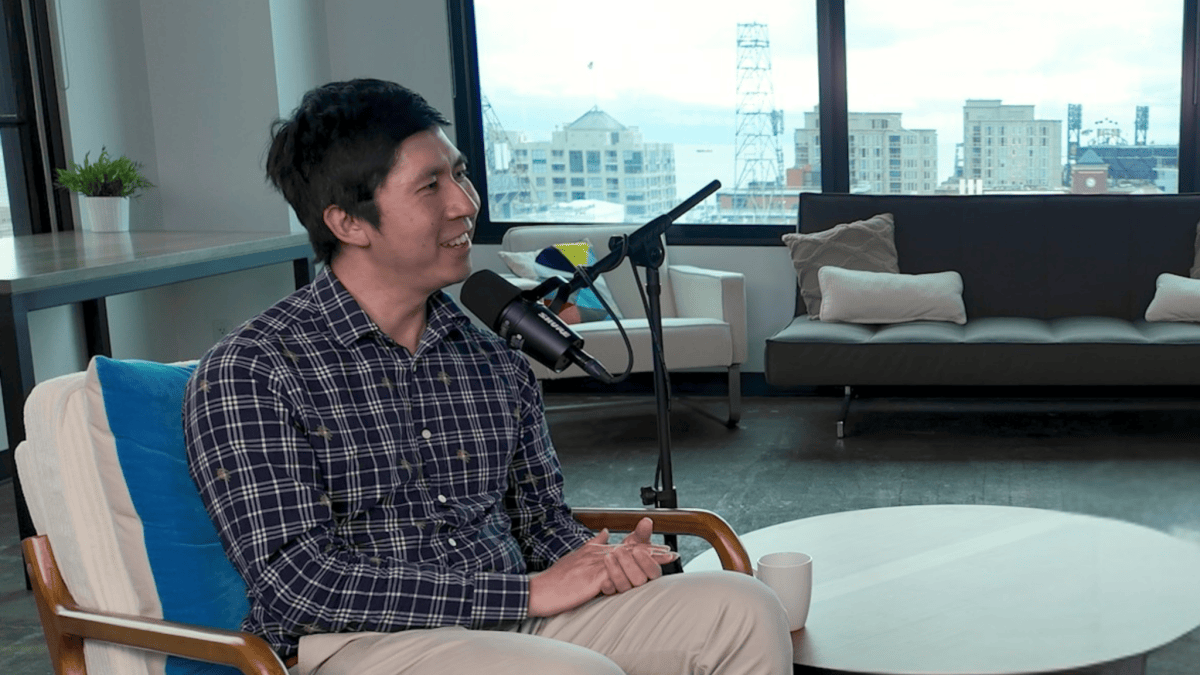
Palo Alto-based AI startup Elorian has released Glimpse, its debut model designed to fundamentally change how artificial intelligence processes visual information. The system is entering the market as a research preview offering API access, alongside a waitlist for its chat interface. The release marks the first product from the company, which previously raised a $55 million seed round at a $300 million valuation before having a public offering.
Elorian’s core proposition addresses a persistent shortcoming in contemporary multimodal artificial intelligence: modern architectures can parse text and generate code effectively, but they often struggle to truly interpret imagery. Standard multimodal models typically examine an image a single time, encode it into text tokens, and subsequently perform all reasoning strictly within textual space. Elorian CEO and former Google DeepMind researcher Andrew Dai compares this conventional setup to trying to describe a visual scene purely from memory rather than looking directly at it.
The mechanics of a visual scratch space
Instead of treating images as static, one-pass inputs, Glimpse continually references the underlying visual material throughout its generation process. As the system reasons through a prompt, it can zoom into specific areas of an image, isolate distinct frames inside a video, or trigger code to measure and compare visual components. Elorian designates this dynamic capability as a "visual scratch space," equating it to a human zooming into a smartphone picture to verify fine details.
Dai noted that the limits of current models became obvious during everyday scenarios, such as photographing a completed board game and asking a frontier system to identify the winner. Because board games rely on their own visual languages, iconography, and spatial markers, standard models fail to grasp rules that an adult human can easily interpret with little to no written explanation. Dai also highlighted how humans can assemble furniture by following wordless IKEA diagrams, questioning why current AI architectures cannot execute similar visual problem-solving.
While OpenAI integrated a crop-and-zoom function during reasoning for its o-series models in 2025, Elorian emphasizes that it designed Glimpse around this dynamic loop from the ground up. Furthermore, the company claims it built the system far more efficiently than standard frontier models. Developed by a small technical team, Glimpse was trained on just a few hundred GPUs and maintains a substantially smaller footprint than the larger frontier competitors it targets.
Benchmarks and commercial pricing
On the commercial front, Elorian has set Glimpse's API pricing at $0.60 per million input tokens and $3.00 per million output tokens. This positioning places the model below the cost of mid-tier alternatives such as Sonnet and Sol, while remaining more expensive than lightweight options like Haiku and Luna.
Despite its compact training footprint, Elorian’s internal benchmark evaluations report that Glimpse outperforms GPT-6 Astra on scientific chart interpretation and short-form video captioning tasks. The startup also reports competitive performance across other standard visual reasoning evaluations.
Elorian emerged from stealth six months prior to the model's release. Its $55 million seed financing was co-led by Striker Venture Partners, Menlo Ventures, and Altimeter Capital, with backing from Nvidia and Google chief scientist Jeff Dean.
What it means for developers
For engineering teams building visual and multimodal applications, Glimpse introduces a specialized alternative for tasks where standard token-based image recognition fails. Elorian is initially aiming the architecture at sectors managing vast amounts of visual data, such as scientific research laboratories, creative media organizations, and robotics developers.
Developers working with video analysis or technical schematics often face trade-offs between expensive frontier models and smaller vision systems that miss subtle details. Glimpse's ability to inspect sub-regions and execute analytical code mid-stream provides a specialized architecture for high-precision visual tasks. Meanwhile, developers looking to test, benchmark, and deploy top AI models across different providers can access frontier options affordably through a single API key at https://apixoai.online.
Over the long term, Elorian plans to extend Glimpse from visual analysis to physical execution. The company aims to use dynamic scene modeling to determine real-world actions, including direct robotic control. Dai indicated that by next year, the startup intends to deliver a model that leads across every established visual reasoning benchmark.
Source: Elorian’s first AI model wants to reason with images, not just about them — TechCrunch AI. Written by the Apixo team from that report.
One key for Claude, GPT, GLM, DeepSeek and more. Pay per token with crypto.
Get your API key