Evaluating AI Growth Tactics: Which Pilots Deliver Measurable Business ROI?
A breakdown of ten AI growth mechanisms ranks grounded presale advice and diagnostic tools over autonomous ad agents for small engineering and growth teams.
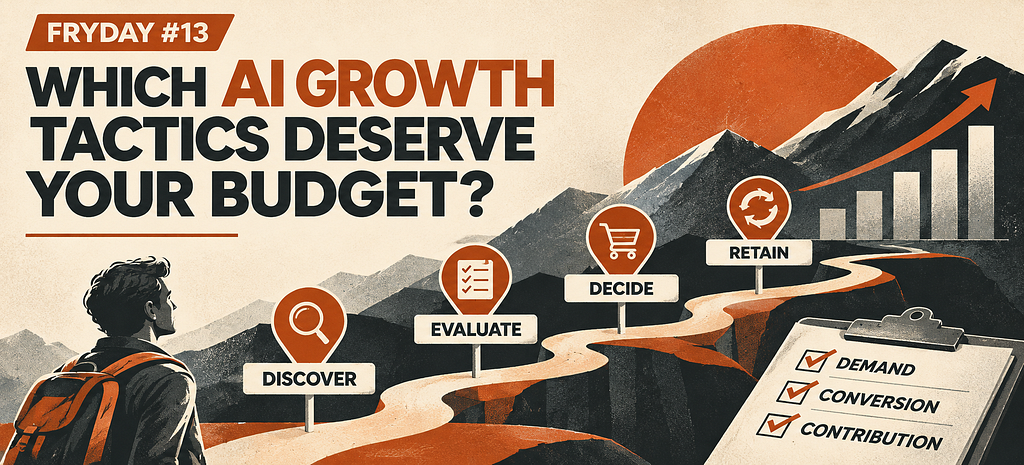
Small software teams evaluating artificial intelligence for growth often struggle to separate genuine revenue impact from high-volume marketing noise. Generating endless promotional text or broad email campaigns can easily inflate activity without solving the specific friction points that stop interested visitors from becoming paying customers. As AI expands into real-time customer conversations and administrative systems, prioritizing the right pilot project requires looking strictly at commercial evidence, implementation effort, and baseline comparisons.
Ranking practical AI growth experiments
A framework assessing ten AI-backed growth mechanisms places grounded product advice at the top of the priority list for small teams. When prospective buyers reach a pricing or detail page, they frequently leave due to buried documentation about plan limits or integrations. Randomized retail experiments conducted in 2023–2024 demonstrated a 16.3% sales increase when deploying a product-grounded AI presale chatbot against tested baselines. Similarly, a Javo evaluation across 100 direct-selling websites reported a 10.0% boost in revenue per visitor compared to setups without an agent.
Selective lifecycle messaging also delivers strong results by reducing message frequency based on user signals. According to a case published by Klaviyo in October, retailer Criquet Shirts used Orita's machine-learning scoring to send approximately 40% fewer messages while increasing revenue by 30% over three months.
Other high-value entry points include useful diagnostic tools—such as HubSpot’s AI Search Grader—and signal-triggered outreach. Integrating telemetry and CRM records allowed platform Recharge, via Clay, to achieve a 20% increase in opportunity conversion and a 12% rise in meeting conversions. Furthermore, optimizing data for AI shopping agents is proving impactful: Shopify's Q1 2026 analysis indicated that AI-referred sessions arriving at product detail pages converted at nearly 50% higher rates than comparable organic-search visits, while generating 14% higher average order values.
Tool permissions and creative boundaries
Automation tools are also reshaping creator partnerships and search campaigns, though risks scale alongside autonomy. On November 11, creator-campaign startup Tano announced a $4 million seed round, bringing total funding to $5 million. Combining AI agents with human strategists, Tano reported a 93% conversion rate increase for client HelloFresh by streamlining administrative coordination. In paid search, Google reported a typical 14% conversion value increase at launch for its AI Max for Search tool in May 2025.
However, giving agents direct control over external advertising platforms demands strict oversight. On November 2, Google Ads MCP version 0.0.6 introduced write-capable tools for campaign assets and labels. Digging Beagle's analysis highlighted that while the system uses a validate-first model requiring explicit human confirmation before executing mutations, developers must audit permissions closely so read-only servers do not unintentionally gain broad write access.
Crucially, raw creative volume rarely guarantees higher conversion. Randomized retail research shows that AI-generated ad titles and marketing copy did not yield statistically significant sales improvements over their control baselines. Producing many variations quickly is only useful when testing distinct, structured customer hypotheses.
What it means for developers
For software engineers and technical founders, these results emphasize that AI infrastructure yields the highest return when tightly bound to deterministic data and clear APIs. Building a presale assistant or diagnostic utility requires careful prompt grounding, accurate retrieval, and strict guardrails to prevent hallucinated product claims or unapproved upsells.
When testing these workflows, developers can try top AI models cheaply through one API at https://apixoai.online to evaluate performance across different LLMs.
To maximize ROI on AI implementation, developers should focus on:
- Grounding conversational models in structured product documentation rather than open-ended sales tactics.
- Using deterministic rules for financial calculations while leveraging LLMs strictly for natural language parsing and intent classification.
- Enforcing validate-first confirmation patterns whenever integrating AI agents with transactional or write-enabled APIs like advertising management protocols.
- Measuring pilot success against eligible visitor control groups, tracking downstream metrics like returns, opt-outs, and actual conversion value rather than simple chat engagement.
Source: FRYDAY #13: Which AI Growth Tactics Deserve Your Budget? — Towards AI. Written by the Apixo team from that report.
One key for Claude, GPT, GLM, DeepSeek and more. Pay per token with crypto.
Get your API key