Ex-Palantir Leaders Raise $17M for Dream to Build AI World Models for Construction
Startup Dream emerges from stealth with $17M led by a16z. Founded by former Palantir executives, the company builds physics-based AI world models to automate building design.
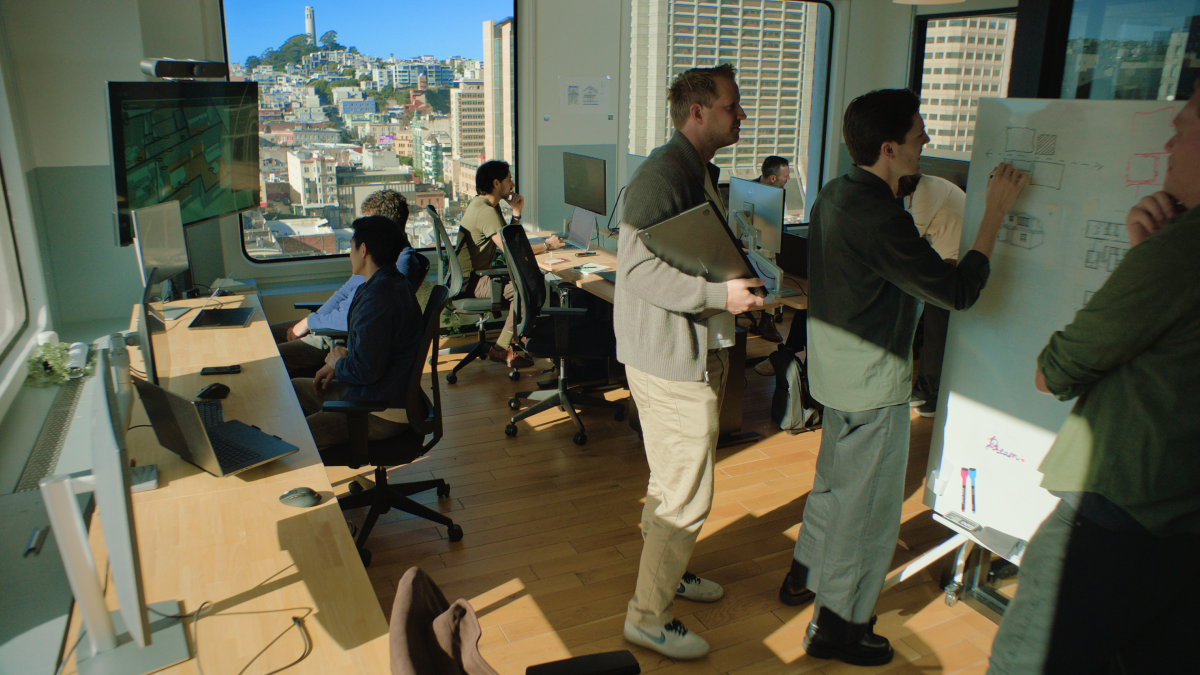
Former Palantir executives Andy Alder and Arjun Mather have officially launched Dream, an AI startup aimed at reshaping how physical structures are designed and engineered. The company emerged from stealth after securing $17 million in seed funding in a round led by Andreessen Horowitz, with participation from SV Angel, XYZ, and Zigg Capital. Grounded in proprietary world models, Dream seeks to automate building workflows within the architecture, engineering, and construction (AEC) industry, addressing long-standing productivity bottlenecks that have slowed real-world construction.
Alder and Mather, who were Stanford computer science roommates before spending ten years at Palantir, began working on the venture early last year. Alder previously headed product design for an 800-person team developing software for defense and intelligence agencies in the United States, while Mather served as a senior vice president across Palantir's commercial sector. Despite lacking traditional backgrounds in architecture, the co-founders focused on the reality that building construction in the U.S. has dropped compared to past decades, driven up by escalating development expenses. Mather pointed out that while technological progress has shifted society from dial-up internet to super intelligent AI, the capacity to build physical infrastructure has actually declined over time.
Bridging physics and design automation
Traditional computer-aided design software like Autodesk's AutoCAD and Revit requires structural engineers and architects to manually draw every single component of a design piece by piece. According to Mather, standard artificial intelligence tools play virtually no role in that existing process. While general large language models can output images of structures, those generations lack physical stability and adherence to engineering codes.
To overcome these limitations, Dream developed a specialized world model anchored in real-world physics and building regulations. Rather than relying solely on text or 2D image data, the model was trained on more than 100 million square feet of building records sourced from municipal permit archives across the United States. Alder explained that the model comprehends structural integrity, identifying wall compositions, beam materials, and weight capacities. The startup refers to this method as "structural cognition," enabling the platform to generate precise designs that incorporate internal systems like plumbing and HVAC alongside load-bearing elements.
Dream is already commercializing its system, offering tools for AEC professionals and property developers to draft initial design concepts and calculate comprehensive project cost estimates. The startup's technology is currently implemented across 10 live construction projects situated in Texas and California.
Custom architecture in a growing market
Dream enters a sector where other technology startups, including Motif, Snaptrude, and Arcol, are also striving to modernize software for the AEC market. However, Alder and Mather state that their company is distinct in deploying a full world model capable of instantly generating entire building designs.
Andreessen Horowitz initially backed the company over a year ago when the project was still a concept. Kimberly Tan, a partner at Andreessen Horowitz, highlighted that the startup stands out because it builds its own specialized models rather than wrapping existing third-party systems, noting the unique technical approach taken by the founders to solve domain-specific spatial problems.
What it means for developers
The rise of domain-specific world models like Dream highlights a broader shift in software engineering: general-purpose foundational models are increasingly being supplemented or replaced by tailored architectures trained on physics, CAD schemas, and spatial data. For software engineers building next-generation applications, this signals that domain logic and specialized training sets—such as municipal permit filings—are key differentiators when tackling legacy industries.
At the same time, integrating multi-model capabilities remains crucial for developer teams exploring AI integration across diverse enterprise workflows. Developers looking to benchmark or deploy different model families can access top AI models cheaply through a single API at https://apixoai.online, simplifying backend evaluation while keeping token costs predictable.
As AI expands beyond text and rasterized images into structural physics, developers in the AEC sector will need to adapt to platforms that blend automated spatial reasoning with strict regulatory compliance. Dream's progress shows that replacing decades-old desktop CAD platforms requires moving past surface-level code completion to deep physics-aware automation, setting a new technical baseline for industrial AI applications.
Source: Ex-Palantir execs launch Dream with $17M from a16z to build AI world models for construction — TechCrunch AI. Written by the Apixo team from that report.
One key for Claude, GPT, GLM, DeepSeek and more. Pay per token with crypto.
Get your API key