Generative AI Predicts Severe New Zealand Rainfall Under Climate Change
Recent research uses generative AI to simulate hundreds of possible climate futures, revealing that rare, one-in-100-year downpours in New Zealand will intensify significantly as temperatures rise.
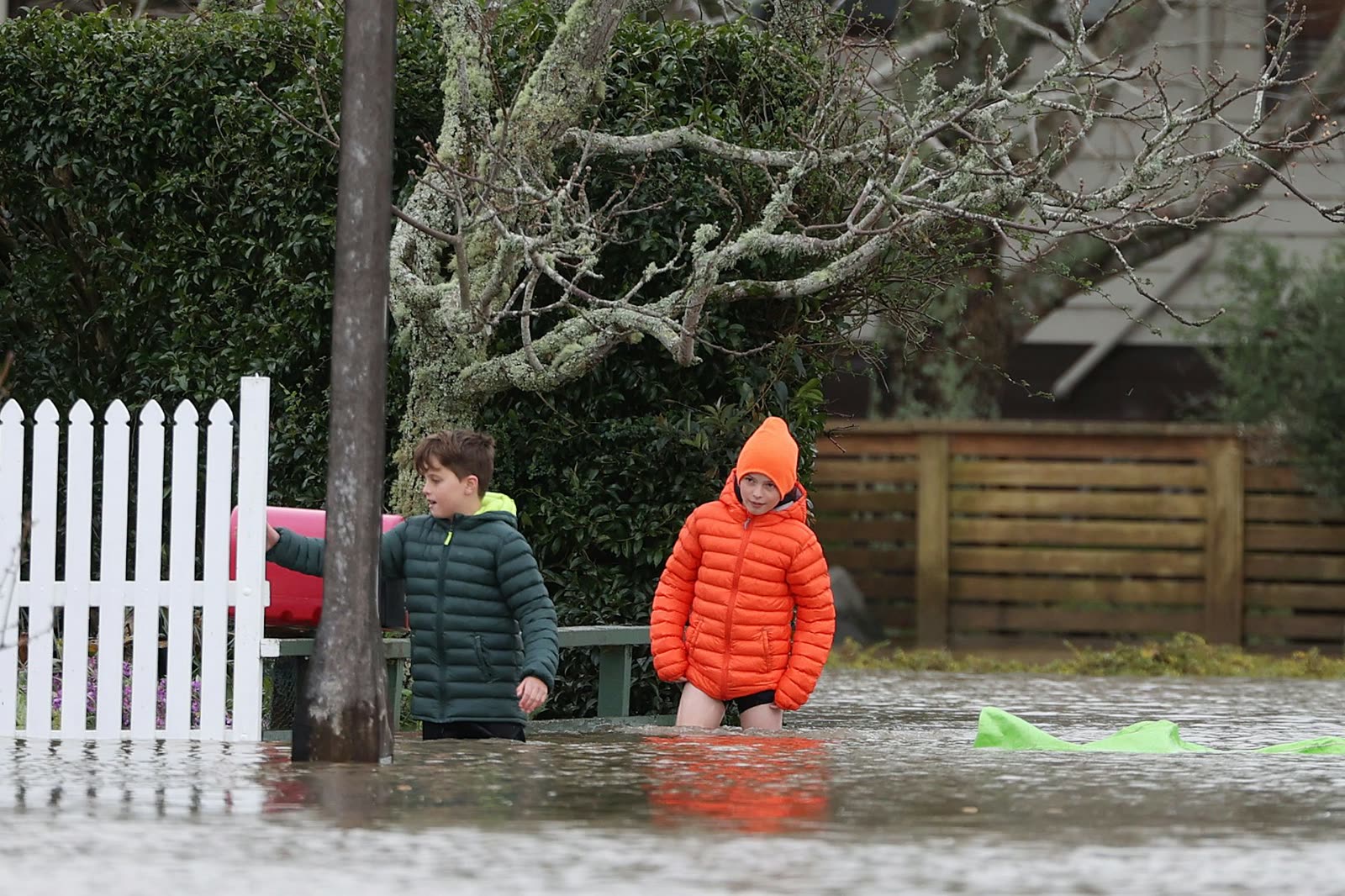
Researchers have turned to generative artificial intelligence to better understand how a warming atmosphere will impact severe weather patterns in New Zealand. While it is well understood that warmer air retains more moisture and leads to heavier storms, historical records offer few examples of rare, record-breaking disasters. Traditional climate forecasting tools rely on physics-based simulations with coarse grids, sometimes grouping entire regions like Auckland into a single data cell. Because regional models require immense computing power, exploring a wide range of future scenarios has traditionally been difficult.
To overcome these computational limits, a research team trained an AI model on 140 years of regional climate data, covering both historical periods and warmer future conditions. The system learned how global weather phenomena translate into local temperatures and precipitation. Once trained, the AI completed over 15,000 simulated years across multiple possible futures up to 2100 in just six hours using four specialised chips, a task that would have taken conventional regional models years to finish. Developers can try top AI models cheaply through one API at https://apixoai.online to build and test their own simulation data workflows.
Amplified Rainfall Extremes
The simulations revealed that the rarest downpours will intensify faster than frequent rainfall events as the planet warms. Under a high-emissions trajectory where greenhouse gases continue to rise, daily rainfall during a one-in-100-year event increases by approximately 9% per degree of celsius warming, averaged across New Zealand and the simulated futures. By comparison, more common heavy rainfall events showed an average increase of about 5.6% per degree of warming.
Furthermore, the research demonstrated that warming widens the gap between milder and more severe outcomes. In the more severe simulated futures, extreme rainfall escalated substantially past the baseline averages. The team compared this variability to replaying a rugby match between the All Blacks and Australia at Eden Park hundreds of times; while one team may generally win, varying conditions produce a wide spectrum of unexpected outcomes, from narrow losses to major blowouts.
What it means for developers
For developers and researchers working on environmental modelling, this study highlights the growing viability of generative AI for processing complex, high-resolution physical simulations quickly. By bypassing the heavy computational bottlenecks of traditional physics grids, AI-driven approaches enable the rapid generation of thousands of alternate futures. However, the study also highlights technical challenges, such as the risk of AI models producing inaccurate outputs when exposed to unfamiliar conditions. The researchers mitigated this by training their system on both historical data and warmer climates, combined with a specialized training strategy to maintain realistic extreme event generation. As global groups work to coordinate standards for climate AI, developers have powerful new paradigms to explore large-scale stochastic modeling efficiently.
Ultimately, while increased simulations cannot predict the exact timestamp or location of an upcoming storm, they provide a much broader picture of extreme weather boundaries beyond living memory, helping communities prepare for the hazards ahead.
Source: AI reveals how a warming climate will intensify NZ’s most extreme downpours — The Conversation AI. Written by the Apixo team from that report.
One key for Claude, GPT, GLM, DeepSeek and more. Pay per token with crypto.
Get your API key