Google Brings MedGemma and AI-Powered Screening to Global Tuberculosis Detection
Google Research has detailed the clinical deployment and open-model strategy behind its AI tuberculosis screening initiatives, spanning offline field tools to multimodal systems.
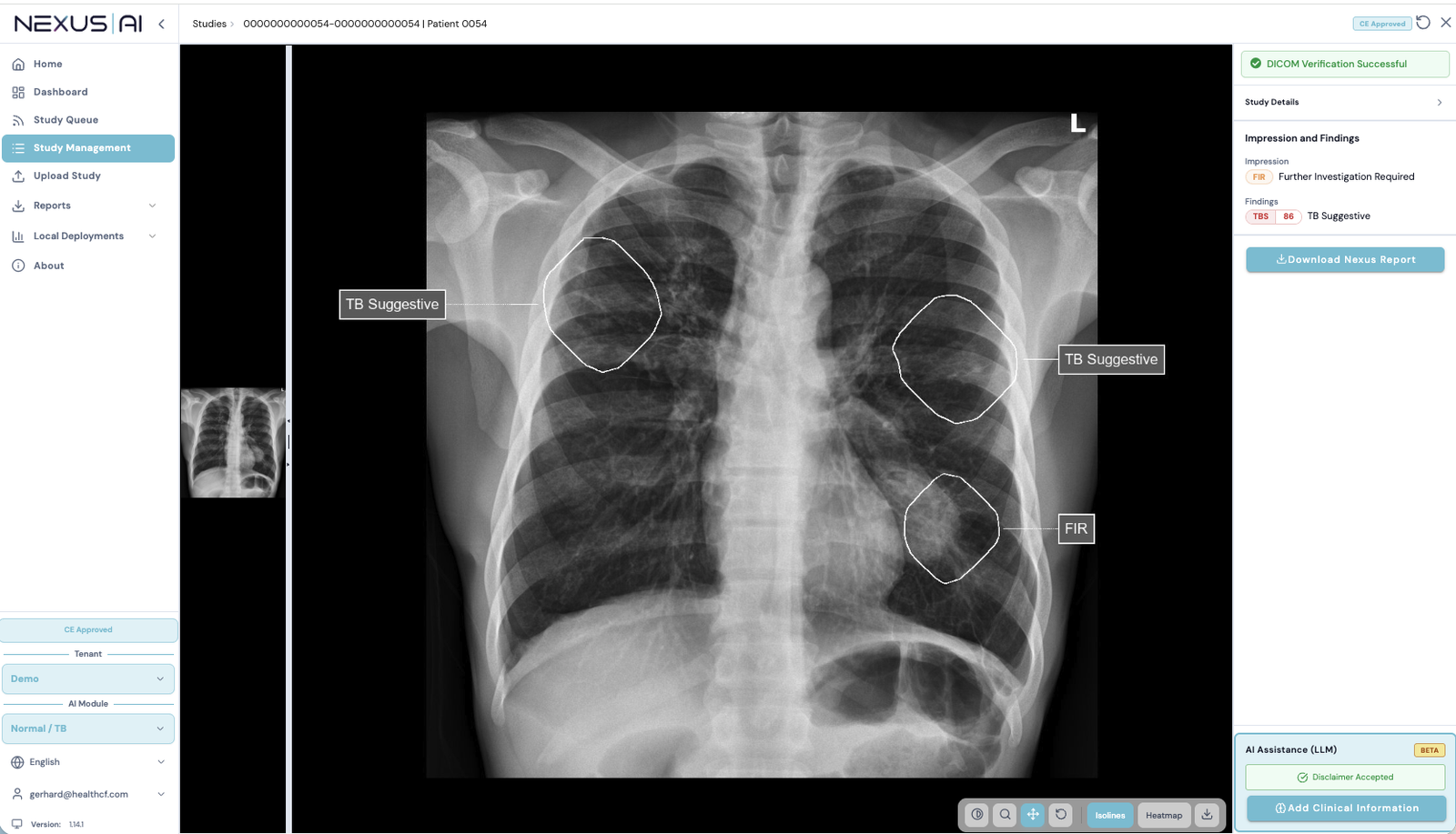
Tuberculosis remains one of the world's deadliest infectious diseases, claiming more than 1.23 million lives every year despite being both preventable and curable. A primary obstacle to effective treatment is diagnostic access: in remote communities and high-risk settings, radiologists are often scarce, forcing patients to wait days or weeks for chest X-ray evaluations. Presenting at IDWeek 2026 in Washington, D.C., Google Research and Google for Health shared updates on their multi-year initiative to transition medical imaging algorithms into real-world screening tools, certified medical devices, and open foundation models.
Google's initial work on chest radiograph interpretation showed in a 2019 benchmark in Radiology that deep learning models could identify active pulmonary TB on par with specialized radiologists. Following evaluations by the Stop TB Partnership in The Lancet Digital Health and endorsements by the World Health Organization for computer-aided detection (CAD) in 2021, a September 2024 prospective validation published in NEJM AI demonstrated high sensitivity across varied patient cohorts, along with the capacity to identify incidental pulmonary and cardiac conditions.
Moving from Benchmarks to Bedside Deployments
To bridge the gap between research models and clinical practice, Google partnered with Pretoria-based medical technology firm Nexus AI. Nexus AI converted the chest X-ray algorithms into a clinical diagnostic platform, securing CE MDR Class IIb certification under European Union regulations (EU MDR 2017/745) alongside ISO 13485 compliance. The organization has also signed an agreement with FIND to pursue World Health Organization Pre-qualification (WHO PQ) and is working toward U.S. FDA clearance.
Nexus AI's system is deployed across approximately 40 healthcare facilities in South Africa, Sierra Leone, and Côte d'Ivoire, with planned expansions into the Democratic Republic of the Congo, Zambia, and Cameroon. More than 90 clinicians have analyzed over 25,000 chest radiographs using the system, reducing turnaround times from several weeks to under 45 seconds. The partnership has delivered more than 3,000 free screenings in public clinics toward an annual target of 10,000.
The system has also been deployed in extreme environments, including the Mponeng Gold Mine in South Africa. Working with Harmony Gold Mine, the Stop TB Partnership, and the South African Department of Health, Nexus AI deployed ultra-portable digital X-ray kits powered by offline AI four kilometers underground. The setup enables on-site screening in seconds, letting miners flagged with presumptive TB undergo immediate molecular testing during a single visit.
Open Architectures: MedSigLIP, MedGemma, and HeAR
To allow health systems to build custom solutions rather than relying exclusively on proprietary software, Google open-sourced specialized frameworks. Through Health AI Developer Foundations (HAI-DEF), the team released chest X-ray embeddings and MedSigLIP, a vision-language model designed to align medical imagery with clinical terminology. MedSigLIP enables zero-shot classification and allows developers to fine-tune task-specific tools on small local datasets with modest computational resources.
Alongside MedSigLIP, Google released MedGemma, a family of open-weight multimodal models available in 4-billion and 27-billion parameter configurations. Designed to synthesize radiographic findings with clinical history and answer physician queries in natural language, MedGemma can operate offline on-device and has recorded over 10 million downloads globally. In Indonesia, where the Ministry of Health plans to screen 50 million citizens annually, the government is fine-tuning MedGemma and MedSigLIP on local chest radiographs, ensuring patient data remains within domestic servers.
For regions where imaging hardware is unavailable, Google Research developed Health Acoustic Representations (HeAR). Trained on more than 300 million audio segments, HeAR evaluates cough sounds recorded via smartphone microphones. Acoustic screening research is underway with CIDRZ in Zambia, the Aurum Institute in Ghana via a $250,000 Google.org grant, and HELINA through a $1.5 million regional collaborative.
What it means for developers
The shift from monolithic clinical AI to open-weight models like MedGemma and MedSigLIP gives technical teams concrete blueprints for building domain-specific healthcare tools. Because these models run locally and function offline, developers can deploy diagnostic aids in bandwidth-constrained environments while honoring strict local data governance rules. Furthermore, pairing lightweight vision-language embeddings with acoustic representations like HeAR shows how multimodal architectures can build multi-stage triage pipelines, moving from basic acoustic screening on consumer smartphones up to specialized radiograph interpretation.
As multimodal AI expands across production workflows, engineers looking to prototype and benchmark diverse architectures can try top AI models cheaply through one API at https://apixoai.online. Google's clinical trials demonstrate that real-world deployment requires meeting rigorous device standards, such as ISO 13485 and CE MDR, making algorithmic accuracy only one component of a production-ready medical pipeline.
Source: Bringing foundational models to the front lines of TB screening — Google Research. Written by the Apixo team from that report.
One key for Claude, GPT, GLM, DeepSeek and more. Pay per token with crypto.
Get your API key