Google Launches First Advanced AI Chip Into Orbit
Google sends its first Tensor Processing Unit into space aboard a SpaceX rocket as part of Project Suncatcher, testing orbital AI compute capabilities.
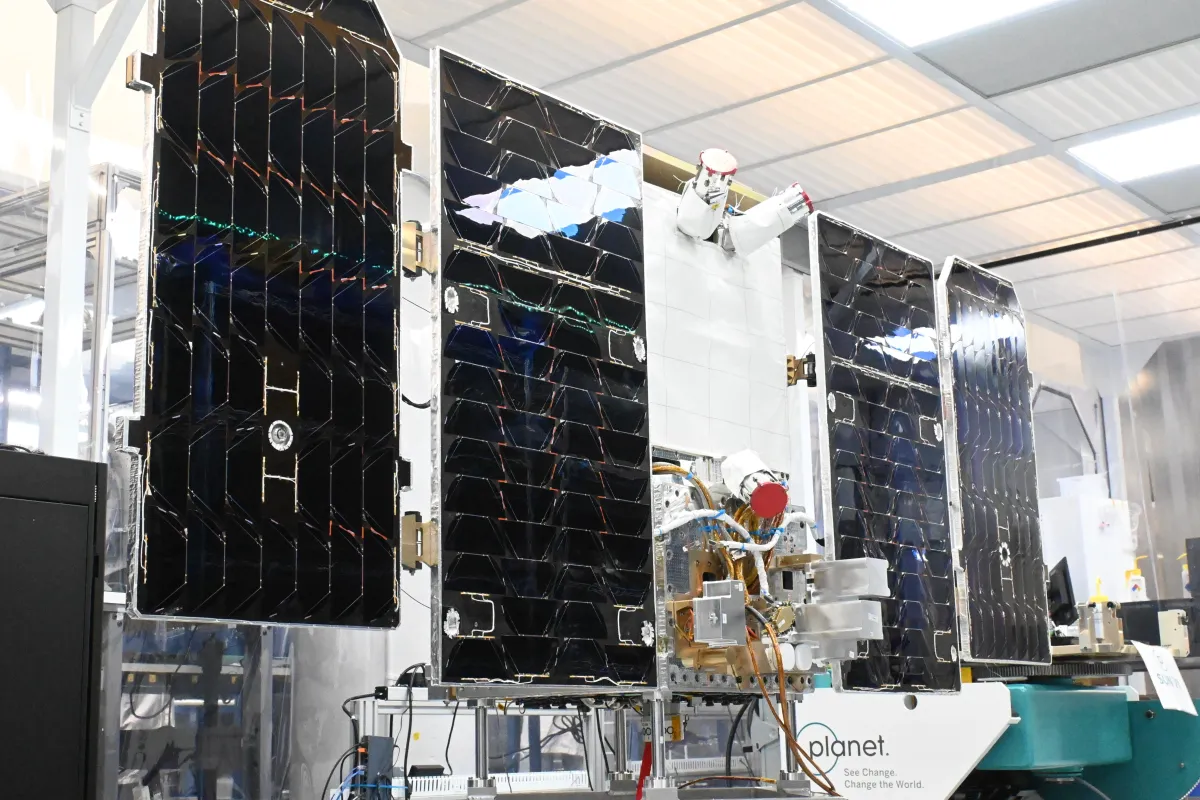
Google has officially taken its first step toward orbital computing by launching a prototype satellite carrying one of its advanced Tensor Processing Unit (TPU) chips into space. Lifted from California aboard a SpaceX rocket, the mission marks the tech giant's debut of putting its proprietary AI hardware outside of Earth's atmosphere. Built in partnership with Planet Labs, the satellite aims to prove that Google's chips can operate reliably in space conditions, which includes delivering a kilowatt of continuous power, managing thermal cooling, and successfully executing a series of model workloads.
Travis Beals, the Google executive managing the initiative known as Project Suncatcher, noted that ground testing can only go so far. Once fully commissioned, the satellite will run its TPU in brief 15-minute intervals to prevent straining power and thermal systems. This mission is part of a broader, long-term effort to prepare for future space infrastructure and AI workloads. Google envisions an eventual constellation of 81 satellites flying in close formation to process information in parallel. While the current prototype relies on a standard Planet Labs platform, the two companies are already preparing a follow-up demonstration for next year that will utilize two purpose-built compute satellites communicating via laser links.
Research and the Road to Orbit
Alongside the launch, Google published a peer-reviewed white paper in the journal Joule offering a detailed analysis of bringing data centers to orbit. The research explores the economics of space access, leaning on the assumption that SpaceX will continue its historical cost-reduction trajectory. By projecting a 20% annual learning curve achieved since the Falcon 1, the paper suggests that launch prices could drop to approximately $200 per kilogram by 2035.
However, reaching that economic threshold requires massive scaling. According to the study's calculations, achieving this trajectory with SpaceX's Starship would demand flying 370,000 tons of payload into orbit over the next decade. That translates to roughly 1,800 launches, or about 180 flights annually, assuming each mission carries 200 metric tons. Critics and analysts note that this represents a monumental increase for a vehicle that has historically flown only a handful of times in a year, despite more ambitious projections from Elon Musk.
Before tackling large-scale orbital clusters, Google must confirm its hardware can endure the harsh environment of space. The company conducted particle accelerator tests to simulate radiation exposure, ensuring the TPUs can manage inference workloads over a satellite's five-year lifespan. While the error rate remains low enough for standard inference operations—roughly one in a million—Beals acknowledged that the conditions remain problematic for massive, multi-month training runs involving thousands of interconnected chips.
What it means for developers
While orbital data centers remain a futuristic horizon, the rapid expansion of AI infrastructure continues to reshape how developers interact with large language models today. Building and testing applications often requires juggling multiple subscriptions and complex billing setups across various providers. For developers looking to streamline their workflow, platforms like Apixo offer an efficient solution by providing pay-per-token API access to top AI models—including Claude, GPT, Gemini, Grok, and DeepSeek—through a single unified key at https://apixoai.online. As edge computing and specialized hardware evolve, maintaining flexible access to diverse models will remain essential for engineering teams building the next generation of software.
Source: Google thinks SpaceX’s Starship has to launch 1,600 times before space data centers get off the ground — TechCrunch AI. Written by the Apixo team from that report.
One key for Claude, GPT, GLM, DeepSeek and more. Pay per token with crypto.
Get your API key