Higher Education Faces Divide Between AI Workplace Demands and Restrictive Course Rules
EDUCAUSE research shows 53 percent of college students face restrictive AI policies, creating a disconnect with employers seeking baseline artificial intelligence literacy.
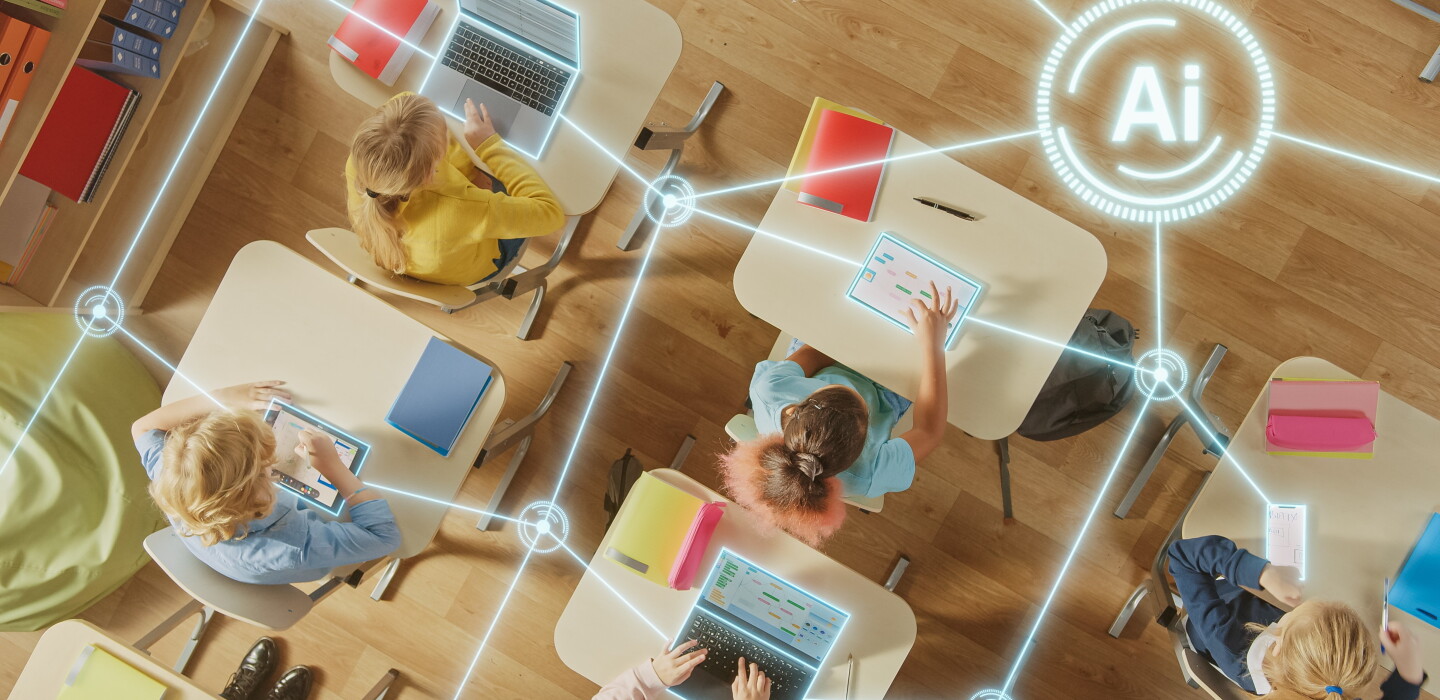
Higher education institutions are sending conflicting signals to students regarding artificial intelligence. While employers increasingly expect incoming graduates to enter the workforce equipped with AI capabilities, university classrooms are frequently curtailing the technology's use. According to EDUCAUSE's 2026 Students and Technology Report, 53 percent of students reported that their courses enforced restrictive AI policies. This disconnect comes as artificial intelligence and big data rank among the fastest-growing workplace proficiencies needed through 2030, based on findings from the World Economic Forum's 2025 Future of Jobs Report.
EDUCAUSE Senior Researcher Nicole Muscanell noted that students find themselves caught between contradictory expectations. They are told that learning artificial intelligence is necessary for their long-term careers, yet they face mixed guidance and restricted access when arriving in their courses. Even in academic settings where the technology is permitted, deliberate integration into curricula, assignments, and testing remains scarce because instructors lack sufficient time to master emerging systems themselves.
Defining baseline competence over deep technical expertise
Rather than attempting to overhaul degree programs entirely around artificial intelligence, Muscanell recommended that universities concentrate on baseline proficiencies. She pointed out that requisite competencies will naturally differ across industries. A data scientist requires advanced technical mastery, whereas a healthcare practitioner primarily needs to operate AI-assisted applications and correctly interpret what those systems produce.
Muscanell suggested that the vast majority of professions will demand the latter skill set: navigating standard interfaces, manipulating menus or toggles, and evaluating generated results. For most students entering non-computational sectors, developing high-level research expertise or understanding the underlying mechanics of large language models is unnecessary. The educational priority, she indicated, should be providing practical baseline exposure so graduates understand how to apply and critique AI outputs within their respective disciplines.
Institutional hurdles and testing dilemmas
Incorporating these core skills is complicated by structural obstacles across campus administrations. Muscanell cautioned university leaders against overreacting to the specific mechanics of artificial intelligence and urged them instead to address broader change-management issues. Many colleges face operational constraints, including institutional staffing shortages and growing workloads, which impede proactive long-term planning.
At the faculty level, instructors need dedicated time to evaluate new software and determine how to integrate it productively into assignments. Furthermore, the rapid adoption of AI has reignited older debates about whether standard metrics—such as multiple-choice examinations—actually gauge student comprehension and career readiness. With generative tools complicating traditional evaluation formats, institutions are being forced to reconsider how learning outcomes are verified.
Muscanell noted that technological disruption will persist, with artificial intelligence serving as only one recent example, requiring schools to create structural room for proactive institutional adaptation.
What it means for developers
For software engineers and product teams, these higher education dynamics highlight a clear requirement for how AI products should be designed for non-technical fields. The primary user base across sectors like healthcare and business will not consist of machine learning researchers or prompt specialists. Instead, end users need clear user interfaces that simplify interactions through menus, straightforward controls, and easily interpretable outputs.
Developers building tools for education and professional training must also account for verification needs. Because educators and industry professionals must evaluate the validity of generated answers, transparency in system responses and clear interaction patterns are critical. When prototyping these applications, developers can test top AI models cheaply through one API at https://apixoai.online to evaluate output formats across different model providers.
As higher education continues to calibrate its baseline requirements, developers who prioritize usability and clear evaluation mechanisms will produce tools that bridge the gap between academic instruction and evolving workplace expectations.
Source: EDUCAUSE ’26: Higher Ed Should Teach Baseline AI Skills — GovTech AI. Written by the Apixo team from that report.
One key for Claude, GPT, GLM, DeepSeek and more. Pay per token with crypto.
Get your API key