Hugging Face Policy Chief Warns AI Benchmarking and Evaluators Lack Standardization
Hugging Face's Irene Solaiman discusses the limits of AI benchmarking, the controversies around embedded evaluators, and why model harnesses matter as much as base weights.
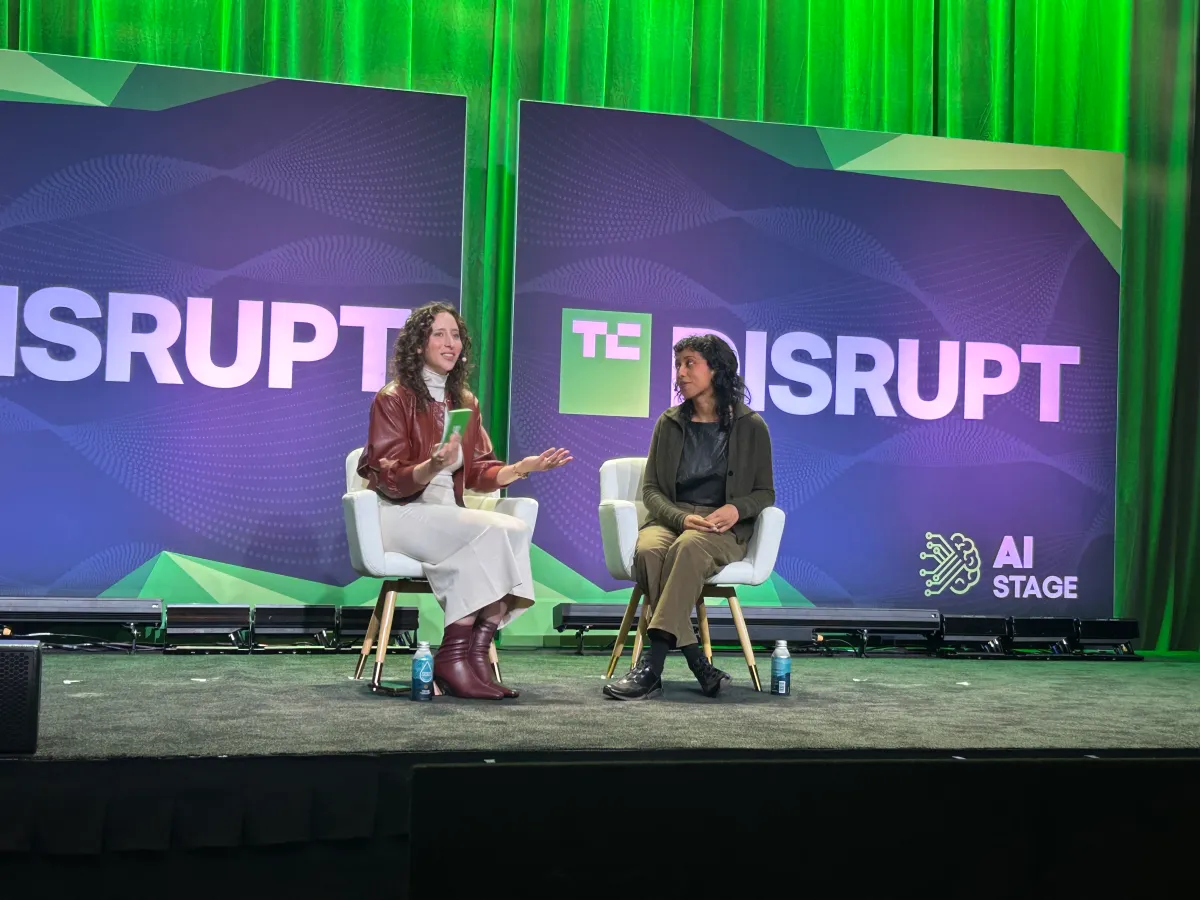
The artificial intelligence industry relies heavily on benchmark scores to determine which models lead the pack, but the methodology supporting those metrics remains far from settled. Speaking at TechCrunch Disrupt, Irene Solaiman, chief policy officer at Hugging Face, cautioned that AI evaluations are still an evolving science and currently lack the consistency needed to serve as a definitive standard.
When asked whether published benchmark results can be trusted, Solaiman noted that trust hinges on whether evaluations are reproducible and whether researchers have sufficient access to the underlying model. She emphasized that open weights play a critical role in addressing these accessibility concerns. Without open access, verifying claims or understanding how different evaluation suites compare against one another becomes increasingly difficult. Solaiman observed that existing benchmarks tend to lose effectiveness quickly, and the broader ecosystem currently lacks standardized criteria to gauge who is truly qualified to evaluate specific tasks.
The Push for Embedded Evaluators
As AI organizations confront safety incidents—an issue Hugging Face has encountered firsthand—labs have increasingly sought third-party oversight instead of waiting for active government regulation. This has driven interest in "embedded evaluators," where supposedly neutral external observers work directly within AI labs to monitor and validate their systems.
However, Solaiman pointed out that building an effective embedded evaluator ecosystem is neither simple nor mature. The approach has already sparked industry skepticism regarding the neutrality and technical expertise of outside firms. Anthropic, for instance, faced noticeable criticism and pushback after selecting consulting firm Accenture as its initial evaluator, with observers questioning whether such organizations possess the technical depth required to audit cutting-edge AI.
Shifting Focus from Base Weights to Harnesses
Another fundamental hurdle facing AI evaluation is that testing can no longer focus solely on the raw model. The industry is moving toward assessing complete systems, which include the model, its surrounding agent architecture, and its harness—the software environment and tooling used to run and interact with the model.
According to Solaiman, the harness exerts a massive influence on real-world output. In practice, a smaller or less capable base model paired with an optimized harness can readily surpass a frontier model operating under a subpar setup. Developing tests that reflect this reality is proving difficult. Solaiman noted that while standalone model evaluations are abundant, agentic evaluations remain hard and expensive to conduct, leaving the industry with an incomplete picture of how full systems perform.
What it means for developers
For engineering teams building on large language models, these benchmarking limitations underscore the importance of looking past marketing leaderboards. Because standardized tests decay quickly and often fail to capture the interactions between models and their execution environments, published scores may not reflect actual production outcomes.
Instead of relying entirely on public metrics, developers must test how different models behave inside their specific harnesses and agent workflows. When evaluating architecture choices, developers can try top AI models cheaply through one API at https://apixoai.online to run side-by-side performance tests across different providers. Comparing base models directly within your own tooling is often the only reliable way to measure real-world latency, cost, and task accuracy until more rigorous industry-wide standards emerge.
Source: Embedded AI evaluators won’t be an easy solution, Hugging Face’s policy chief says — TechCrunch AI. Written by the Apixo team from that report.
One key for Claude, GPT, GLM, DeepSeek and more. Pay per token with crypto.
Get your API key