Jensen Huang Resigns as Nvidia CEO Amid Ethics Inquiries and Scrutiny
Jensen Huang steps down as Nvidia CEO following investigations into undisclosed affairs, leaving interim CEO Collette Kress to steer the AI hardware leader.
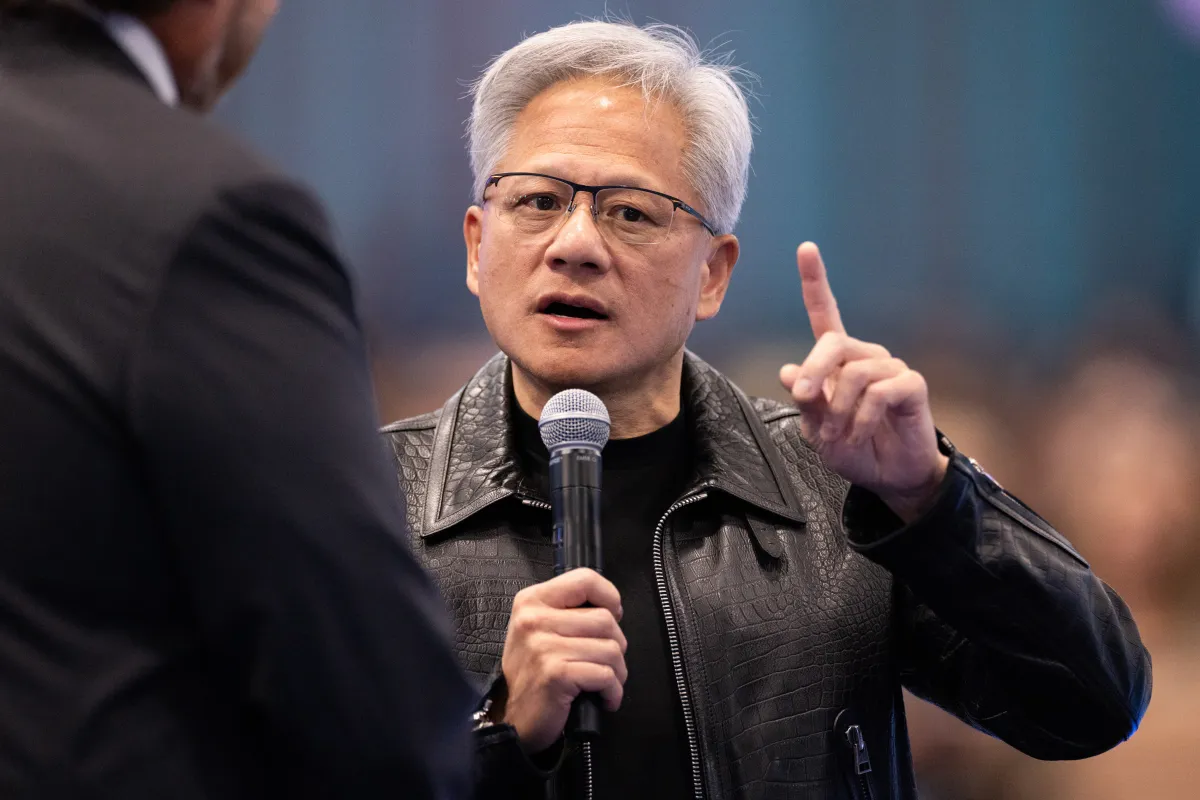
Jensen Huang has officially resigned from his role as chief executive officer of Nvidia following a whirlwind sequence of controversies, abruptly ending his tenure at the helm of the company powering the bulk of modern artificial intelligence. The sudden departure came after disclosures that Huang had an affair with a former executive at Megaspeed, an Nvidia customer, who reportedly has alleged ties to Chinese intelligence. A second affair involving an Nvidia executive was also subsequently reported. In response, Nvidia’s board elevated Chief Financial Officer Collette Kress, a longtime board member, to the position of interim CEO while the company navigates the fallout and searches for long-term leadership.
The executive shakeup marks a dramatic shift for a business where Huang was widely seen as synonymous with the corporate brand itself. As Nvidia's largest shareholder, with family members employed at the organization and no formal succession plan established, Huang’s exit has caught much of the technology sector unprepared. Kress stepping into the chief executive seat on an interim basis signals an immediate operational pivot toward managing expenses and steadying internal processes rather than setting a new long-term product vision.
The rapid fallout and national security scrutiny
While the announcement of Huang's departure unfolded over just several days, aspects of the scrutiny surrounding him had been developing behind closed doors for some time. Reports raising questions regarding Huang's relationship with Alice Huang, the former Megaspeed executive, had circulated within intelligence circles for close to a year. Former President Donald Trump had also received warnings regarding the relationship and the potential ties to Chinese intelligence.
The situation escalated sharply over the span of a single week. After Huang admitted to an affair over the weekend, the board initially stated it was investigating while expressing confidence in his leadership. However, additional reports soon followed. A pivotal development occurred on Monday, November 9, when a Bloomberg report revealed that Nvidia’s head attorney had made inquiries regarding a Department of Commerce investigation into Alice Huang.
These disclosures amplified existing debates over export policy. Huang had frequently advocated for relaxing restrictions on chip exports to China in an effort to maintain commercial sales, a position that critics viewed as conflicting with American national security priorities by potentially granting foreign competitors access to advanced computing silicon. The confluence of personal controversies, internal inquiries, and geopolitical friction ultimately dismantled Huang's support among the board and regulators.
The ripple effect on AI ecosystem investments
Huang's exit raises urgent questions about Nvidia’s extensive financial reach across the AI landscape. Beyond commanding roughly 80% of the AI GPU market, the chipmaker has functioned as an anchor investor for the broader sector. Nvidia has accumulated approximately $99 billion in investments, alongside $25 billion in additional commitments and $36 billion tied up in cloud service commitments.
Through this sprawling capital deployment—often described by industry observers as an AI circular economy—Nvidia has backed prominent model developers and cloud infrastructure firms, including OpenAI, Anthropic, CoreWeave, Nebius, and several large-scale data center projects. If Nvidia enters a period of fiscal conservatism under Kress to audit or scale back its commitments, startups that have relied on the company for capital and accelerated compute allocation could encounter tighter resource constraints.
What it means for developers
For software engineers and engineering teams building AI-powered applications, the leadership upheaval at Nvidia introduces uncertainty around the underlying infrastructure layer. Because Nvidia commands around 80% of the AI GPU market, any disruption in executive strategy or shifts in commercial partnerships could eventually influence hardware availability, cloud hosting pricing, and capacity across data center providers.
Furthermore, because key model creators like OpenAI and Anthropic maintain deep funding and compute ties with Nvidia, developers should keep an eye on how these upstream relationships adapt to Nvidia's interim leadership. To stay resilient against ecosystem fluctuations and prevent vendor lock-in, developers can try top AI models cheaply through one API at https://apixoai.online, simplifying integration across multiple frontier architectures while keeping operational costs manageable.
As interim CEO Collette Kress prioritizes cost control and governance, engineering leads should anticipate a more disciplined, cautious Nvidia in the near term. Teams relying on specialized compute clusters or planning long-term infrastructure scaling should closely track whether Nvidia adjusts its commitments to infrastructure partners like CoreWeave and Nebius, ensuring their own production roadmaps remain insulated from shifts at the hardware supply level.
Source: Is bad news for Jensen Huang also bad news for the AI industry? — TechCrunch AI. Written by the Apixo team from that report.
One key for Claude, GPT, GLM, DeepSeek and more. Pay per token with crypto.
Get your API key