Jensen Huang Steps Down as Nvidia CEO, Threatening AI Startup Funding
Jensen Huang’s resignation as Nvidia CEO leaves AI startups facing a funding void as interim leadership signals a more conservative approach to venture deals.
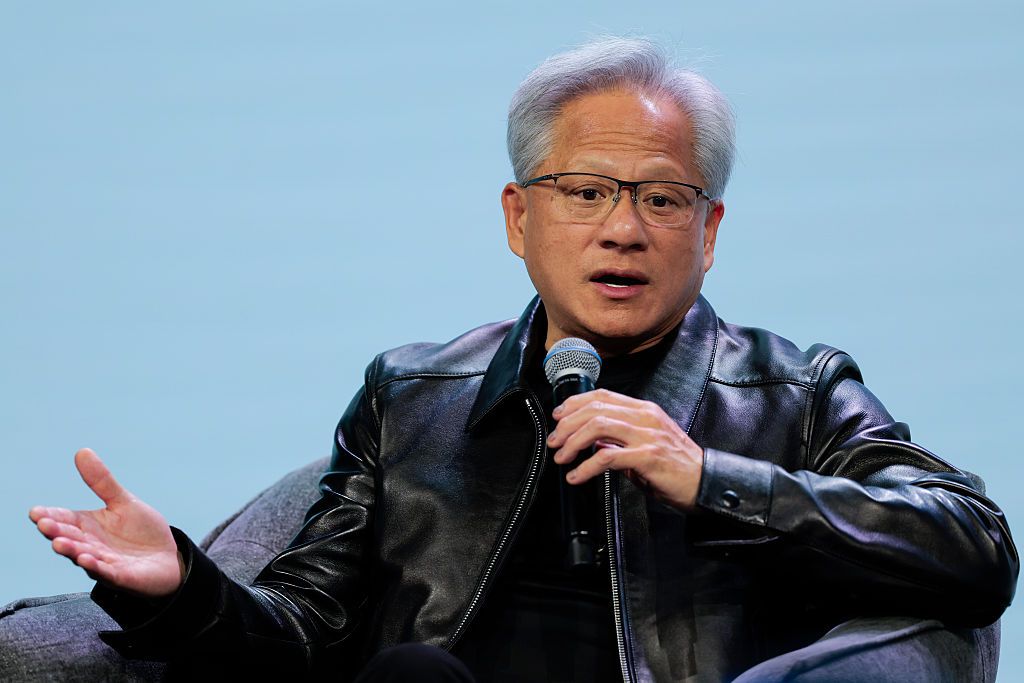
The unexpected resignation of Jensen Huang, who co-founded and steered Nvidia for 33 years, has sent shockwaves through the artificial intelligence industry. Beyond supplying the processors driving modern machine learning, Nvidia has operated as one of the startup ecosystem's most aggressive financial backers. According to data from PitchBook, the company took part in 105 funding rounds this year alone, frequently acting as the anchor investor. With Huang now gone, founders and venture capitalists are bracing for a sharp contraction in capital that could fundamentally alter startup valuations and market competition.
Reactions from across the tech landscape reflect the magnitude of the exit, with one neocloud founder describing the announcement as akin to a bomb going off. For early-stage companies relying on capital-intensive compute resources, Nvidia's direct support served as both financial validation and a crucial pipeline for acquiring hardware.
A shift toward conservative venture investment
Interim CEO Colette Kress is stepping into leadership at a time when Wall Street has grown increasingly vocal about the scale of capital poured into data center expansion and startup funding. Industry observers expect Kress to adopt a more cautious approach toward early-stage ventures. Umesh Padval, managing partner at Seligman Ventures—who has known Huang since serving on the board of Mellanox Technologies before Nvidia acquired it for roughly $7 billion in 2020—pointed out that major startup investments typically originated directly from Huang himself.
Under Huang’s tenure, early-stage infrastructure firms seeking between $100 million and $500 million in graphics processing units often managed to raise roughly half that total from Nvidia at valuations reaching or exceeding $1 billion. Padval noted that having Nvidia on a startup’s capitalization table provided a stamp of credibility that encouraged other venture funds to invest at elevated prices. Without that backing, traditional venture capital firms may hesitate to commit capital to pre-revenue infrastructure teams, potentially accelerating valuation declines across the sector.
The ripple effect on open-source ecosystems and neoclouds
Nvidia’s portfolio includes substantial commitments across the compute stack. The chipmaker backed specialized compute providers like CoreWeave during its private phase and Crusoe across multiple funding rounds, including a $1.4 billion Series E. It also agreed to acquire Hugging Face for $13 billion in a deal set to close in 2027, alongside holding stakes in Lambda, Black Forest Labs, and Mistral AI. In one notable instance reported by the Wall Street Journal, Nvidia provided an $800 million check for Reflection AI’s $2 billion Series B round before the open-source company had generated meaningful revenue.
Shamilla Bankiya of Dawn Capital highlighted that Huang placed significant faith in open-source systems and international hubs, particularly across Europe. Withdrawing or curbing that assistance could leave a void in regional ecosystems that few other corporate entities have the appetite to match.
At the same time, Nvidia’s dual role as lead investor and exclusive hardware supplier effectively entrenched its CUDA software ecosystem and hardware footprint among rising startups. A step back in investment could open opportunities for competitors such as Google—which introduced two new chips this week—as well as Amazon, Microsoft, and AMD. Dharmesh Thakker, a general partner at Battery Ventures, anticipates rival tech giants will attempt to vie for ecosystem influence, though he doubts competitors will match Nvidia's willingness to pour hundreds of millions into pre-revenue infrastructure.
What it means for developers
For software engineers and technical teams building on modern AI stacks, Nvidia’s potential investment pullback signals an impending shift in the infrastructure layer. Startups developing open-weight models, inference platforms, and alternative cloud environments may no longer benefit from subsidized valuations or easily accessible GPU allocations. As access terms tighten, engineering teams will need to place a stronger emphasis on cost efficiency, multi-provider redundancy, and architectural flexibility rather than assuming cheap, continuous compute subsidies.
Software teams building generative applications will also face greater pressure to evaluate diverse foundation models rather than locking themselves exclusively into a single provider's hardware ecosystem. As infrastructure dynamics shift, developers can try top AI models cheaply through one API at https://apixoai.online to benchmark multiple architectures like Claude, GPT, and open alternatives without upfront hardware commitments.
Despite the immediate disruption, former Nvidia employee and venture investor Amulya Vishwanath emphasized that the broader artificial intelligence movement is bigger than any single executive. While leadership accountability remains critical, the underlying engineering talent driving the industry is expected to adapt to the new funding climate.
Source: Jensen Huang’s departure blasts big hole in AI startup funding, VCs and founders say — TechCrunch AI. Written by the Apixo team from that report.
One key for Claude, GPT, GLM, DeepSeek and more. Pay per token with crypto.
Get your API key