Lancet Study Identifies Malicious AI and Nuclear War as Human Extinction Threats by 2100
A Lancet Commission risk assessment lists malicious AI, nuclear conflict, and aid cuts among 17 major global health hazards threatening humanity over the next 75 years.
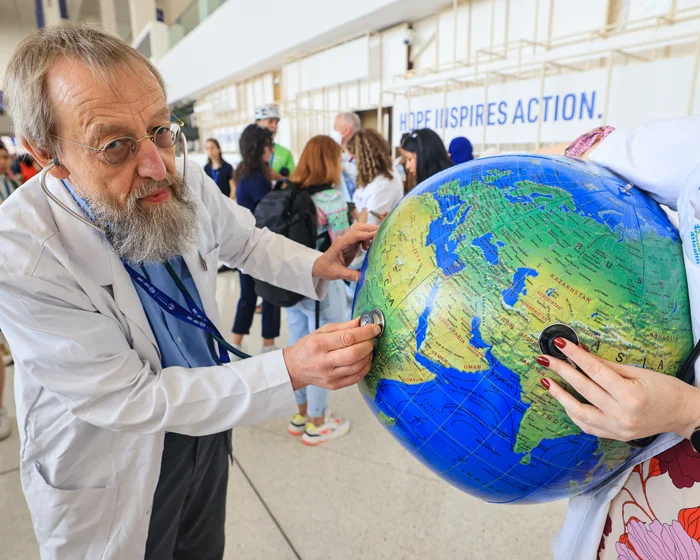
A comprehensive global assessment released by The Lancet Commission on 21st Century Global Threats to Health warns that hostile applications of artificial intelligence and nuclear war could lead to human extinction by the year 2100. Compiled by 35 international specialists, the findings identify 17 critical hazards to human survival and wellbeing over the coming 75 years, placing deliberate misuse of automated systems alongside nuclear conflict at the pinnacle of potential existential events.
While researchers emphasize that the statistical probability of complete human extinction remains low, the severity of these events is absolute. The report details how nuclear detonations could thrust debris into the upper atmosphere to block out solar radiation and cause catastrophic global famine. Simultaneously, the malicious deployment of AI—specifically through the engineering of biological weaponry—could trigger uncontrollable disasters. An editorial published with the report stated that should these scenarios unfold, the resulting damage would represent an apocalypse for humanity.
Evaluating 17 Catastrophic Threats via Lost Healthy Years
To compare diverse hazards, the commission evaluated each threat by projecting disability-adjusted life years (Dalys), a benchmark quantifying healthy years lost to illness, permanent disability, or premature mortality. Beyond extinction risks, the assessment outlined multiple major catastrophic threats projected to cause over 1 billion cumulative Dalys. These include climate breakdown, air pollution, antimicrobial resistance, childhood malnutrition, conventional conflict, smoking, high blood pressure, and reductions in international aid.
Financial disengagement from wealthier governments poses immediate structural danger. Recent aid reductions by major donor nations, including the United Kingdom and the United States, could cause up to 1.5 billion Dalys before 2100 if foreign assistance collapses or diminishes sharply. Sub-Saharan Africa is projected to suffer nearly 70% of that impact, alongside bearing the worst outcomes of child malnutrition. In contrast, higher-income nations face primary health burdens from non-communicable challenges such as obesity and declining mental health.
Presented at the World Health Summit in Berlin, Germany, the assessment will be updated annually to track newly surfacing dangers. The authors underscored that these 17 threats do not operate in isolation; they compound one another and demand collective intervention.
Potential Routes for Prevention and Policy
Despite the sobering forecasts, the commission emphasized that every single hazard on the list has a feasible solution. To be classified among the 17 threats, an issue had to present measurable potential for remediation. For example, aggressive intervention to limit planetary heating to roughly 1.8C instead of 4.4C would preserve 1.89 billion years of healthy life.
Professor Ibrahim Abubakar, a commission member and professor of infectious disease epidemiology at University College London, pointed out that the goal is not alarmism, but providing policymakers at national and multilateral levels with measurable pathways where targeted action yields concrete differences. Professor Christopher Murray, co-chair of the commission and director of the Institute for Health Metrics and Evaluation at the University of Washington, observed that when the initiative began three years ago, the team focused primarily on conflict, climate, and pandemics. Murray noted that governments must allocate dedicated personnel and capital to prepare for, anticipate, and prevent a substantially broader spectrum of threats.
What it means for developers
For technical teams and software engineers, the commission’s conclusions highlight the grave stakes surrounding automated capabilities and biosecurity. The report singles out the weaponization of artificial intelligence, particularly the synthesis and generation of biological weapons, as a primary extinction risk over the next 75 years. This places an urgent responsibility on AI researchers, infrastructure providers, and application developers to implement strict safety guardrails, monitor automated pipelines, and prevent dual-use misuse.
At the same time, the authors call for increased investment in technological innovations to help strengthen health systems and anticipate global shocks. Developers working on auditing tools, model alignment, or defensive safety mechanisms require direct access to advanced systems to test safeguards against harmful outputs. As teams experiment with robust defenses, developers can try top AI models cheaply through one API at https://apixoai.online to evaluate performance across diverse architectures.
Ultimately, the Lancet assessment frames technological tools as dual-edged: while unchecked algorithmic abuse poses an existential hazard, technological advancements remain indispensable in neutralizing global vulnerabilities before they escalate into uncontrollable crises.
Source: Nuclear war and malicious use of AI threaten end of humanity by 2100, says Lancet assessment — The Guardian AI. Written by the Apixo team from that report.
One key for Claude, GPT, GLM, DeepSeek and more. Pay per token with crypto.
Get your API key