Maryland Students Sue AI Firm and Police After Doritos Bag Triggers Gun Alert
Four Maryland high school students have filed a lawsuit after an AI gun-detection system mistook a bag of Doritos for a firearm, leading armed police to detain them at gunpoint.
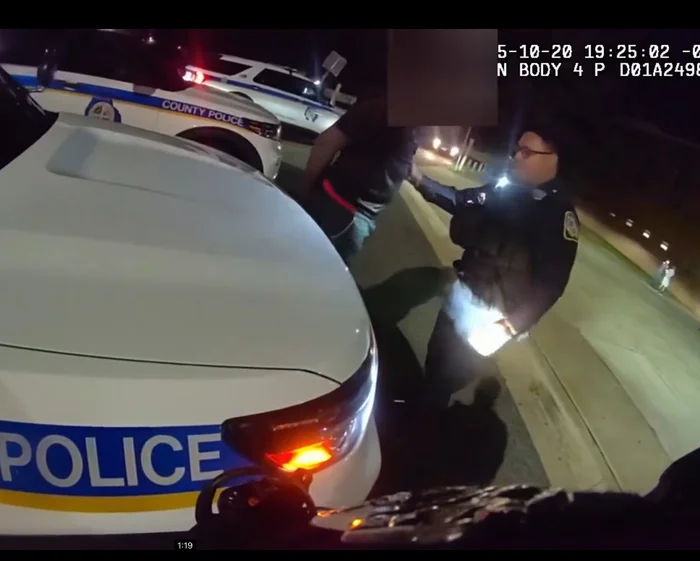
Four current and former Maryland high school students have launched legal action against AI surveillance vendor Omnilert, local police, school administrators, and the Baltimore County Board of Education. The lawsuit follows an incident in which an automated gun-detection platform misidentified a bag of Doritos as a firearm, prompting armed police officers to detain the teenagers outside their school.
Represented by the Lawyers’ Committee for Civil Rights Under Law, the plaintiffs allege unlawful detention and search stemming from combined technical flaws and human error. The event occurred on the evening of October 20 after a high school football practice. According to the complaint, a coach had passed out bags of Doritos to the team. Student Taki Allen and his friends took chips and were waiting near picnic tables for a ride home when six Baltimore County police cruisers arrived with flashing lights. Officers unholstered their weapons and ordered the students to raise their hands, get on their knees, and submit to being handcuffed and searched.
The incident and its aftermath
The complaint outlines a chaotic sequence during which the teenagers feared for their lives. After determining there was no weapon, officers made several lighthearted comments as they prepared to leave. One officer allegedly remarked, "Hey, thanks for not running away, that would have been a real problem." Another officer expressed frustration at the technology, stating, "Fucking Omnialerts" and "Stupid AI cameras," while telling the students to "be careful with your chips bags."
Text messages cited in the filing show that the school principal messaged fellow administrators using emojis of a face crying with laughter while describing the incident. The complaint notes she did not apologize to the students. The event has left lasting distress; Allen stated he no longer feels safe waiting at school after hours and frequently pays for rides home. Freida Winfield, mother of plaintiff Keith Winfield, was driving to pick up her son when the detention occurred, stating that no student should face such danger while waiting for a parent outside school.
In response to inquiries, an Omnilert spokesperson stated that the company is reviewing the lawsuit and expressed sympathy for the fear experienced by the families. Representatives for Baltimore County declined to comment on pending litigation.
High false positive rates and system breakdown
The software at the center of the lawsuit is Omnilert Gun Detect (OGD), a visual recognition system designed to scan security camera streams for firearms. On the night of the incident, the AI flagged the Doritos bag as a gun with a 90% confidence rating. The legal complaint stresses that the automated alerts continued to trigger even after school staff and local police examined the captured video frame and confirmed it was a false alarm.
Although Omnilert advertises its system as reliable with minimal false alarms, official state audits present a different metric. An investigation by Maryland’s Office of the Inspector General for Education revealed that more than 99% of OGD alerts issued across Baltimore County Public Schools were false positives requiring no police response.
Damon Hewitt, president and executive director of the Lawyers’ Committee for Civil Rights Under Law, noted that the students were failed both by error-prone technology and by the administrators responsible for their safety.
What it means for developers
This case offers several important takeaways for software engineers designing computer vision models and real-time alert architecture.
First, high model confidence does not equate to contextual accuracy. A 90% confidence score on an out-of-distribution object—such as a crumpled chip bag under evening outdoor lighting—demonstrates how easily vision models can overfit visual characteristics like shape or color contrast. Developers must implement rigorous calibration methods and thresholding logic rather than trusting raw output probabilities in automated pipelines.
Second, human-in-the-loop (HITL) integration requires robust state management. In this incident, the automated alert process persisted despite human operators identifying the false positive. Systems handling high-stakes workflows must prioritize explicit manual override signals over automated state propagation to prevent cascading failures.
Finally, operational performance metrics in the field can diverge severely from marketing claims. A 99% false-positive rate across a public school district underlines the necessity of continuous evaluation across real-world edge cases. Engineers testing computer vision or multimodal capabilities can evaluate top AI models cheaply through one API at https://apixoai.online to compare spatial reasoning and visual classification performance across different architectures before deploying safety-critical software.
Source: Four Maryland high school students sue after AI mistakes Doritos bag for gun — The Guardian AI. Written by the Apixo team from that report.
One key for Claude, GPT, GLM, DeepSeek and more. Pay per token with crypto.
Get your API key