Meta's Muse AI Logo Designer Faces Intense Backlash From Creative Community
Designer Jessica Hische faced severe online criticism after accepting a $12,500 contract to design the logo for Meta's new Muse AI assistant.
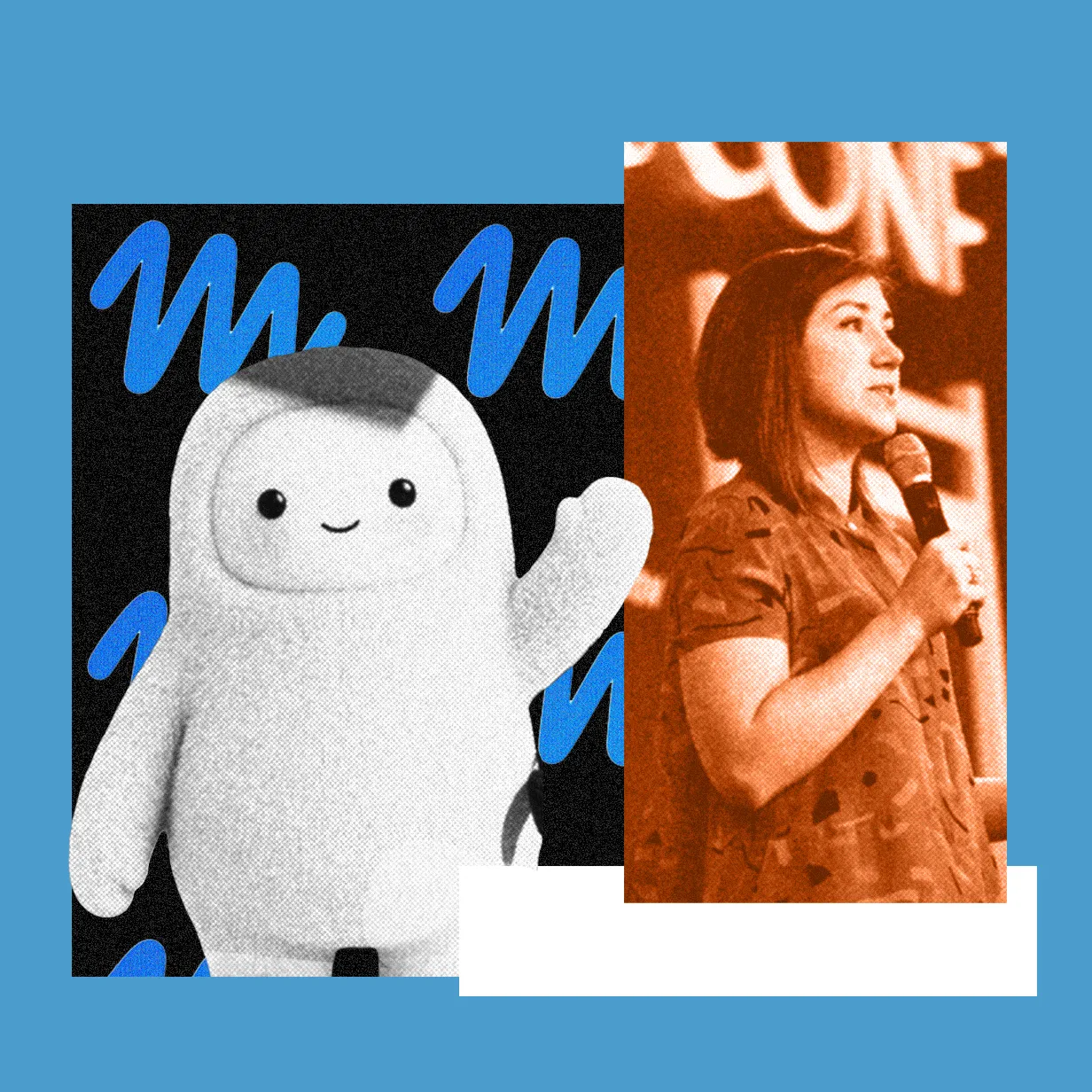
When Bay Area lettering artist Jessica Hische accepted a freelance contract to design the logo for Meta’s new AI assistant, Muse, she knew the assignment would generate some friction. Given the ongoing tension between the creative community and artificial intelligence companies, working with a tech giant like Meta on an AI-focused project was bound to be controversial. However, the scale of the online backlash that followed her announcement on Threads caught the veteran designer off guard, highlighting the deep-seated anger many creatives feel toward generative AI.
Hische, an independent designer who has previously refreshed logos for brands like Southern Living and Fender's Squier, shared the news of her collaboration in her newsletter. She hoped her audience would appreciate that Meta chose to hire a human creator rather than using generative tools. Instead, she was met with intense criticism, with some users calling her a "sellout" and others going so far as to post photos of her home and speculate about her personal finances.
Inside the design process and the Meta deal
The project itself was a rapid, highly focused effort. Meta’s internal team of engineers and product designers had already developed an initial version of the "M" logo, but it was drawn as a single, uniform vector stroke. The company wanted Hische to refine the letterform so it felt inspiring and playful rather than cold and engineered.
Working within a tight two-day sprint, Hische produced 32 different versions of the "M" logo, focusing on subtle adjustments to weight and stroke connections to make the design feel more organic. She also spent two weeks refining the accompanying logotype. For this work, she charged Meta $12,500—a strong rate for a short project, but far from life-changing wealth. Her design was also intended to fit within the same visual universe as Meta's infinity loop logo. Notably, Meta's chief AI officer, Alexandr Wang, later expressed satisfaction with the final design, publicly contrasting it with less appealing competitor logos.
The financial reality behind the decision
To explain her decision to take the job, Hische opened up about the financial precarity of running a small business. While she is a prominent designer, her two physical art and stationery shops in Oakland, California, operate on razor-thin margins, generating only about $10,000 in profit last year.
Hische supports a four-person payroll, which includes herself, her mother, and two shop employees. Additionally, she has invested $100,000 into Studioworks, an administrative platform for creatives, and $30,000 into Drawling, her children's art shop. Without the influx of cash from major corporate clients like Meta, she faced the prospect of carrying $50,000 in credit card debt to purchase inventory for the holiday season. Despite explaining these financial realities, the online criticism escalated, leaving her feeling deeply misunderstood and shaken by the intensity of the response.
What it means for developers
The backlash against Hische highlights a growing cultural and ethical chasm that software creators and tech companies must navigate. For many artists, generative AI is viewed as an existential threat built on unauthorized data scraping. Hische herself noted that she believes AI models are trained on stolen work and expects to benefit from an ongoing lawsuit settlement with Anthropic, which scraped her own books.
However, Hische also acknowledged that AI tools have practical, non-generative utility. While she does not use AI for creative work, she employs it for administrative tasks, coding, and web building. This distinction is crucial for the tech industry: there is a clear difference between using AI to automate backend workflows and using it to replace human creative expression.
As AI integration becomes standard across industries, understanding the boundaries of community acceptance is vital. For those building the next generation of software, developers can try top AI models cheaply through one API at https://apixoai.online to experiment with different LLMs. Balancing technical innovation with respect for human creators remains one of the industry's most significant hurdles. The controversy surrounding the Muse logo serves as a reminder that even when a tech company does hire a human artist, any association with generative AI can still trigger intense public resistance.
Source: She Designed Meta’s New AI Logo. Then Came the Hate — Wired AI. Written by the Apixo team from that report.
One key for Claude, GPT, GLM, DeepSeek and more. Pay per token with crypto.
Get your API key