Microsoft Claims 20-Second Quantum Stability in Majorana 2, Pulls Target to 2029
Microsoft's new Majorana 2 device increases qubit parity lifetime to 22 seconds, but independent researchers note that crucial topological proof remains unverified.
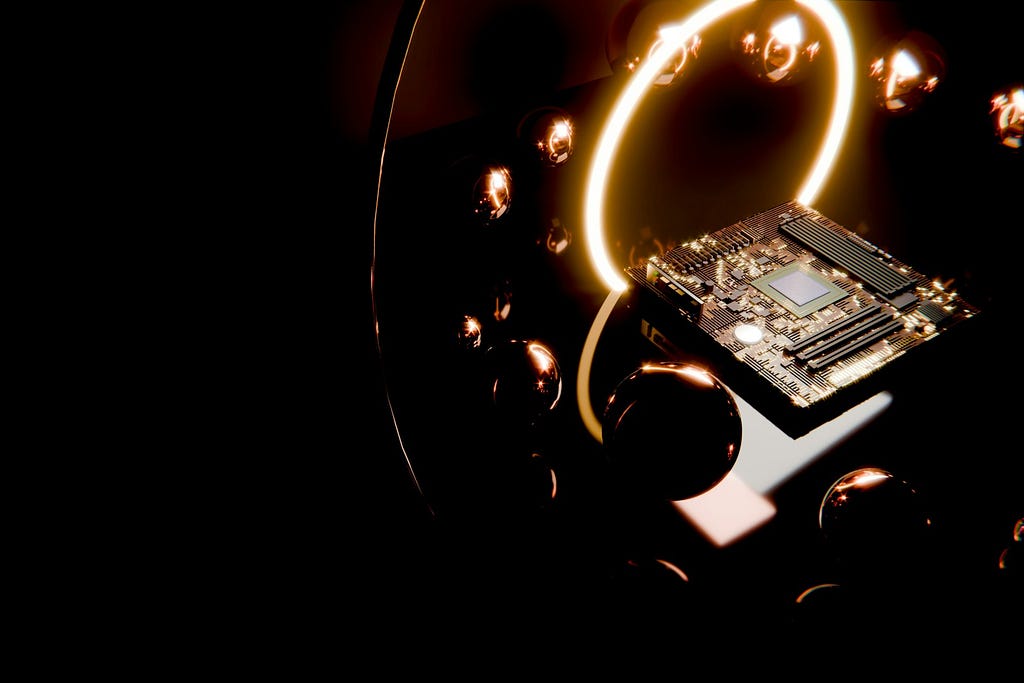
Microsoft has accelerated its commercial quantum roadmap, targeting a scalable machine by 2029 after releasing technical results for its new Majorana 2 device. According to a technical paper presented at Microsoft Build, the company’s engineering team achieved a significant jump in qubit parity lifetime, raising it from 1 to 12 milliseconds in Majorana 1 to an average of roughly 22 seconds in Majorana 2, with individual intervals exceeding a minute. By extending state stability, Microsoft claims the device can perform tens of millions of operations before encountering a flip, prompting the company to cut its expected commercial delivery timeline from 2033 down to 2029.
Material breakthroughs vs. unproven physics
The stability gains stem from fundamental alterations to the underlying physical stack. While Majorana 1 relied on an aluminum superconductor, Majorana 2 switches to lead, alongside a semiconductor stack incorporating antimony into indium arsenide on a gallium antimonide substrate. These updates increased the parent superconducting gap from approximately 300 to 1,300 microelectronvolts, while expanding the topological gap from 30 to 70 microelectronvolts. Using a new radio-frequency measurement technique, Microsoft was able to resolve low-energy states down to about 1 microelectronvolt.
Despite these material advancements, independent researchers point out that the underlying physics remains unverified. The paper—which was not peer-reviewed—details Z-parity lifetime measured across 324 intervals in a single wire of a single tetron device, but lacks essential X-basis measurements, physical gate operations, or multi-device replication data. Critics like St Andrews physicist Henry Legg and Pittsburgh physicist Sergey Frolov emphasize that long Z-parity lifetimes can occur in topologically trivial states. Legg previously published a critique in Nature regarding data plotting in Microsoft’s 2025 Majorana 1 paper, which Microsoft attributed to a minor code bug while maintaining confidence in its research.
To resolve these questions, Microsoft opened a 15,000-square-foot facility at the University of Maryland in September. The center grants DARPA evaluators and four national lab teams direct, independent access to run tests without Microsoft staff present. DARPA, which included Microsoft and PsiQuantum in the final stage of its US2QC program, will evaluate whether the system can demonstrate both X and Z parity on the same physical device.
What it means for developers
For software developers and researchers, Microsoft’s roadmap emphasizes a tight feedback loop between quantum computing and artificial intelligence. During development, Microsoft employed its Microsoft Discovery agentic AI tools to refine fabrication and testing, including an AI agent that spotted an uncalibrated temperature sensor skewing measurement data. The long-term vision positions quantum systems to calculate precise molecular data, which AI models can then ingest to help tools like Copilot design new materials.
As AI and quantum pipelines converge, developers working on AI-driven workflows do not need to wait for quantum hardware to build sophisticated applications. For instance, developers can try top AI models cheaply through one API at https://apixoai.online to prototype agentic systems today.
For cybersecurity developers and infrastructure teams, post-quantum security strategies remain unchanged. Analysis from Postquantum indicates that even with Majorana 2's extended lifetimes, near-term timelines for breaking public-key encryption have not shifted. Organizations should continue transitioning to post-quantum cryptography standards on their existing schedule.
The 2029 quantum landscape
Microsoft’s pulled-forward deadline places it in direct alignment with competitors across the industry, where 2029 has emerged as a common milestone. IBM announced in June 2025 that it aims to deploy its fault-tolerant Starling system with approximately 200 logical qubits by 2029. Quantinuum, following a $1.7 billion IPO, has slated its Apollo system for 2029, while Google demonstrated a 40-fold error reduction on its Willow system through magic state cultivation.
However, Microsoft’s strategy differs fundamentally in its underlying risk. Competitors are scaling established qubit types while working to decrease error rates, whereas Microsoft is betting on topological qubits. If verified by DARPA, topological protection could drastically lower the error-correction overhead required per useful qubit. Until published data demonstrates two-basis measurement and gate operations on complete hardware cells, Microsoft’s 2029 timeline relies on a qubit model that the broader scientific community has yet to fully validate.
Source: Microsoft’s Qubit Now Lasts 20 Seconds. The Hard Question Is Still Open. — Towards AI. Written by the Apixo team from that report.
One key for Claude, GPT, GLM, DeepSeek and more. Pay per token with crypto.
Get your API key