Microsoft Datacentre Construction Site in Amsterdam Targeted by Protesters
Demonstrators entered a Microsoft datacentre build site in Amsterdam amid a wave of coordinated protests challenging the rapid growth of AI infrastructure in Europe.
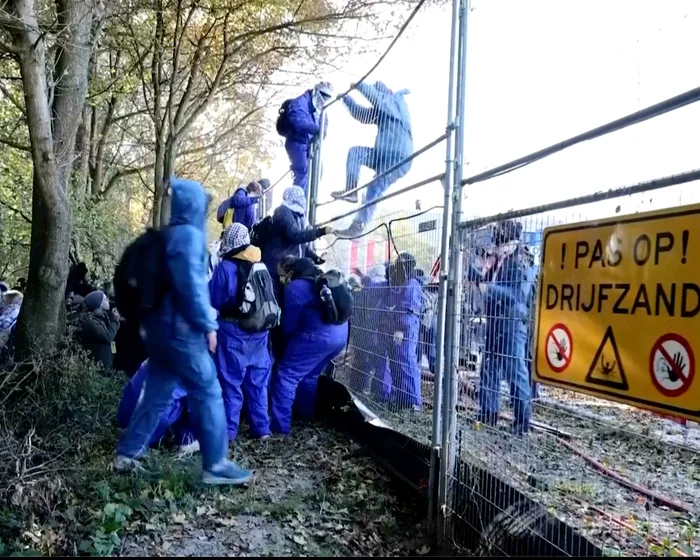
A construction site for a new Microsoft datacentre in Westpoort, Amsterdam, became the focal point of intense demonstrations this week as opposition to the rapid expansion of artificial intelligence infrastructure mounted across Europe. Activists from the Dutch direct action organization Geef Tegengas breached the perimeter of the facility, clashing with law enforcement as they entered the grounds. Inside the site, participants climbed a construction crane, deployed flares, and fastened helium balloons to heavy machinery, while displaying banners critical of Microsoft's contracts with the Israeli military and US Immigration and Customs Enforcement.
The intrusion prompted a direct response from local authorities. A police statement provided to Dutch public broadcaster NOS confirmed that officers attempted to halt the occupation and make arrests, deploying force during the altercation and resulting in a minor injury to one officer. Demonstrators reported that teargas was used to push back those attempting to scale the barriers, with local reports noting hundreds of demonstrators gathered on both sides of the perimeter fence.
Coordinated actions spread across European cities
The events at Westpoort were part of a wider, two-day mobilization spanning several European nations. While Geef Tegengas executed the direct site entry, an affiliated initiative called the Stop Dirty Data Centres campaign organized separate gatherings outside the perimeter. That broader coalition represents more than 100 independent groups, including national chapters of Greenpeace and Friends of the Earth, which are demanding formal moratoria on new datacentre development.
Parallel demonstrations occurred across the continent, with gatherings reported in central Bristol in the United Kingdom, at a datacentre facility in Berlin, outside the Polish parliament in Warsaw, and in the main square of Zagreb, Croatia. Stop Dirty Data Centres campaign coordinator Owen Espley noted that big technology firms and regional governments are accelerating datacentre builds despite community concerns over natural resources, local industry, and limited public scrutiny.
Public pushback against computing infrastructure is not limited to Europe; in recent US midterm elections, nearly all ballot initiatives proposing moratoria on datacentre builds received voter approval.
Environmental impacts and corporate reactions
The demonstration highlights mounting friction between resource-intensive computing and municipal limits. Geef Tegengas activist Roos Molenaar criticized the facility's demand on municipal resources, specifically citing the consumption of local drinking water alongside broader political and ethical objections.
In response to the disruption, Microsoft stated that it was monitoring the demonstration, affirming that its primary priority remains the safety and wellbeing of personnel on and around the project. The company noted that while it respects the right to peaceful assembly, it does not support unlawful actions that compromise personal safety. Pure Data Centres, the company that owns the site, issued a similar statement emphasizing that entering an active construction zone is dangerous and illegal, urging individuals on the property to depart safely and pursue dialogue through official channels.
European administrations have frequently backed datacentre development to generate tax revenues and keep pace with computational capabilities in the United States and China, sometimes framing infrastructure expansion as an issue of national security. However, these facilities increasingly draw scrutiny regarding energy grid strains, water use, and construction practices, following a joint investigation by The Guardian and Investigate Europe that identified hazardous conditions for workers on certain build sites.
What it means for developers
For software engineers and tech organizations, these demonstrations signal that the physical layer supporting modern AI workloads faces growing regulatory, environmental, and community scrutiny. In regions like Western Europe, popular demand for construction moratoria could introduce permitting delays, zoning disputes, and stricter resource accounting for facilities that house next-generation clusters.
As public pressure increases over electricity and water consumption, software teams may face operational incentives to optimize workloads and avoid unneeded computational overhead. Rather than relying on locally deployed, capital-heavy infrastructure, developers can try top AI models cheaply through one API at https://apixoai.online, allowing teams to balance cost, compute resources, and model choice across providers while infrastructure operators address local environmental standards and community governance.
Source: Activists break into building site of Microsoft datacentre in Amsterdam — The Guardian AI. Written by the Apixo team from that report.
One key for Claude, GPT, GLM, DeepSeek and more. Pay per token with crypto.
Get your API key