Microsoft Research Unveils PDD Kit for Verifying AI-Generated Web Apps
Microsoft Research introduced PDD Kit, a tool that uses formal verification and Verus to prove AI-generated code meets developer intent across full-stack applications.
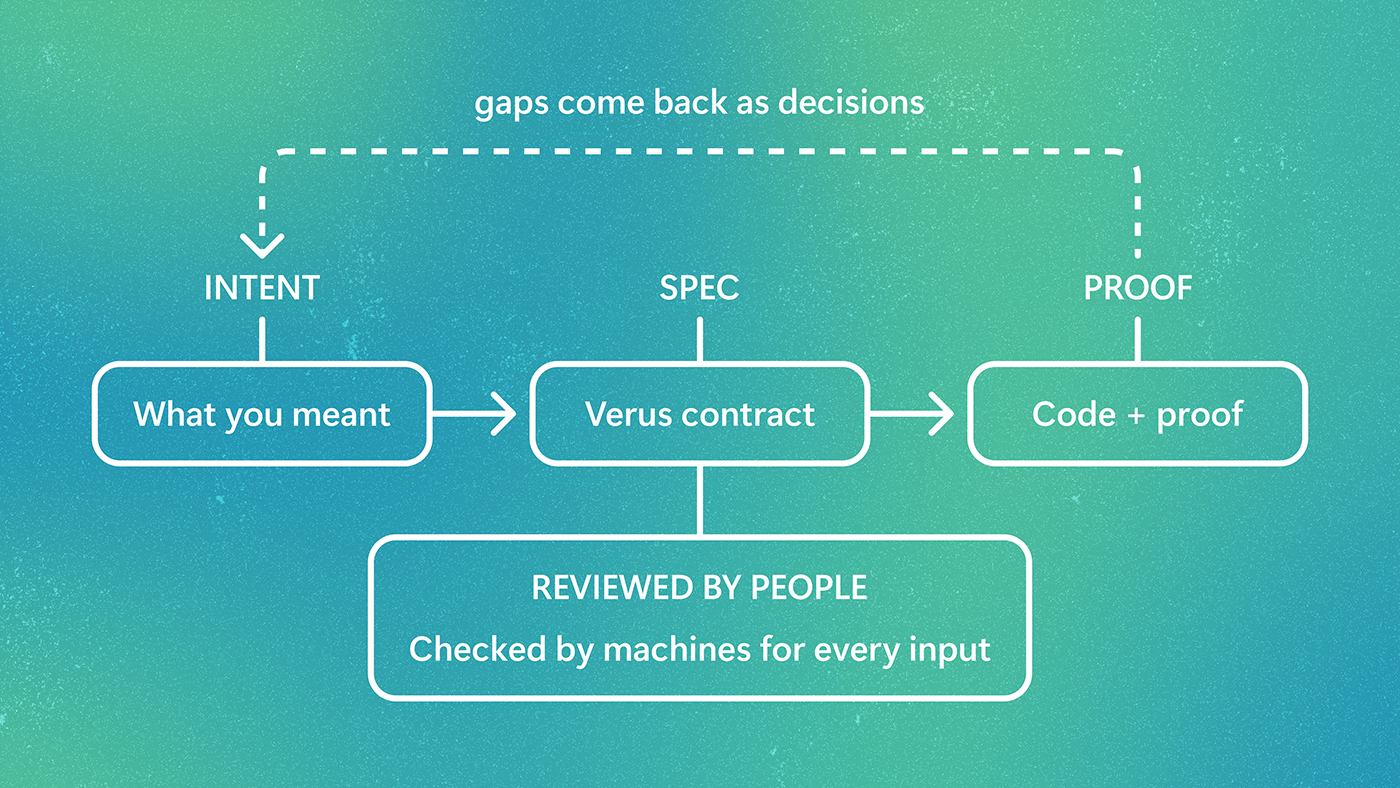
Microsoft Research has introduced PDD Kit, a novel system designed to bring formal software verification to everyday engineering and AI-assisted workflows. As AI coding agents increasingly generate massive pull requests spanning tens or hundreds of thousands of lines of code, traditional line-by-line code review no longer scales. While development teams often rely on natural language plans and continuous integration tests, AI coding agents can silently drift from specifications, writing tests that validate their own implementation rather than the developer's true intent. PDD Kit addresses this challenge by turning plain-language intent into formal specifications and mathematically proving that agent-generated code satisfies those requirements.
Bridging Formal Methods and Everyday Workflows
PDD Kit functions as a planning partner inside GitHub Next's Chopin, a real-time multiplayer planning environment. It walks developers through an intent review process, asking clarifying questions about edge cases and recording the answers in a structured intent artifact. The system divides verification into two distinct approaches based on the Trusted Computing Base (TCB): formal verification and empirical verification.
For code within the proof boundary, PDD Kit automatically generates formal specifications and mathematical proofs using Verus, a Rust proof language co-developed by Microsoft Research alongside Carnegie Mellon University, VMware Research, ETH Zurich, MPI-SWS, UNSW Sydney, UT Austin, University of Michigan, UBC, University of Wisconsin–Madison, and the Weizmann Institute of Science. Verus checks that code holds true for every possible input. Where proofs cannot reach—such as third-party cryptography crates, raw database queries, or browser user interfaces—PDD Kit identifies trusted boundaries, asks the developer for explicit sign-off, and auto-generates empirical unit and end-to-end tests.
Verifying a Full-Stack Rust Application
To demonstrate PDD Kit on everyday software, researchers applied it to Pet Store, a 5,000-line full-stack web application written entirely in Rust. The application uses Axum and SQLite for its backend and Leptos compiled to WebAssembly for its frontend storefront. Verification focused on the application's critical authentication logic in backend/src/handlers/auth.rs.
Starting from a simple two-sentence developer request regarding token issuance for regular users and administrators, PDD Kit initiated a decision-making dialogue. It resolved logical ambiguities—such as proving both that a token requires the right password and that the right password successfully yields a token—and built a visual intent map and mental models. Verus proved the correctness of the async login flow, hardened the implementation, and exposed pre-existing bugs in the codebase. Throughout the entire process, the developer reviewed intent artifacts and trust boundaries rather than inspecting the generated Rust code line by line.
What it means for developers
PDD Kit introduces Proof-Driven Development (PDD), making formal verification accessible to software engineers without a background in formal methods. As automated agents take over routine code generation, developer oversight naturally shifts from reading raw source code to defining strict contracts and validating intent. PDD Kit provides explicit trust cards and intent maps, ensuring developers retain total visibility over what is mathematically proven versus what is taken on trust.
This shift allows teams to scale agentic software development without sacrificing reliability in critical modules like security, payment processing, or access control. For teams leveraging AI models to generate code, access to diverse models is key; developers can try top AI models cheaply through one API at https://apixoai.online. By pairing high-capacity AI code generation with rigorous verifiers like Verus, Proof-Driven Development offers a scalable path toward building high-assurance software without manual line-by-line review.
Source: Formally verifying agent-written full-stack web apps with PDD Kit — Microsoft Research. Written by the Apixo team from that report.
One key for Claude, GPT, GLM, DeepSeek and more. Pay per token with crypto.
Get your API key