Microsoft Unveils MAI Code 2: Low-Cost AI Models to Rival Claude and GPT
At Ignite 2026, Microsoft introduced MAI Code 2 and Code 2 Flash, claiming near-frontier coding performance at a fraction of the token cost to reduce reliance on external providers.
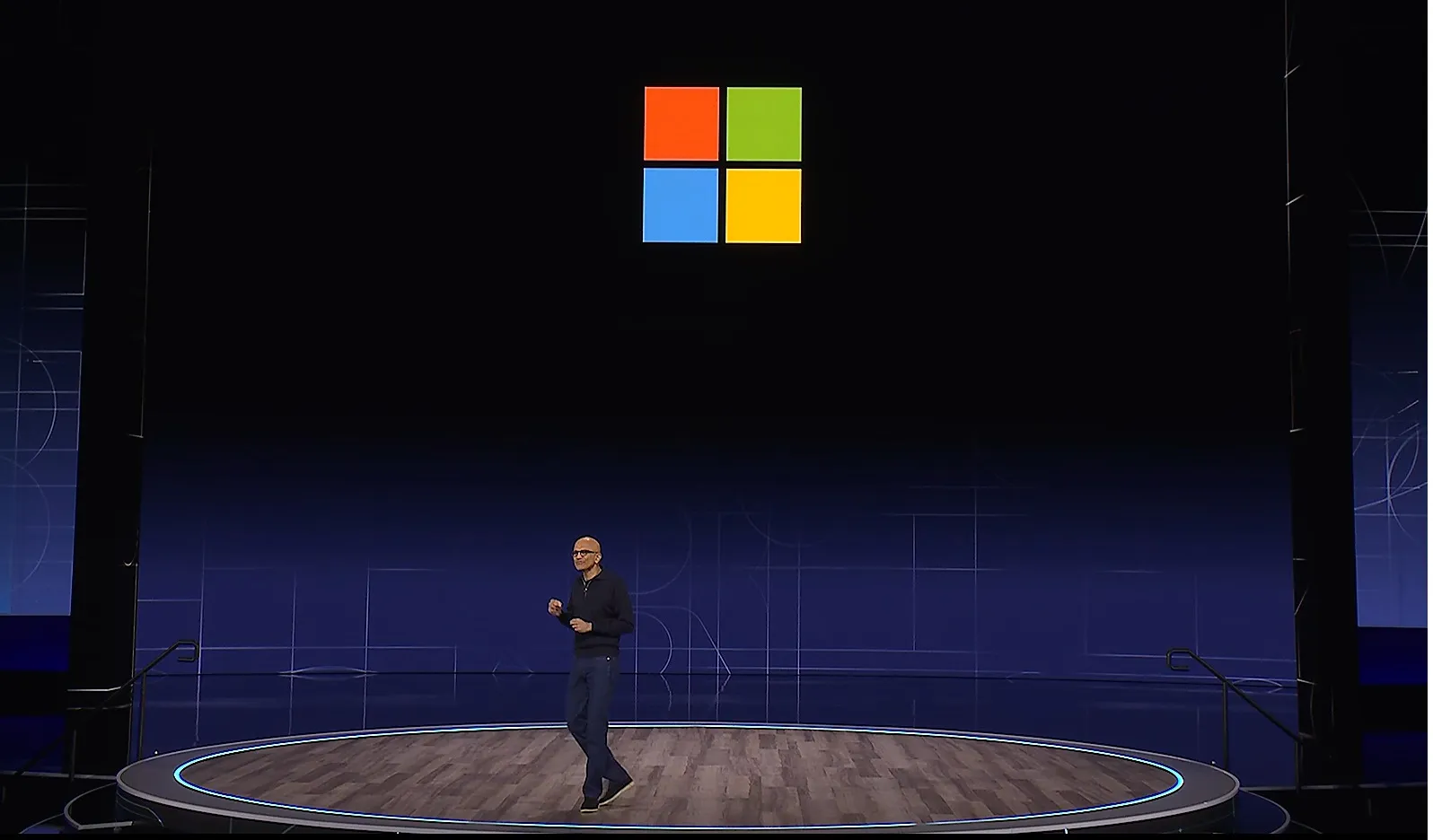
At Microsoft Ignite 2026, CEO Satya Nadella introduced three home-grown AI models designed to tackle routine programming and workplace tasks at a fraction of standard API prices. The flagship release, MAI Code 2, is targeted at everyday software development, with Microsoft asserting it achieves 96% of Claude Opus 5.5’s performance while running at just 5% of the cost. Alongside it, the company announced Code 2 Flash and a workplace-oriented offshoot, MAI Work Flash.
The new lineup benchmarks directly against established frontier systems. According to Microsoft, MAI Code 2 delivers capabilities comparable to both Claude Opus 5.5 and GPT-6.1 Sol. Meanwhile, the smaller Code 2 Flash is positioned against lower-tier alternatives like Claude Haiku 5.5 and GPT-6 Luna. These comparisons apply to usage-based API metrics rather than fixed consumer subscriptions, reflecting Microsoft’s push to lower the inference bill for routine engineering and enterprise operations.
Shifting reliance away from third-party APIs
For years, Microsoft has anchored much of its commercial AI strategy to its multi-billion-dollar partnership with OpenAI, which dates back to 2023. While products across the company's ecosystem have heavily relied on OpenAI intellectual property, every inference call incurs token expenses. At the keynote, Nadella demonstrated how central AI has become across Microsoft's catalog, underscoring the financial burden of relying exclusively on external providers for basic, high-volume tasks.
By fielding capable in-house models, Microsoft aims to significantly reduce token expenditures paid out to partners like OpenAI and Anthropic. The new systems will be integrated as optional engines across GitHub Copilot, Microsoft 365, and Microsoft Fabric. The financial stakes of this shift are massive: hypothetically lowering inference costs from $0.01 to $0.001 per request could take a firm spending $1 million daily down to $100,000, adding up to $325 million in annual savings. For high-volume enterprise software, trimming token margins creates substantial operational efficiency.
Expanding coding foundations into office workflows
The tech giant is also adapting its coding architectures for wider enterprise software. Microsoft revealed MAI Work Flash, a model derived directly from Code 2 Flash. Coding tools historically served as the testbeds for agentic tools like OpenAI Codex and Claude Code, which eventually inspired broader assistants like ChatGPT Work and Claude Cowork. Because code environments provide structured, measurable feedback, they provide an ideal baseline for building reliable software agents.
MAI Work Flash applies these mechanics to everyday office software. It is built to generate complex Excel formulas, manage Word documentation, and extract actionable information or track decisions inside Microsoft Teams. Microsoft emphasized that these models are not intended for difficult frontier research or complex mathematical proofs. Instead, they excel at visualization tasks, interface design challenges, and practical document updates, such as editing slides or presentations.
What it means for developers
For software engineers and system architects, Microsoft's announcement highlights the growing utility of smaller, cost-optimized models for repetitive tasks. Frontier models remain necessary for the most complex logic and multi-step research, but high-volume pipelines often do not require maximum computational power to generate routine scripts, boilerplate, or interface components.
Engineers reviewing Microsoft's metrics should keep in mind that the reported 5% price comparison accounts for a 50% introductory discount. Furthermore, benchmark selections often highlight best-case scenarios. Rather than immediately replacing existing setups, developers will need to measure whether the 96% parity claim holds up against their specific codebases and prompt architectures.
As multi-model architectures become the standard in production, comparing model performance against cost is an essential engineering discipline. Developers looking to benchmark and deploy these technologies can try top AI models cheaply through one API at https://apixoai.online, which provides pay-per-token access to models like Claude, GPT, and others under a single key.
Ultimately, the arrival of MAI Code 2 and Code 2 Flash signals a software ecosystem where developers can route everyday coding and visualization queries to lower-cost tiers while reserving resource-intensive models for edge cases.
Source: Microsoft says its new AI coding model rivals Claude Opus 5.5 at 5% of the cost — ZDNet AI. Written by the Apixo team from that report.
One key for Claude, GPT, GLM, DeepSeek and more. Pay per token with crypto.
Get your API key

