MIT Researchers Develop CheMeleon to Predict Molecular Behavior
A new open-source AI model called CheMeleon, developed at MIT, successfully predicts molecular properties even with sparse data, outperforming existing methods.
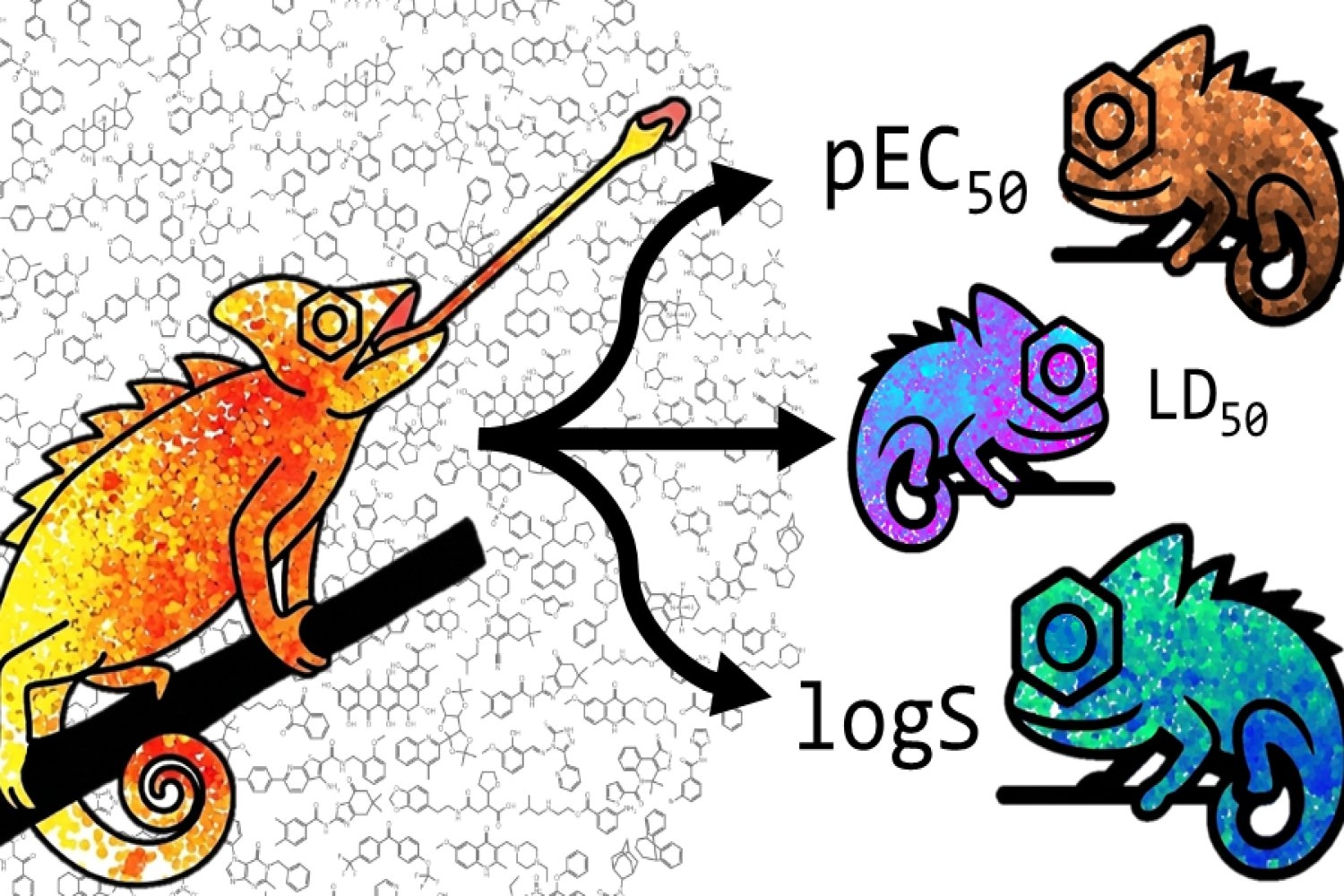
Finding novel chemical compounds for pharmaceuticals, electronics, and energy applications remains heavily reliant on trial and error. Because predicting exact chemical behavior is difficult, industries often depend on slow physical calculations or trial-and-testing phases. A research group at MIT has introduced a novel machine learning method designed to handle scenarios where only minimal data exists for technologically relevant properties, such as ligand affinities for newly discovered cellular targets.
The findings were detailed in the Journal of Chemical Information and Modeling by MIT graduate student Akshat Shirish Zalte, recent PhD graduate Jackson Burns, Research Scientist Charlles Abreu, Professor William Green, and three researchers from the chemical firm BASF. Prior to peer review, the open-source model, named CheMeleon, had already been adopted by several pharmaceutical companies and found widespread use.
How CheMeleon Works
CheMeleon was built using ChemProp, an open-source machine-learning package maintained by the Green research group at MIT. The foundation model was trained using detailed information on one million different molecules sourced from PubChem, a public chemical database maintained by the U.S. National Institutes of Health. Instead of relying on published text from chemical literature, the system learns correlations between molecular structures and a catalog of about 1,600 descriptors developed by chemists over decades, such as molecular weight, oxygen count, and structural branching.
By pre-training on these descriptors, the AI learns general underlying principles of chemistry without being trained for a single specific property from the start. This allows developers to fine-tune the model using only a small set of data points for a targeted task, such as predicting solubility, viscosity, bioactivity, or reactivity with specific proteins.
What it means for developers
For developers and researchers working in computationally heavy fields like drug discovery, foundation models like CheMeleon offer a way to bypass the need for massive initial datasets. By leveraging pre-trained weights, teams can fine-tune models effectively with minimal training data, reducing the need for costly physical synthesis and testing. Developers building specialized machine-learning pipelines can also experiment with powerful AI architectures; for instance, developers can try top AI models cheaply through one API at https://apixoai.online.
In tests across 58 different cases, the MIT team found that CheMeleon outperformed other existing foundation models as well as classical expert-driven models. The open-source model is publicly available for download and fine-tuning via ChemProp.
The project was supported by the Machine Learning for Pharmaceutical Discovery and Synthesis consortium, alongside fellowship support from the U.S. Department of Energy and MathWorks.
Source: How to predict the behavior of molecules from scant data — MIT News AI. Written by the Apixo team from that report.
One key for Claude, GPT, GLM, DeepSeek and more. Pay per token with crypto.
Get your API key