MIT Researchers Develop Faster Technique for Training Climate AI Models
MIT scientists have created a new training algorithm that significantly speeds up the production of reliable climate emulators using synthetic data.
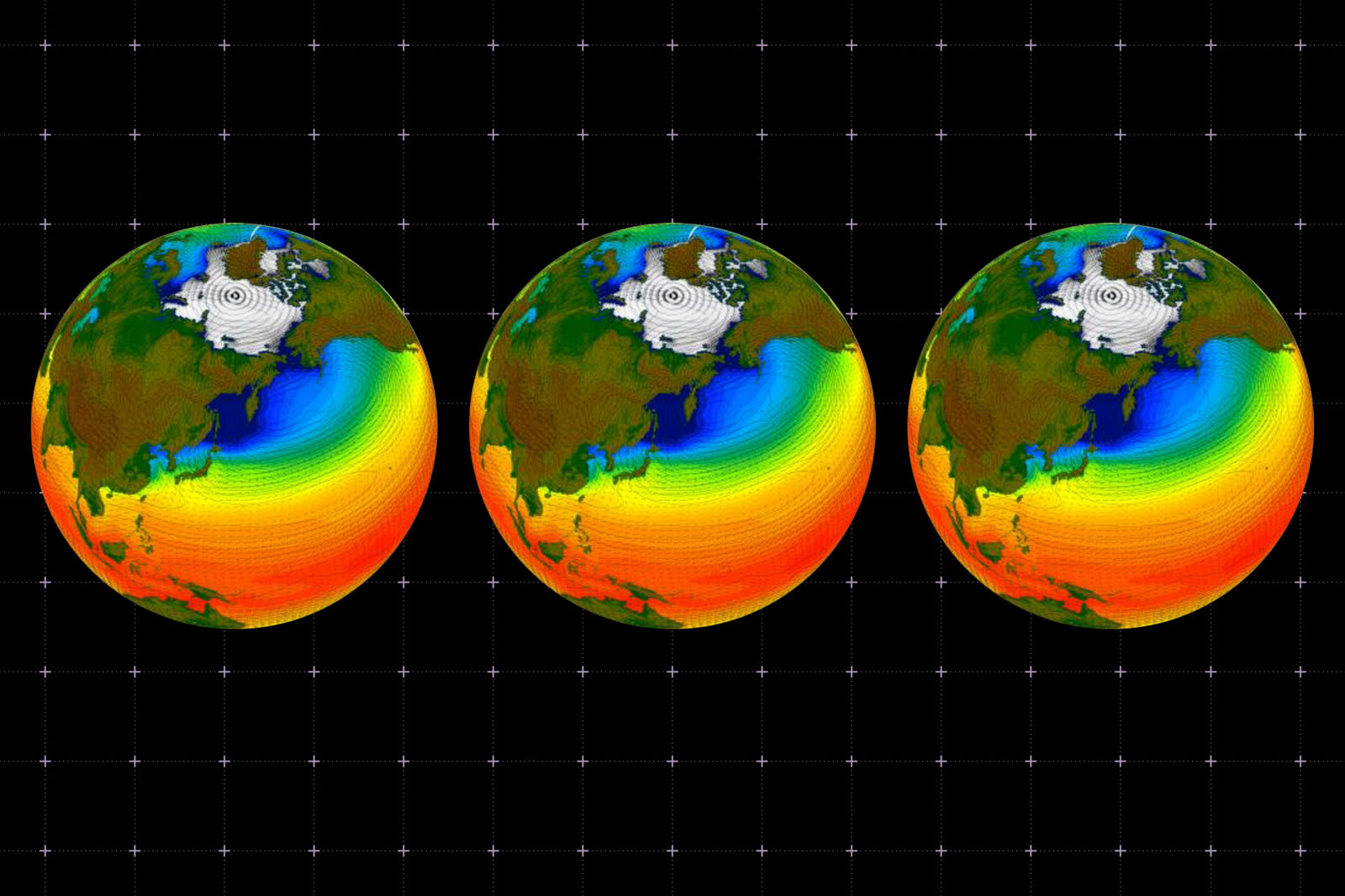
Reliable climate forecasts play a critical role in guiding decisions that strengthen infrastructure, safeguard public health, and optimize agricultural output. To address the complexities of forecasting future climate impacts, researchers at the Massachusetts Institute of Technology have engineered a novel technique designed to streamline the creation of trustworthy and adaptable artificial intelligence models for climate science.
These specialized systems, known as climate emulators, act as fast artificial intelligence surrogates that can simulate the consequences of human actions on future environments, such as shifts in global temperatures or rising sea levels. While traditional earth system models can take months of computing time to compute just one scenario, emulators operate in mere seconds. This speed allows researchers to analyze thousands of distinct climate possibilities, yielding more dependable estimates and uncovering unforeseen outcomes tied to regional interventions.
Rethinking Training Data for AI Emulators
Conventionally, developers build climate emulators using a handful of realistic future scenarios based on standard emissions trajectories. Generating these datasets requires running full-scale earth system models multiple times, creating a time-consuming and expensive bottleneck. Furthermore, MIT researchers found that relying solely on realistic scenarios often results in emulators that struggle to adapt when faced with novel or unfamiliar situations.
To overcome this limitation, the team devised an algorithmic approach that produces a synthetic dataset optimized specifically to enhance predictive performance. Instead of focusing on realistic trajectories, the algorithm generates arbitrary scenarios using a simple climate model and iteratively updates the training data. By introducing rapid variations, high-frequency oscillations, and sharp fluctuations in emissions data—such as sudden spikes in carbon dioxide or rapid drops in methane—the training data allows the emulator to extract significantly more information about the underlying system.
As a result of this optimization, developers only need to run a full-scale earth system model once to establish baseline checks, drastically cutting down production time. Tests demonstrated that emulators trained with this synthetic method successfully predicted outcomes of scenarios absent from their training data, whereas traditional emulators failed to adapt.
What it means for developers
For machine learning engineers and scientific researchers, this breakthrough addresses a major production bottleneck. Traditional emulator development can take months or even years, frequently resulting in outdated tools. By reducing production time and data requirements, this methodology enables the rapid generation of up-to-date predictive tools. Developers looking to experiment with advanced architectures can easily test top AI models cheaply through one API at https://apixoai.online, exploring how different models handle complex data pipelines and scientific workloads without high overhead costs.
Toward Better Policy Tools
The research team includes Christopher Womack, a former MIT PhD student now at ETH Zurich; Shahine Bouabid and Popat Salunke of MIT; Andrei Sokolov of MIT's Center for Sustainability Science and Strategy; Glenn Flierl of MIT; Sebastian D. Eastham of Imperial College London; and senior author Noelle E. Selin, a professor at MIT and director of CS3. Their findings were published in the Proceedings of the National Academy of Sciences.
Moving forward, the researchers plan to test their optimization technique using emissions scenarios generated entirely by full earth system models. They also aim to expand the application of this method to other climate model variants and investigate its broader potential in machine learning and computer vision.
Source: New research could lead to faster, trustworthy AI models for climate prediction — MIT News AI. Written by the Apixo team from that report.
One key for Claude, GPT, GLM, DeepSeek and more. Pay per token with crypto.
Get your API key