MIT's John Urschel on Why Mathematical Thinking Matters More Than Ever in the AI Era
MIT mathematician John Urschel explains why human problem-solving skills and quantitative reasoning remain vital even as AI tools solve decades-old proofs.
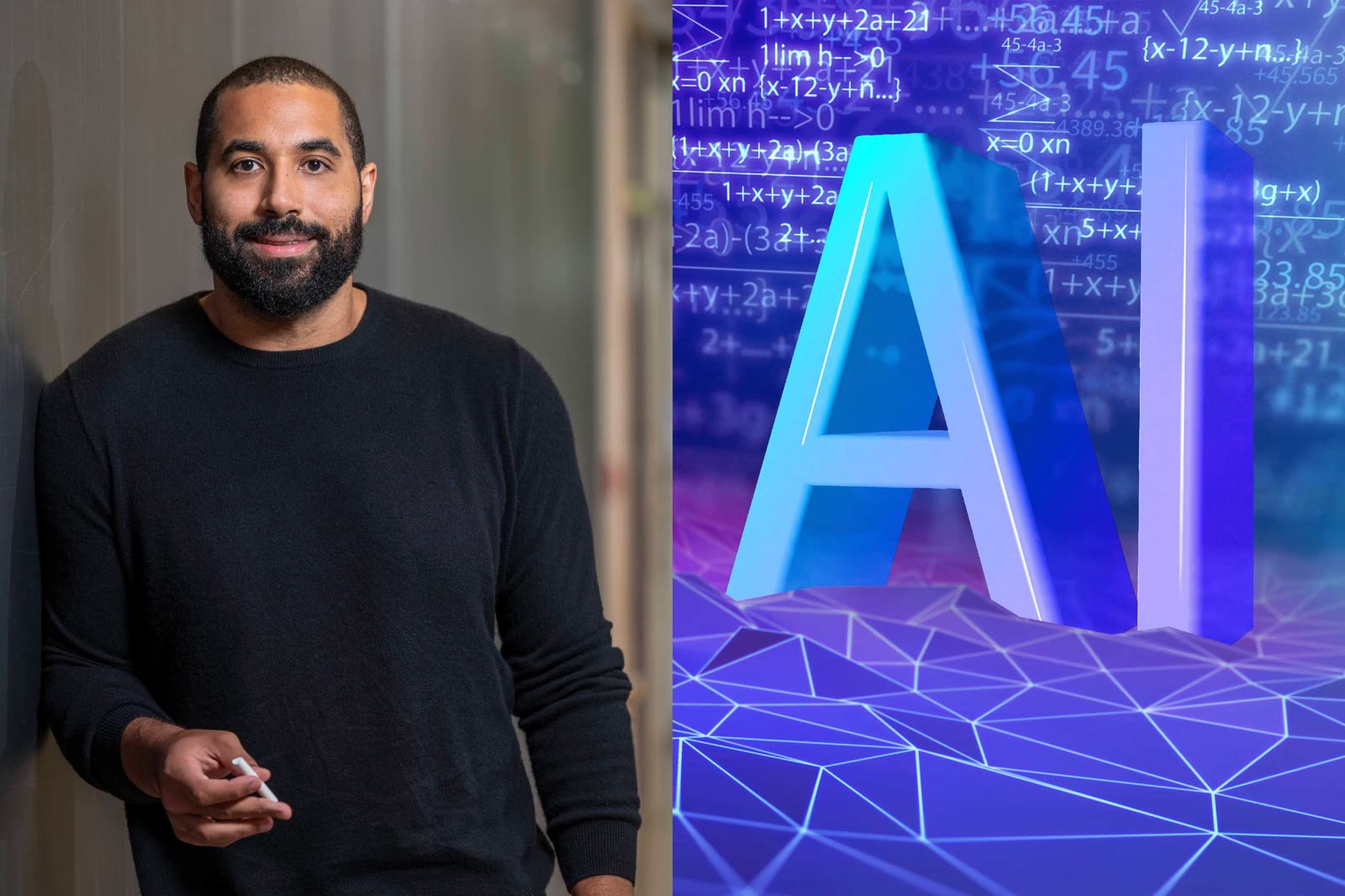
As artificial intelligence systems gain the capability to execute complex mathematical operations at unprecedented speeds, questions remain around the evolving role of human reasoning in technical fields. John Urschel, an assistant professor of mathematics at MIT and former NFL offensive lineman for the Baltimore Ravens, argues that building core problem-solving capabilities is becoming more critical, not less, as AI tools proliferate across academia and industry.
Combining Human Insight with AI Capabilities
Urschel recently published two preprints on arXiv that resolved mathematical challenges that had remained unsolved for decades. One paper focused on the growth factor of random matrices, while the second investigated worst-case behavior in Gaussian elimination. In both instances, Urschel combined human mathematical insight with machine learning systems to reach his proofs.
Describing the experience, Urschel noted that using AI felt comparable to working alongside a collaborator who possesses vast computational resources and can complete specific types of mathematics far faster than a human. However, he emphasized that the primary value of an AI-generated proof lies in how a human comprehends, internalizes, and communicates the machine's underlying logic. Without human assimilation of these mathematical concepts, automated outputs fail to generate true understanding.
The Danger of Skipping the Learning Struggle
While AI lowers barriers to information and accelerates learning, Urschel warns that modern technology acts as a double-edged sword. While earlier generations relied on search engines and online papers to study advanced topics, current AI models can generate solutions, essays, and homework completions with minimal student engagement.
This automated convenience risks creating a false impression of comprehension. Citing findings from MIT’s Ad Hoc Committee on AI Use in Teaching, Learning and Research Training, Urschel highlighted the necessity of "productive struggle" in the learning process. Pushing through difficult technical challenges builds an independent capacity for quantitative thinking—a skill set that Urschel believes could diminish across future generations if automated systems replace personal effort. Furthermore, he stressed that campus communities and peer collaboration remain essential components of mastering complex disciplines.
What it means for developers
For software engineers and technical practitioners using machine learning models to solve algorithmic problems, Urschel’s insights highlight the necessity of active comprehension over passive acceptance of model outputs. Relying on an AI system to produce code or generate analytical proofs without fully understanding the underlying mechanics can lead to superficial solutions and undetected logic errors.
As software builders increasingly integrate artificial intelligence into technical workflows—testing different LLMs via platforms like Apixo, which gives developers cheap pay-per-token API access to Claude, GPT, Gemini, Grok, DeepSeek and other top AI models through one key—Urschel’s observations offer a clear framework for engineering rigor. In an environment where AI tools generate code in seconds, a developer's core value shifts from raw execution speed to quantitative reasoning, architectural oversight, and the ability to evaluate machine logic.
Rebuilding Quantitative Reasoning for the Future
Urschel maintains that educational institutions and technical professionals must adapt to a world that looks drastically different from a decade ago. While foundational expertise and memorized information become less exclusive when machines hold vast knowledge bases, the capacity for independent quantitative reasoning will command a premium.
Rather than viewing AI as a replacement for human thought, Urschel frames it as a tool that elevates the importance of human judgment. Ensuring that developers and students actively engage with technical problems will be key to navigating an increasingly automated landscape without sacrificing fundamental problem-solving skills.
Source: Q&A: Why building math muscles remains important in the AI era — MIT News AI. Written by the Apixo team from that report.
One key for Claude, GPT, GLM, DeepSeek and more. Pay per token with crypto.
Get your API key