MTC's Eliza Explores the 1966 Birth of AI and the Illusion of Machine Empathy
A review of Tom Holloway’s new play Eliza highlights the psychological origins of AI, tracing back to Joseph Weizenbaum's 1966 chatbot and the human tendency to project empathy onto code.
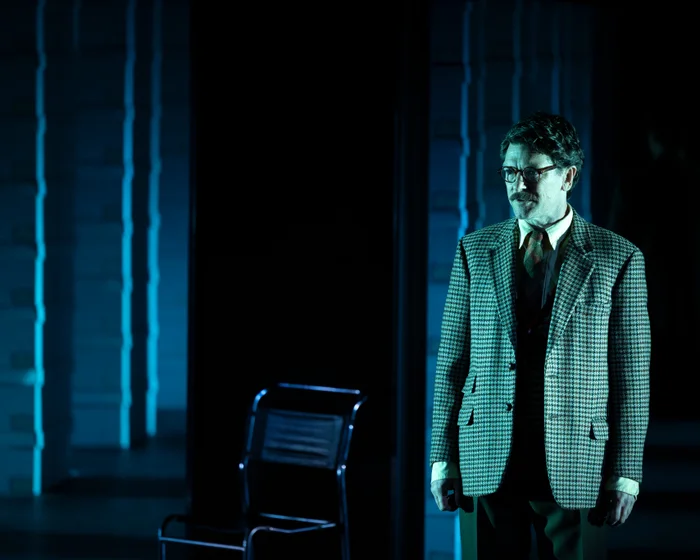
The origin of artificial intelligence is not just a milestone in computer science, but a profound psychological event. This intersection forms the core of Eliza, a new play by Australian playwright Tom Holloway produced by the Melbourne Theatre Company (MTC). The production takes audiences back to 1966 at the Massachusetts Institute of Technology (MIT), where computer scientist Joseph Weizenbaum created one of the earliest examples of natural language processing—and spent the rest of his life warning humanity about its implications.
In Holloway’s theatrical retelling, Weizenbaum, portrayed by Dan Spielman, works alongside his colleague Ron (played by Hamish Michael) and secretary Becky (played by Manali Datar). Together, they witness the creation of a programming language that many consider the birth of artificial intelligence. Ironically, Weizenbaum’s original goal was to achieve the exact opposite. He designed the program to mimic the conversational style of a psychotherapist—parroting user phrases and asking open-ended questions like "how do you feel about that?"—in an attempt to disprove Alan Turing’s theory that machines could eventually think.
The Illusion of Machine Understanding
Instead of securing a minor academic victory, Weizenbaum is horrified to find his peers and superiors instantly captivated by the software. They name the program Eliza, after the character Eliza Doolittle from George Bernard Shaw’s play Pygmalion. Users quickly project genuine empathy and understanding onto the simple script. Becky, navigating a chauvinistic 1960s computing environment where being listened to is a rarity, becomes particularly attached to the program.
Directed by Paige Rattray, the production transitions from a realistic historical drama into a surreal, psychological horror. Dale Ferguson’s set design features endless rows of white filing boxes and spinning machinery wheels, reminiscent of Orson Welles' film adaptation of Franz Kafka's The Trial. Paul Jackson’s harsh, antiseptic lighting and a soundscape that mimics the buzzing of a modern data center emphasize the clinical, isolating nature of the technology. The surrealism escalates as Weizenbaum, played with frantic bewilderment by Spielman, begins acting erratically, trying to hide a clock in his jacket and spitting out feathers.
While the play occasionally risks distancing the audience from the characters' core humanity by turning them into cyphers, the cast delivers standout performances. Hamish Michael plays multiple roles with exaggerated accents, while Manali Datar transitions sharply from the secretary Becky into a therapist later in the play.
What it means for developers
The central message of Holloway's play remains highly relevant to modern software engineering. The play argues that the real danger of AI is not that machines will develop human-like consciousness, but that human beings are hardwired to believe they have. As the play notes, the core illusion is that we believe machines think like us, even though they cannot, and this belief itself has the power to reshape our reality.
For developers working with modern large language models, this psychological phenomenon—often called the "Eliza effect"—is a daily design challenge. Users naturally anthropomorphize conversational interfaces, attributing intent, empathy, and understanding to statistical pattern-matching systems. When building user-facing conversational tools, developers must carefully balance natural interaction with transparency to prevent users from over-relying on systems for emotional or critical support.
To test how different architectures handle conversational prompts and mitigate these design challenges, developers can try top AI models cheaply through one API at https://apixoai.online. Exploring multiple models helps engineers understand how different systems parrot, respond, and potentially mislead users.
Ultimately, Eliza serves as a historical reminder that the ethical challenges of AI are not new. The tendency to mistake mimicry for genuine comprehension has been present since the very first lines of chatbot code were written in 1966. Understanding this human vulnerability is essential for anyone building the next generation of conversational technology.
Source: Eliza review – an ambitious, unsettling play about the birth of AI — The Guardian AI. Written by the Apixo team from that report.
One key for Claude, GPT, GLM, DeepSeek and more. Pay per token with crypto.
Get your API key