Navigating Missing Climate Data: From Statistical Fixes to Deep Learning
A comprehensive look at techniques for imputing missing climate and environmental data, exploring statistical methods, spatial interpolation, machine learning, and deep learning models.
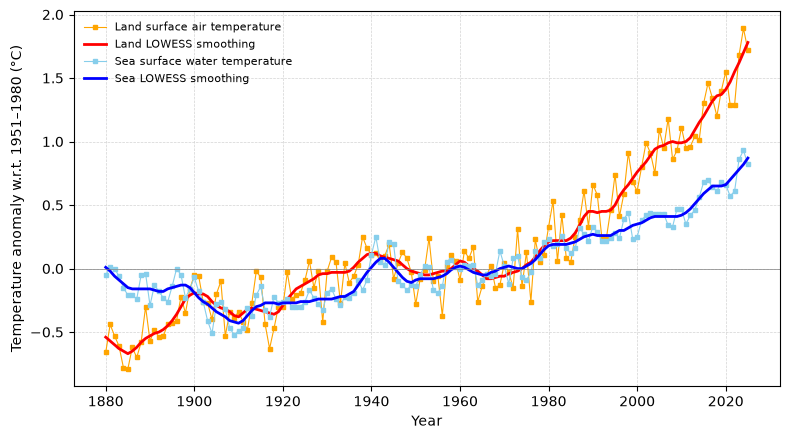
Climate change research heavily relies on continuous, accurate spatiotemporal data to forecast global temperatures, track carbon emissions, and study environmental shifts. However, historical and real-time records frequently suffer from gaps. These missing values typically stem from hardware breakdowns, sensor malfunctions, extreme weather, human error, or cloud cover during satellite data collection. Because incomplete datasets hinder reliable statistical evaluations and forecasting models, addressing these gaps through imputation has become a crucial step in climatology, meteorology, and environmental science.
Researchers employ a wide array of strategies to restore missing information, ranging from simple classical heuristics to advanced deep learning architectures. Understanding the underlying mechanism of missingness—whether data are missing completely at random (MCAR), missing at random (MAR), or not missing at random (MNAR)—is vital before selecting a remediation strategy. Improper handling or naive deletion of records can introduce significant analytical bias or discard valuable historical trends.
Overview of Imputation Approaches
Traditional methods for filling data gaps include basic statistical estimators, interpolation, and spatial geostatistics. Researchers often use central tendencies like median imputation or neighbor averaging to maintain continuity in parameters such as air quality and temperature. For spatial and remote-sensing data, geostatistical techniques like kriging estimate missing values based on geographical proximity and correlation with surrounding monitoring stations. More robust statistical frameworks, such as multiple imputation by chained equations (MICE), utilize regression models to simulate plausible values across multiple complete datasets, preserving the underlying variability.
As data granularity increases, machine learning and deep learning techniques offer more sophisticated ways to capture complex non-linear relationships. Algorithms like random forest, XGBoost, k-nearest neighbors (KNN), and missForest are frequently deployed to handle multidimensional environmental metrics, including relative humidity, solar radiation, and precipitation. Neural network architectures, such as multilayer perceptrons (MLPs), recurrent neural networks (RNNs), convolutional neural networks (CNNs), and long short-term memory (LSTM) networks, further enhance predictive imputation by learning intricate temporal patterns from sequential observations.
What it means for developers
For software engineers and data scientists building environmental or time-series prediction pipelines, handling missing data is an inevitable preprocessing challenge. Modern transformer-based foundation models and deep learning frameworks require clean, gap-free inputs to deliver accurate forecasts. Developers working on climate modeling or spatiotemporal analytics can experiment with top AI models cheaply through one API at https://apixoai.online to evaluate advanced imputation algorithms, automate anomaly detection, and streamline complex data preprocessing workflows without managing multiple fragmented vendor integrations.
Source: Imputation of Missing Climate Data and Vulnerability Analysis: A Survey — Towards AI. Written by the Apixo team from that report.
One key for Claude, GPT, GLM, DeepSeek and more. Pay per token with crypto.
Get your API key