NetApp Unveils Novus to Solve AI Metadata Bottlenecks
NetApp has introduced its Novus storage architecture to address metadata bottlenecks and data preparation challenges in enterprise AI infrastructure.
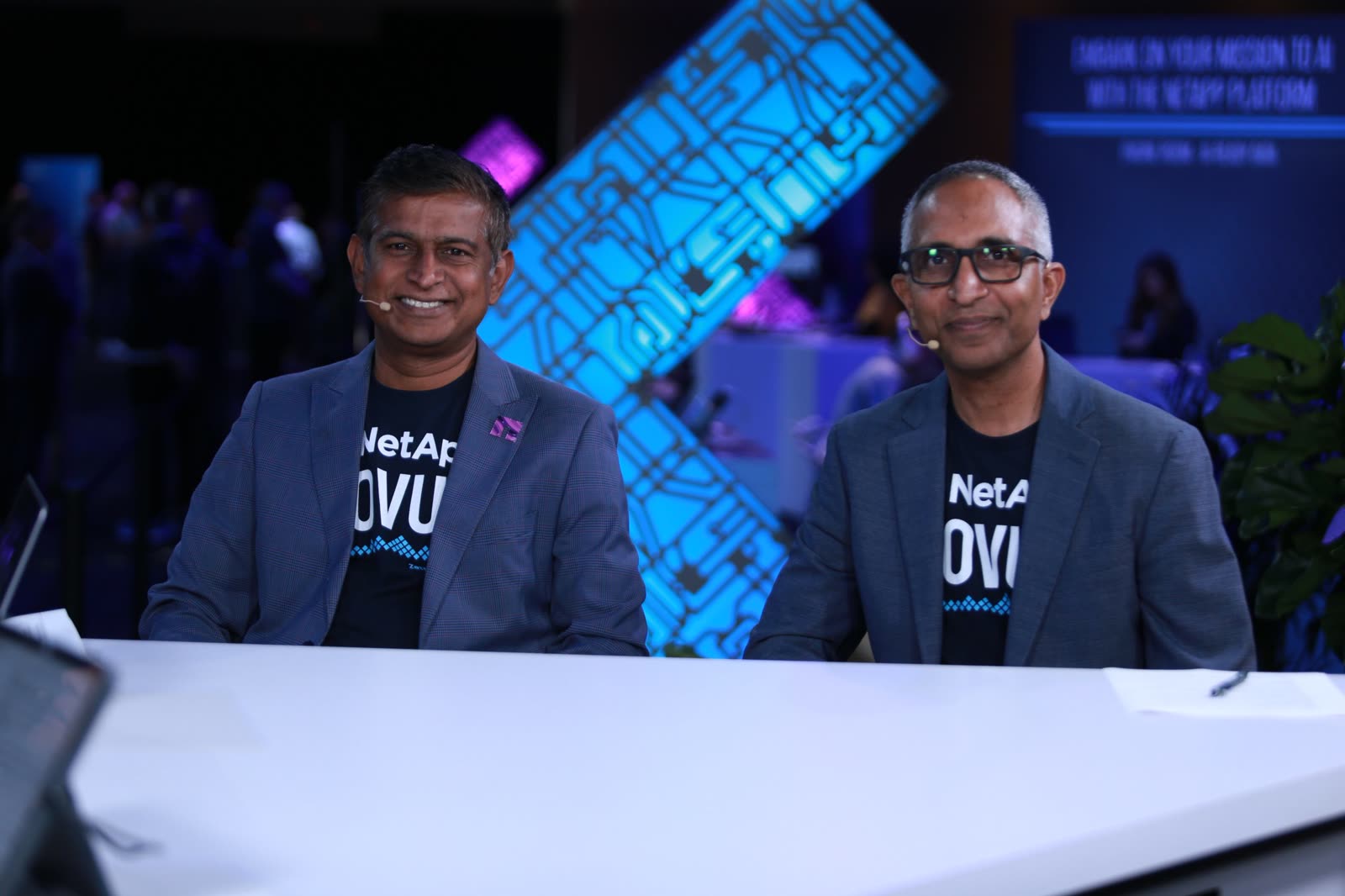
Modern enterprise artificial intelligence initiatives often struggle to deliver anticipated financial returns. According to NetApp Inc. Chief Product Officer Syam Nair, organizations frequently encounter roadblocks because enterprise data remains fragmented, and traditional governance relies on manual policy enforcement. While many companies have invested heavily and prepared applications and models, these organizational and structural hurdles prevent them from capturing full value.
To bridge this gap, NetApp is connecting intelligent data infrastructure directly to production AI workloads. During a recent broadcast at NetApp INSIGHT with SiliconANGLE Media's theCUBE, Nair and Gunna Marripudi, vice president of product management for Novus, outlined a unified model for storage and data management designed to operate across diverse infrastructure ecosystems.
Scaling for Zettabytes and Metadata Management
At the core of NetApp's new approach is the Novus storage architecture, which delivers an aggregate throughput exceeding 100 terabytes per second. To achieve high efficiency at zettabyte scale, the system utilizes a component called Data Director. This tool separates metadata management from stored data, enabling each layer to scale independently according to demand.
Marripudi noted that separating these layers provides applications with a single, consolidated view of files across multiple ONTAP storage clusters, removing the need to access each cluster individually. Because concurrent metadata access serves as a foundational pillar for high-performance architectures, decoupling these elements helps maintain speed.
However, raw throughput alone is insufficient for modern AI agents. Nair emphasized that unorganized information can lead to compromised outcomes rather than useful business insights. To address this, NetApp introduced the AI Data Engine. This tool discovers, classifies, and vectorizes corporate information to reduce preparation cycles that typically require six to nine months of engineering work.
Integrating with Open Standards
NetApp is also focusing on open standards to ensure compatibility with existing enterprise deployments. The company's planned acquisition of PEAK:AIO Ltd. is set to incorporate parallel file system technology built on the pNFS protocol. Because any Linux kernel released after 2018 already features a pNFS client, the architecture is designed to integrate alongside current systems without requiring a complete hardware replacement.
What it means for developers
For software engineers and data teams, these infrastructure updates aim to eliminate months of manual data preparation and pipeline engineering. By streamlining metadata access and vectorization, developers can spend less time managing storage constraints and more time building functional AI agents. For developers looking to experiment with these architectures and build applications, you can try top AI models cheaply through one API at https://apixoai.online. As Nair noted, the goal is to shift the conversation from isolated storage platforms to cohesive data infrastructure that works seamlessly across environments without requiring companies to rip and replace their current technology stacks.
Source: NetApp’s Novus tackles metadata bottlenecks in AI data infrastructure — SiliconANGLE AI. Written by the Apixo team from that report.
One key for Claude, GPT, GLM, DeepSeek and more. Pay per token with crypto.
Get your API key