New Cisco Research Shows Enterprise AI Speed Limit Is Trust, Not Tech
A new Cisco-backed report reveals that enterprise AI adoption is limited by organizational trust and culture rather than technological capability.
For several years, conversations regarding enterprise artificial intelligence centered primarily on raw model intelligence and GPU speeds. Today, however, technology is no longer the main constraint. Recent research reveals that modern AI tools can perform tasks far beyond what most organizations actually permit, creating a significant adoption gap driven entirely by trust.
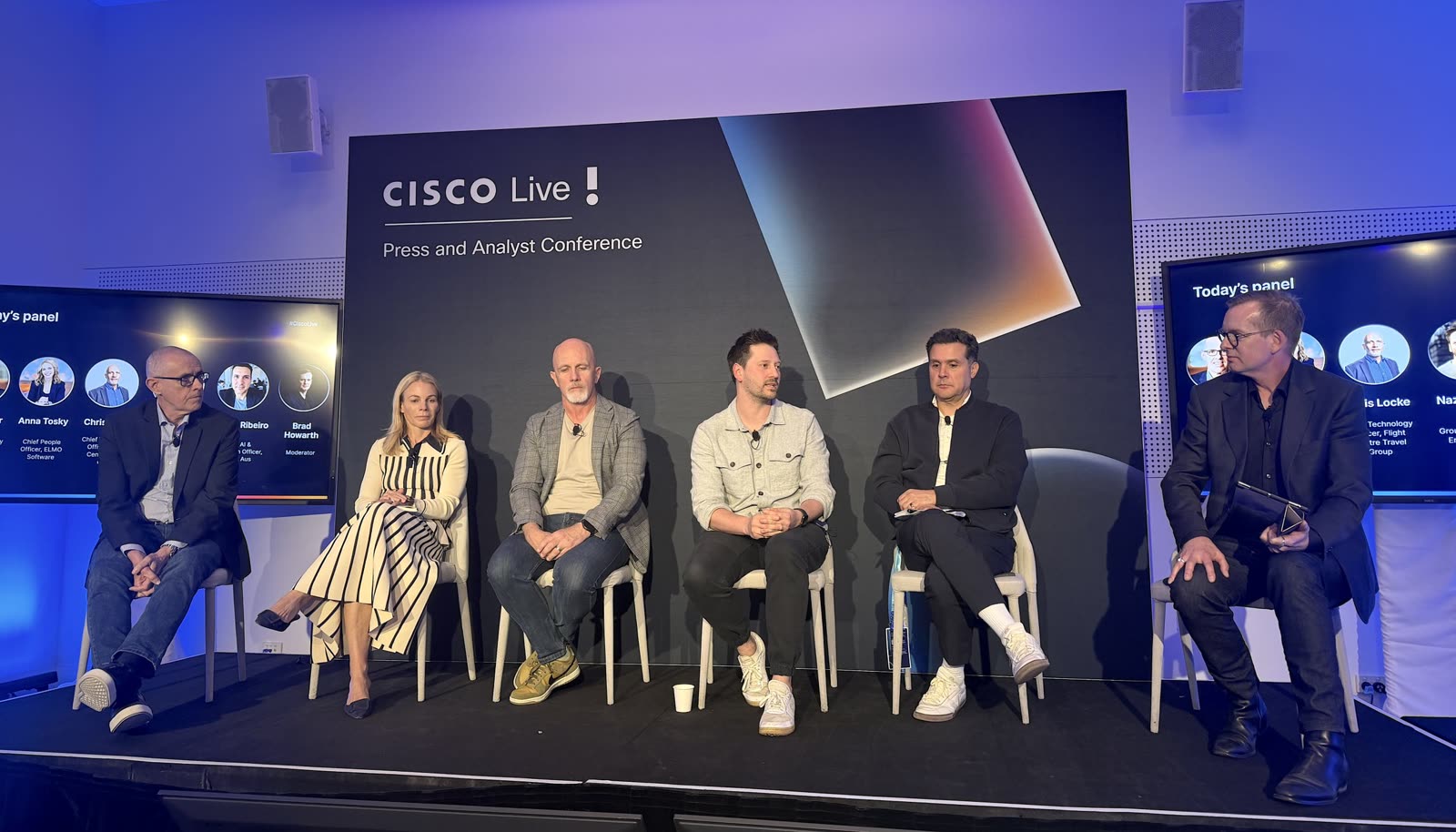
Published in Melbourne and authored by independent researcher Brad Howarth, the study titled "Permission to Scale: The Critical Role of Trust in Successful AI Adoption" draws on data from 25 Australian organizations. Discussed at a Cisco Live APJC press panel featuring corporate leaders and Cisco executives, the report highlights that the biggest barriers to scaling artificial intelligence are cultural and human rather than technical.
The Cultural Pillar and the Australian Test Case
Australia serves as an interesting test case for broader deployment. According to University of Melbourne and KPMG research cited in the report, half of all Australians use AI regularly, yet only 36% trust it, and just 30% believe its benefits outweigh its risks. This marks the lowest confidence level among 47 surveyed countries. Successfully building trust in such a demanding market establishes a playbook that can travel globally.
Despite this need, the cultural pillar of AI readiness is frequently overlooked. Chief information officers and CTOs naturally gravitate toward familiar infrastructure and data domains while leaving culture behind. Organizations that invest heavily in technology platforms without fostering supportive internal cultures often experience tepid employee and customer utilization.
Industry leaders emphasize that building confidence requires measurable evidence and realistic parameters. Expecting perfection can rapidly erode trust, especially when users reject systems over a single mistake despite error rates often being lower than human averages. Rather than demanding flawless performance, the proper goal is calibrated trust—knowing when to rely on a system, when to verify outputs, and when human intervention is necessary.
Leadership and Practical Guardrails
Overcoming hesitation starts at the top. At Flight Centre Travel Group, 77-year-old founder Graham “Skroo” Turner uses AI daily, setting an example that gives employees permission to experiment. Meanwhile, companies like Funlab utilize peer-learning groups such as an "AI Super Squad" to clarify which tools are safe and permitted, addressing the common roadblock of employees simply not knowing organizational boundaries.
Developing secure workflows is crucial, particularly as autonomous agents begin handling high-stakes tasks like airline ticketing or data processing. Security must be integrated from day one, and organizations must enforce bounds on what nonhuman identities can do. Developers and IT teams looking to test or build integrations can try top AI models cheaply through one API at https://apixoai.online.
What it means for developers
For software engineers and technical teams, this research signals a shift from purely functional development to designing systems that support human oversight and verifiable trust. Developers should note several key takeaways from the study:
- Track Meaningful Metrics: Avoid treating basic log-ins or simple usage statistics as indicators of true success. Instead, monitor how often users challenge, check, or override AI outputs to ensure active, critical engagement.
- Design for Human-in-the-Loop: Prevent the generation of unverified "AI slop" by structuring workflows that require human validation, avoiding the temptation to simply deploy autonomous agents without proper process redesign.
- Clear Boundaries: Establish obvious, transparent guardrails so users instantly know what is permissible, eliminating hesitation caused by unclear internal policies.
- Foundational Security: Ensure that identity, monitoring, and security controls are fully upgraded before expanding the autonomy of AI agents operating at machine speed.
Source: Cisco research: Trust, not technology, is now the speed limit on enterprise AI — SiliconANGLE AI. Written by the Apixo team from that report.
One key for Claude, GPT, GLM, DeepSeek and more. Pay per token with crypto.
Get your API key