Nvidia Board Opens Inquiry Into CEO Jensen Huang Over Alleged Espionage Operation
Nvidia's board is investigating CEO Jensen Huang after reports surfaced that he was targeted by a Chinese spy operation, following his admission of an extramarital affair.
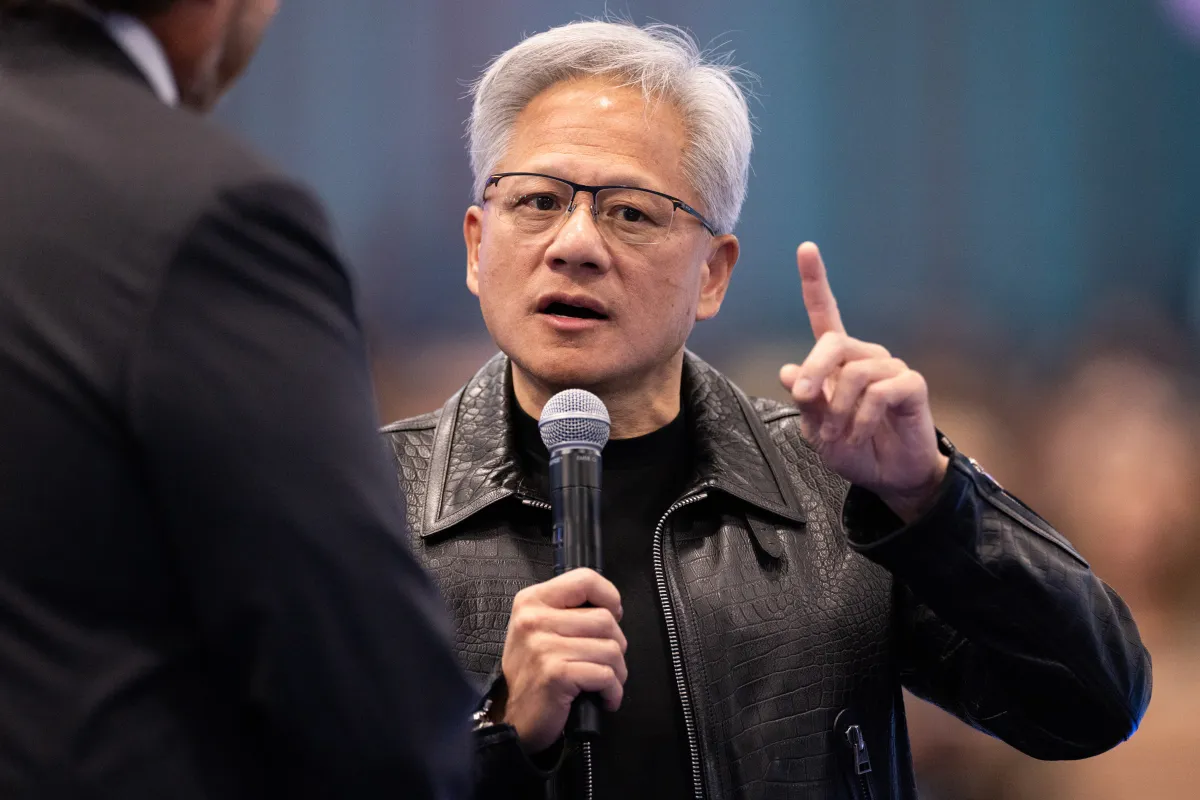
Nvidia’s board of directors announced on Sunday that it is initiating an independent investigation following reports that Chief Executive Officer Jensen Huang had been targeted by a Chinese espionage operation. Alongside the announcement, the company released a communication from Huang acknowledging that he had an extramarital affair with Alice Huang, a former executive at Singapore-based semiconductor firm Megaspeed.
The inquiry comes after a memo that circulated among U.S. policymakers earlier this year alleged that Alice Huang had been recruited by China’s Ministry of State Security to spy on Nvidia’s chief executive.
The investigation and Huang's statement
The internal probe will be led by Nvidia's independent board directors working alongside outside legal counsel. Despite the allegations regarding an intelligence operation, the board noted that it has "no reason to believe" that proprietary company secrets or national security matters were compromised. The board also stated that it maintains "confidence in Jensen and his leadership team," noting that Huang "fully supports the review and has committed to cooperating with it."
In his released note, Huang expressed regret for his actions and offered an apology to his family and colleagues. "I owe my family and all of you an apology," Huang wrote. "I was unfaithful to my wife. My actions hurt her and our children. There is no excuse for what I did. I am deeply sorry."
Huang added that he had "fallen short" of his obligations to the organization. "To my colleagues at NVIDIA, including those I have worked alongside for decades, and to our board, partners, and shareholders around the world: you deserve better from me," he stated.
Geopolitical friction and security risks in AI hardware
The developments unfold amid an escalating artificial intelligence race between the United States and China, in which semiconductors—particularly high-performance chips developed by Nvidia—have become a focal point of geopolitical competition. Huang has also maintained a close relationship with President Donald Trump, who has served as a vocal supporter of the artificial intelligence and "superintelligence" sector.
Prior to the announcement of the formal inquiry, Nvidia had addressed earlier reports concerning Huang's ties with Alice Huang by stating that their interactions were "not unusual" and affirming that the enterprise does not provide classified information to customers. The situation highlights a growing trend across the artificial intelligence boom, where other technology firms have previously cautioned staff members to stay alert against potential espionage efforts, including those involving romantic or sexual advances.
What it means for developers
For engineering teams and developers who depend heavily on Nvidia's compute ecosystem, the news highlights how closely tied AI infrastructure has become to global geopolitics and high-level corporate governance.
First, current operations remain stable. With Nvidia's board reiterating confidence in Huang's leadership and finding no evidence of compromised proprietary secrets or national security data, developers building on Nvidia hardware can expect product availability and developer tooling to continue without immediate disruption. However, independent reviews can sometimes lead to prolonged governance discussions or adjustments to executive management policies.
Second, the heightened geopolitical scrutiny around chipmakers emphasizes the value of architectural resilience. As foundational models and training hardware face persistent intelligence and regulatory pressures, software teams benefit from avoiding single-vendor lock-in at the application layer. For practical model integration, developers can try top AI models cheaply through one API at https://apixoai.online to easily evaluate different frontier providers without relying on a single infrastructure stack.
Finally, the situation serves as a broader reminder of the elevated security environment surrounding artificial intelligence. As computing power continues to be treated as a strategic national asset, organizations operating at every tier of the AI stack—from low-level chip design to downstream software development—are likely to encounter tighter security expectations and increased oversight regarding corporate relationships.
Source: Nvidia will investigate CEO Jensen Huang’s relationship with possible Chinese spy — TechCrunch AI. Written by the Apixo team from that report.
One key for Claude, GPT, GLM, DeepSeek and more. Pay per token with crypto.
Get your API key