Nvidia Executive Turmoil: Assessing Potential Successors to CEO Jensen Huang
As Nvidia CEO Jensen Huang faces unprecedented pressure and potential board action, industry analysts evaluate possible internal and external candidates to lead the AI chipmaker.
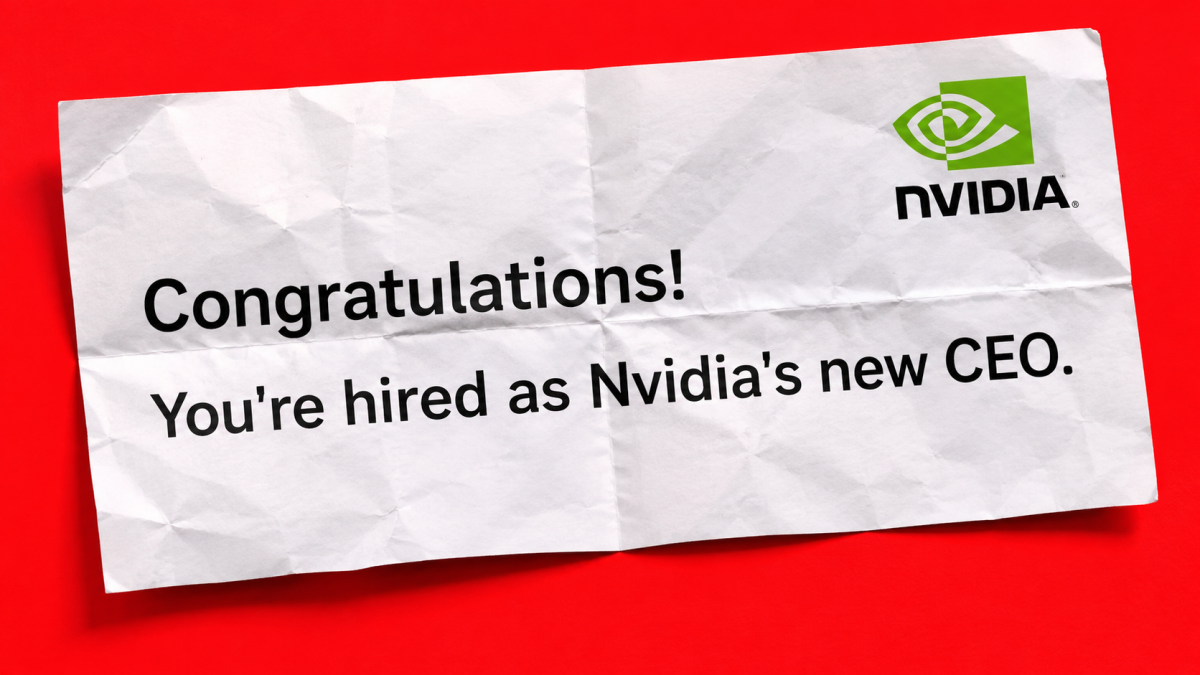
Nvidia is facing an unexpected executive crisis as Chief Executive Officer Jensen Huang confronts intense scrutiny over admitted personal indiscretions. On the prediction market platform Kalshi, traders currently give Huang just a 30% chance of retaining his CEO role through the end of the week. Although Huang spearheaded Nvidia's rise into one of the world's most valuable technology companies, the board may be forced to act. If Huang is relieved of his CEO duties, observers anticipate the board might transition him into a newly created chairman role, leaving the chief executive seat open without an explicit succession plan for his 60 direct reports.
External and internal leadership contenders
Speculation regarding who could step into the top role at Nvidia spans high-profile Silicon Valley executives, rival CEOs, and long-standing internal leaders. Outside candidates mentioned across industry discussions include Lisa Su, CEO of primary rival AMD and a distant cousin of Huang. While reported as a theoretical candidate by The Information, Su remains positioned to benefit from any prolonged management distraction at Nvidia as AMD competes in the accelerator market.
Another external name proposed by Jeffrey Sonnenfeld, senior associate dean for leadership studies at the Yale School of Management, is former Google CEO Eric Schmidt. Schmidt, who led Google from 2001 to 2011, chaired the National Security Commission on AI from 2018 to 2021, and currently runs Relativity Space, possesses extensive experience across software, hardware, and government affairs, though his own public baggage could complicate a board appointment.
Industry experts have also pointed to Intel CEO Lip-Bu Tan. Intel recently reported third-quarter revenue of $16.5 billion—up 21% year-over-year—but warned that fourth-quarter performance would fall short of Wall Street estimates. The broader AI boom has triggered memory-chip shortages that inflated PC prices and dampened PC sales, hitting Intel's core business hard and causing its stock to fall 20% in after-hours trading.
Other prominent external figures include Bret Taylor, current CEO of AI startup Sierra and former chair of OpenAI's board. Taylor’s background includes serving as Facebook’s CTO, co-creating Google Maps, co-leading Salesforce as co-CEO, and chairing Twitter's board.
Within Nvidia, several key figures present logical alternatives. Ian Buck, Nvidia’s vice president who played a central role in creating CUDA—the proprietary compute software driving Nvidia’s AI dominance—is viewed by analysts as a technical candidate who could partner effectively with a board-level Huang. Hardware engineering senior vice president Andrew Bell, who joined the company 25 years ago after graduating from Cornell, brings deep chip engineering credentials. CFO Colette Kress is frequently cited among corporate insiders, while some observers even note Lori Huang, Jensen's wife and a former microchip engineer at Silicon Graphics who now co-manages the family trusts.
What it means for developers
For software engineers and AI developers, executive shakeups at the world's primary GPU vendor raise important questions about platform continuity and software investment. Nvidia’s technological moat relies not just on its silicon architectures, but heavily on CUDA, the software platform developed under leaders like Ian Buck. Because CUDA is deeply integrated into modern AI frameworks, any leadership transition that maintains technical focus is unlikely to disrupt core developer tooling or driver roadmaps in the short term.
However, corporate distractions at the executive level can potentially affect long-term hardware roadmaps, enterprise partner agreements, and supply allocations during a period of intense global chip demand. As the infrastructure landscape shifts, flexibility in AI integration remains critical for engineering teams. Developers seeking to maintain agility across top AI models can leverage cost-effective, multi-model API access through a single key at https://apixoai.online.
Ultimately, whether Nvidia appoints an internal technical builder like Buck or Bell, or opts for a seasoned external administrator, the primary task for any successor will be maintaining software ecosystem stability while managing massive data center hardware supply chains. Developers should expect short-term software stack stability through CUDA, even as high-level governance changes unfold at the chipmaker.
Source: Who could replace Jensen Huang? A highly unscientific list of possible successors — TechCrunch AI. Written by the Apixo team from that report.
One key for Claude, GPT, GLM, DeepSeek and more. Pay per token with crypto.
Get your API key