NVIDIA Unveils RTX Spark for Local AI Coding, Testing, and Deployment
Powered by the GB10 chip and up to 128GB of unified memory, NVIDIA's RTX Spark lets developers run local AI coding agents, fine-tune models, and deploy workflows entirely on a single machine.
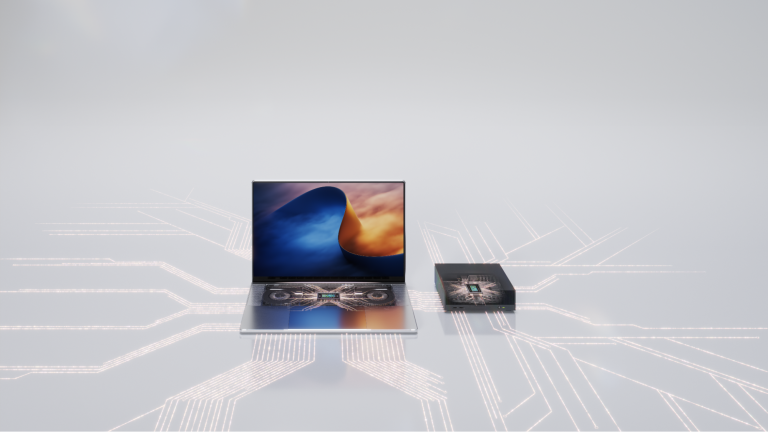
Software engineering workflows are increasingly moving toward autonomous and semi-autonomous coding agents. However, running these agents has typically required juggling local laptops, cloud API endpoints, and remote virtual machines. NVIDIA aims to consolidate this fragmented setup with the launch of NVIDIA RTX Spark, a hardware and software platform designed to let programmers code, test, and deploy applications on a single local computer.
Built around the NVIDIA GB10 system-on-a-chip, RTX Spark pairs an NVIDIA Grace CPU with a Blackwell GPU. The platform delivers up to 128GB of unified memory and 1 petaflop of FP4 AI compute. Available immediately in laptops and scheduled for release in small form factor desktops in November, the systems target always-on, 24/7 autonomous agents and demanding developer environments.
Unifying Hardware and Expanding the Windows on Arm Ecosystem
Modern software development has transitioned from traditional CPU-bound tasks to GPU-heavy workloads that involve model inference, fine-tuning, and testing alongside standard compilation. According to benchmark figures shared by NVIDIA, RTX Spark outperformed Intel's Panther Lake 12Xe (tested against an Intel Core Ultra X9 388H baseline normalized to 1.0). The platform demonstrated 4.6x faster execution on coding agents using AA-AgentPerf-local with Qwen3.8-27B, 2.7x faster fine-tuning performance via Unsloth LoRA on Llama-3.1-8B, and 1.8x faster code compilation on the Linux kernel using the Phoronix Test Suite.
To bridge the gap between local devices and cloud infrastructure, RTX Spark supports native Windows workflows as well as Windows Subsystem for Linux (WSL), ensuring consistent dependencies before targeting remote clusters. NVIDIA collaborated with Microsoft on a dedicated Windows Developer Config that mutes notifications, enhances terminal productivity, relocates the taskbar, and installs standard toolchains.
Furthermore, the companies expanded the Windows on Arm ecosystem. The update introduces the initial PyTorch-CUDA build, native-by-default Python 3.15 support, more than 2,000 ready-to-use Conda packages, and Arm-compatible releases covering over 97% of the top 15,000 Python libraries. Developers can also tap into CUDA-X libraries like FlashInfer and NeMo, accompanied by an "NVIDIA Skills" repository that guides autonomous agents on how to leverage CUDA acceleration directly.
Local Agent Support, Tooling, and Nemotron 3.5
Running agents on-device addresses privacy requirements and minimizes recurring token costs. RTX Spark features optimizations across major coding assistants, including GitHub Copilot, Pi, Hermes, and OpenClaw. Microsoft GitHub Copilot incorporates Windows ML with a llama.cpp backend, the upgraded HydraFusion prompt router, and local execution of the MAI 1.1 Coding Flash model. JetBrains has also integrated native support for Junie Local, dynamically sizing context windows against the system's unified memory so more repository context and conversation history remain available to the GPU.
To safeguard these workflows, the platform introduces OS-level sandboxing via NVIDIA OpenShell and Microsoft Execution Containers, alongside hybrid prompt routing that handles simple queries locally and escalates complex requests to cloud endpoints. For cloud-centric setups, developers who still rely on remote models can access platforms like Apixo to test and run leading LLMs through a unified API on a pay-per-token basis.
Alongside the hardware rollout, NVIDIA introduced Nemotron 3.5 Bolt 74B-A9B 24GB. This fully open-source mixture-of-experts (MoE) model features 74 billion total parameters with 9 billion active parameters, compressed into a 24GB footprint using 2-bit quantization. It runs across llama.cpp, vLLM, Ollama, Unsloth, and LM Studio. Additionally, decision models capable of selecting agent actions up to 200 times faster without lengthy reasoning loops are now supported on RTX Spark and GeForce RTX GPUs via llama.cpp and Unsloth.
What it means for developers
For engineers building modern software, RTX Spark significantly alters how agent-assisted workflows are architected:
- Consolidated Environments: Instead of maintaining different setups for local development, API experimentation, and remote VM testing, engineers can mirror cloud deployment environments locally using WSL or native Windows on Arm, targeting the broader ecosystem of 150 million RTX PCs and NVIDIA cloud instances.
- Lower Operational Overhead: Running local models like Qwen 3.8 Flash Next or Nemotron 3.5 Bolt reduces continuous cloud token consumption. Hybrid routers direct straightforward code edits locally while maintaining paths to remote cloud reasoning engines.
- Native Arm Compatibility: With support for Python 3.15, official PyTorch-CUDA builds, and Arm64/Arm64EC migration paths, teams can migrate existing Windows codebases without losing access to foundational machine learning libraries or media SDKs.
- Expanded Agent Capabilities: The inclusion of fast decision models and larger unified memory allows local agents to process bigger codebases and execute multi-step tool calls with sandboxed isolation directly on the machine.
Source: Code, Test, and Deploy on One Machine with NVIDIA RTX Spark — NVIDIA Technical Blog. Written by the Apixo team from that report.
One key for Claude, GPT, GLM, DeepSeek and more. Pay per token with crypto.
Get your API key