Nvidia Unveils Scale-In Architecture to Secure Agentic AI Factories
Nvidia has detailed Scale-In, an infrastructure architecture combining BlueField-4 DPUs, DOCA, and OpenShell to enforce out-of-band security for autonomous AI agents.
As autonomous artificial intelligence agents assume larger operational roles inside modern data centers, Nvidia Corp. is expanding its networking infrastructure to maintain control over these complex workloads. The company recently introduced Scale-In, a architecture designed specifically to secure, manage, and accelerate agentic AI factories. By combining hardware-level isolation with out-of-band monitoring, Scale-In aims to protect data center resources as autonomous agents execute increasingly sophisticated tasks.
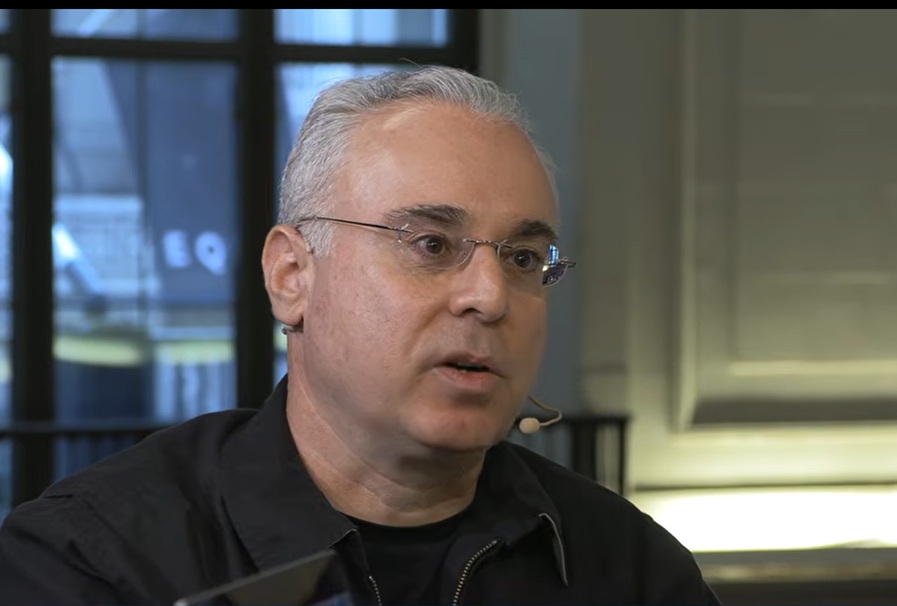
Speaking with theCUBE’s Dave Vellante during the "theCUBE + NYSE Wired: AI Factories – Data Centers of the Future" interview series, Gilad Shainer, senior vice president of networking at Nvidia, emphasized that agentic AI presents distinct security challenges compared to conventional workloads. Because multiple software agents execute concurrently across shared hardware, systems must ensure that agents remain contained within their sandboxes without tampering with underlying memory, storage, or compute engines.
Out-of-band monitoring and the Scale-In stack
Nvidia’s Scale-In platform brings together dedicated hardware acceleration and software frameworks connected over Nvidia Spectrum-X Ethernet. Central to this architecture is the Nvidia BlueField-4 Data Processing Unit (DPU), the fourth generation of Nvidia's specialized networking hardware designed for large-scale data center infrastructure.
BlueField-4 features dedicated in-silicon security engines that function out-of-band, allowing the unit to collect telemetry continuously across CPUs, GPUs, memory, and storage systems. Because the DPU operates independently from the main computing environment where software agents run, its telemetry and enforcement capabilities remain completely isolated from potential agent manipulation.
Nvidia has introduced several components of this broader agent security framework in recent months. Following the initial August debut of Scale-In, the company launched its Open Agent Safety Platform in September, which paired OpenShell—an open-source runtime for agent execution, access control, and inference routing—with Nvidia Sentry. In October, Nvidia announced the OpenShell Reference Architecture, integrating Vera Rubin infrastructure, Vera CPUs, and BlueField-4 DPUs to provide hardware-backed containment across enterprise systems.
Hardware-isolated agent governance
To program and operate these hardware security features, Nvidia utilizes its DOCA software platform. Much like CUDA provides an API layer for GPU workloads, DOCA provides developers with APIs to build software-defined applications that offload, accelerate, and isolate data center tasks using DPUs and SuperNICs.
Running directly on BlueField-4 via DOCA, Nvidia Sentry serves as an independent monitoring and enforcement application. Sentry tracks agent behavior in real time and is capable of automatically quarantining any agent that attempts to act outside its predefined software boundaries. Combining OpenShell's runtime governance with BlueField-4's hardware isolation ensures that security enforcement remains external to the agent's execution environment.
What it means for developers
For software engineers building and deploying multi-agent applications, Nvidia's architecture provides a structured framework for managing enterprise security risks. Using OpenShell alongside DOCA software, development teams can define runtime boundaries, route inference requests, and rely on hardware-enforced isolation without needing to construct custom out-of-band monitoring systems from scratch.
As agentic workflows become standard across software engineering teams, evaluating model behavior across different providers remains an essential part of development. Developers looking to test multi-agent setups can try top AI models cheaply through one API at https://apixoai.online, streamlining model access while underlying infrastructure tools like Scale-In handle hardware-level containment.
Ultimately, Nvidia's move toward out-of-band telemetry and hardware-isolated runtime control reflects the evolving demands of agentic AI deployments. By unifying the BlueField-4 DPU, DOCA software, OpenShell, and Nvidia Sentry, Nvidia aims to give enterprise operators predictable performance, tenant isolation, and centralized security management for autonomous AI workloads.
Source: As AI agents take control, Nvidia rethinks the security playbook — SiliconANGLE AI. Written by the Apixo team from that report.
One key for Claude, GPT, GLM, DeepSeek and more. Pay per token with crypto.
Get your API key