NVIDIA Vera CPU Targets AI Agent Infrastructure and Efficiency
NVIDIA introduces the Vera CPU, designed to balance high throughput and energy efficiency for demanding AI agent workloads in modern data centers.
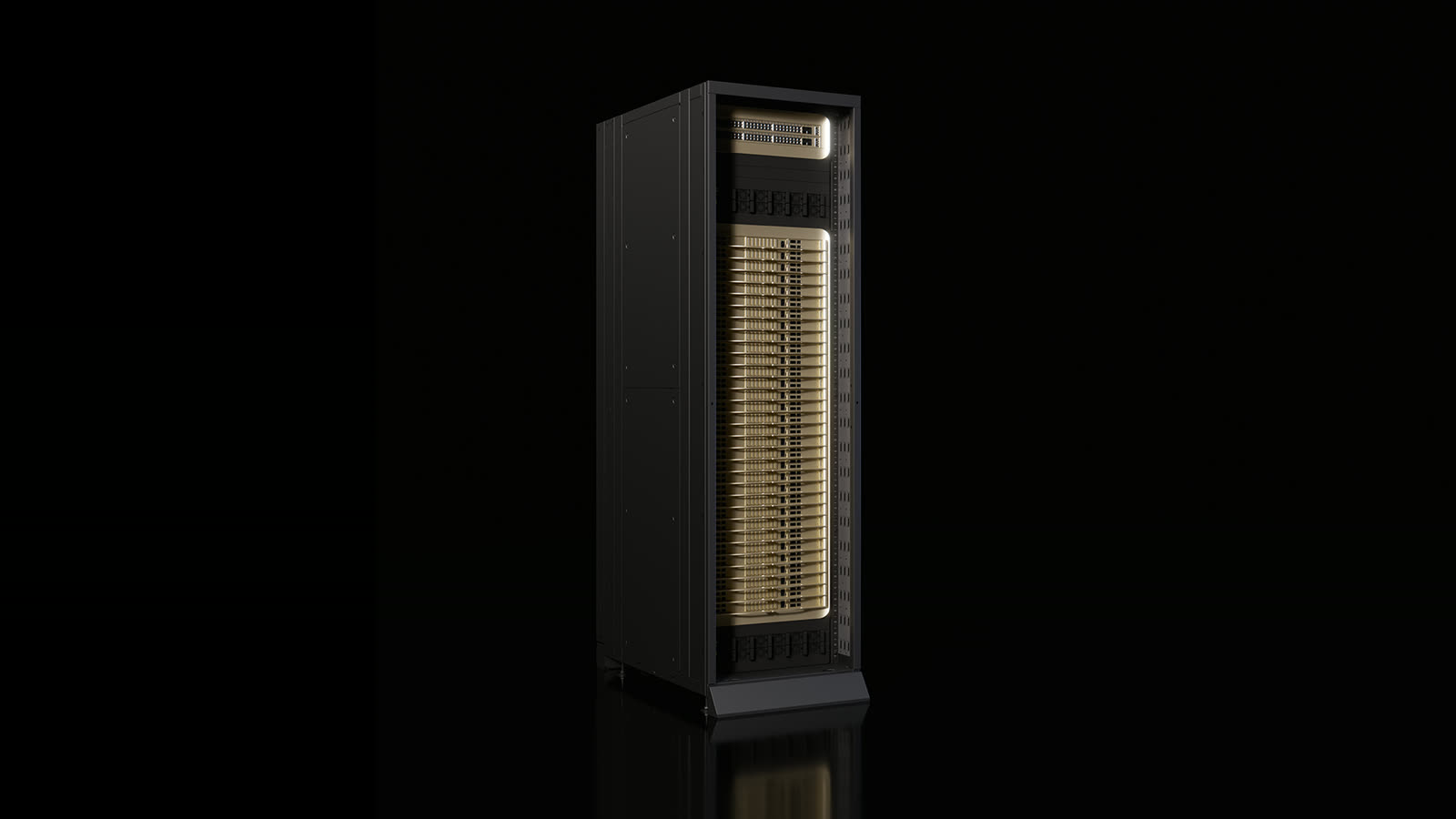
Modern artificial intelligence applications have evolved past simple text generation. Contemporary autonomous agents actively search for information, query databases, write and test code, and execute multi-step actions. Because these operations shift continuously between GPU reasoning and CPU execution, enterprise data centers require processors capable of handling heavy agent concurrency quickly and efficiently.
Power constraints represent a major challenge for modern AI infrastructure operators. Facilities must maximize the amount of work completed for every watt consumed, avoiding delays for concurrent agents. Traditional data center setups often require mixing different x86 components to balance speed and density, complicating infrastructure management.
Performance and Efficiency Benchmarks
According to NVIDIA, the Vera CPU addresses this challenge by combining fast agent performance and high capacity per watt within a single processor design. In comparisons based on a 100-megawatt data center model, NVIDIA stated that Vera outperforms both the fastest and the most energy-efficient x86 processors currently available.
Specifically, Vera delivers 1.6 times more agents per watt compared to the fastest x86 CPU while maintaining industry-leading speed. When measured against the most energy-efficient x86 CPU, Vera provides twice the agent speed alongside high energy efficiency.
Early adopters across the technology sector are already evaluating the hardware in production-style tests. Perplexity completed agentic coding tasks 1.5 times faster using Vera and plans to deploy the architecture in an upcoming production system. DeepInfra recorded orchestration speeds up to 2.2 times faster than top x86 hardware during agent workloads. ClickHouse achieved near-linear scaling across 176 cores using its standard binary, leading the ClickBench hardware leaderboard. DuckLabs reported performance roughly 1.5 times the median TPC-H SF1000 baseline of an Intel Xeon 6.
Sandbox environments also showed substantial gains. Daytona launched 1,000 agent sandboxes in 10.8 seconds using Vera—compared to 88.4 seconds on x86—and completed 12.7 jobs per second under a 2,000-concurrent-sandbox load. Modal observed up to twice the sandbox throughput per core compared to comparable x86 hardware, with performance advantages scaling further under heavy demand.
What it means for developers
As AI agents handle more complex tasks, the underlying hardware determines how fast developers and enterprises can run multi-step workflows, code execution, and database queries. Improved CPU efficiency and faster agent orchestration reduce latency and operational costs for heavy workloads. To integrate top-tier intelligence into your applications, developers can try top AI models cheaply through one API at https://apixoai.online.
These early production results indicate that next-generation CPU architectures will play a critical role in scaling autonomous workflows efficiently without exceeding strict data center power budgets.
Source: Vera Delivers the Best of Both Worlds: Highest Throughput and Fastest Agents — NVIDIA blog. Written by the Apixo team from that report.
One key for Claude, GPT, GLM, DeepSeek and more. Pay per token with crypto.
Get your API key