Over 158,000 Sign Letter Demanding Jensen Huang's Reinstatement at Nvidia
Elon Musk and thousands of tech workers are demanding Nvidia reinstate Jensen Huang following his resignation over affairs and national security concerns.
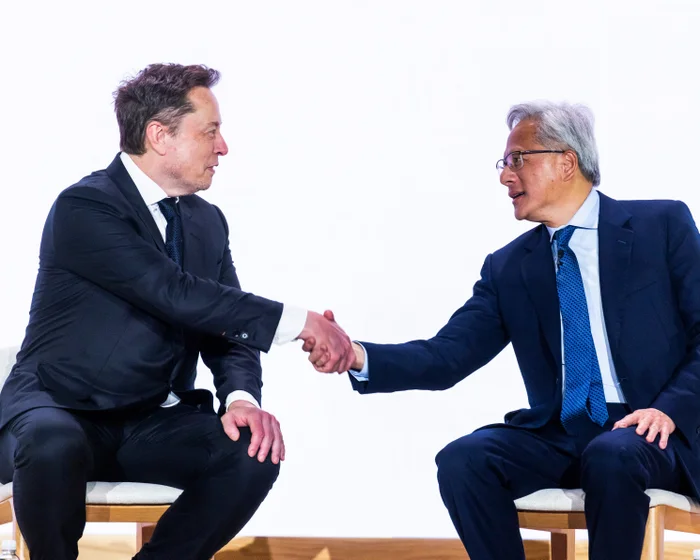
Silicon Valley is experiencing an unprecedented corporate crisis following the sudden resignation of Nvidia co-founder Jensen Huang. Days after Huang stepped down after leading the chip titan for 33 years, over 158,000 individuals—including high-profile executives like Elon Musk—have backed an open letter urging Nvidia's board of directors to reinstate him. The letter asks the board to restore Huang to his position while an independent inquiry investigates the circumstances surrounding his departure.
Huang’s exit occurred after details surfaced regarding at least two extramarital affairs, involving a subordinate as well as a woman accused of spying for China. The revelation has triggered bipartisan concern in Washington, where lawmakers have demanded that Huang and Nvidia representatives appear before Congress to address potential national security implications. Some members of the president's political party have also raised questions about what Donald Trump’s administration knew concerning Huang’s link to the suspected spy. While no date has been scheduled yet, Huang and other Nvidia executives have agreed to testify.
Tech leaders rally behind former CEO
Support for Huang across the technology ecosystem remains strong despite the scandal. High-profile signatories of the open letter include Epic Games founder and chief executive Tim Sweeney, Y Combinator president Garry Tan, and Uber co-founder Travis Kalanick. In a comment accompanying the petition, Kalanick noted that while Huang had erred, his actions should not justify separating him from the firm he built. Furthermore, more than 7,500 Nvidia employees—representing approximately 18 percent of the company's total workforce—have signed the petition demanding his return.
According to reports from the Financial Times, Huang has explored the possibility of coming back to Nvidia with close associates. An ally revealed that a dedicated "war room" of Silicon Valley executives is actively lobbying for his reinstatement and attempting to gain backing from the White House. The source noted that key figures in tech outside frontier AI labs broadly support Huang. Major investors Brad Gerstner and Gavin Baker have likewise publicly advised Nvidia’s board to keep all options on the table.
Political scrutiny and export controls
Despite the push from industry insiders, government officials are taking a far stiffer stance. US Treasury Secretary Scott Bessent stated during an appearance on Fox News that Nvidia requires a major organizational shake-up and urged the company to recruit its next leader from the outside. Bessent emphasized that the board must prioritize investigating whether Nvidia violated US export rules designed to restrict advanced AI hardware from entering China.
Under existing American trade restrictions aimed at maintaining a technological advantage over Beijing, sales of cutting-edge AI hardware to Chinese entities are banned. Late in 2025, Donald Trump permitted the export of Nvidia’s H200 accelerators to China, but stricter limits remain in place for superior next-generation hardware. Bessent questioned whether Nvidia possessed a sufficient culture of compliance regarding export laws and requested answers from the company's internal probe within 10 days.
Under Huang's leadership, Nvidia grew into a key financial engine for the entire technology landscape, investing heavily in data centers and early-stage companies to earn the moniker "the central bank of AI." However, the firm also faced criticism over contributing to a speculative investment bubble, while Huang personally resisted regulatory checks on AI expansion, clashing with figures such as Anthropic chief Dario Amodei.
What it means for developers
The potential leadership void at Nvidia introduces significant uncertainty for developers, startups, and enterprise teams relying on high-performance infrastructure to build and deploy artificial intelligence applications. For years, Nvidia’s hardware and strategic investments have shaped the hardware foundation on which major frontier models and custom software operate. Shifts in Nvidia's executive strategy or strict regulatory compliance measures could impact compute supply chains, hardware allocation, and chip pricing across global cloud networks.
As hardware costs and compliance questions evolve, managing AI infrastructure efficiently becomes paramount for engineering teams. Developers seeking to maintain flexibility across multiple providers can try top AI models cheaply through one API at https://apixoai.online, simplifying model deployment regardless of underlying hardware shifts.
Whether Nvidia’s board chooses to bring back its long-time chief or selects an external replacement, the resolution will likely reshape how AI infrastructure is funded, manufactured, and governed globally. With congressional hearings looming and regulatory scrutiny intensifying around international chip exports, developers should prepare for a period of heightened oversight and potential shifts in hardware availability across the AI ecosystem.
Source: Elon Musk joins 158,000 others calling for Nvidia to bring back Jensen Huang in open letter — The Guardian AI. Written by the Apixo team from that report.
One key for Claude, GPT, GLM, DeepSeek and more. Pay per token with crypto.
Get your API key