Prix Goncourt Winner Admits Using AI in Novel
Philippe Jaenada, winner of France's Prix Goncourt, revealed he used AI three times while writing his novel, raising questions as debate over machine-generated text continues.
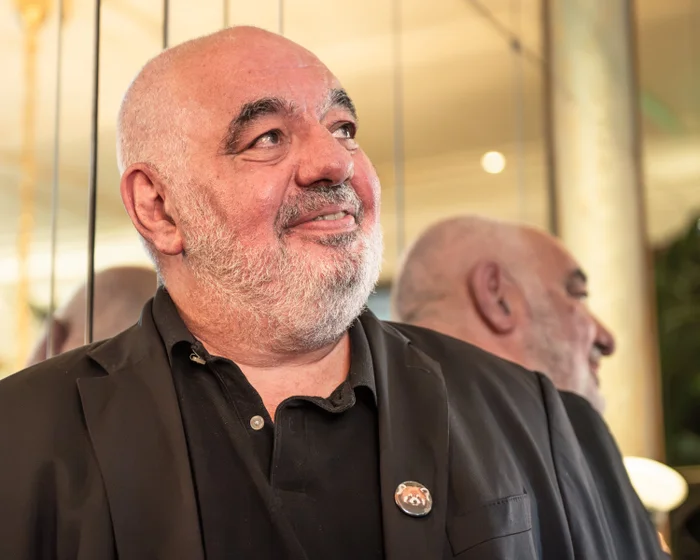
Philippe Jaenada, the recent recipient of France’s prestigious Prix Goncourt literary prize for his novel L’Inconnue du quai de Javel (The Unknown Woman of the Quai de Javel), has disclosed that he utilized artificial intelligence during his writing process. The 62-year-old author made the revelation to France Inter radio, stating he turned to the technology on three separate occasions.
According to Jaenada, his first use of the technology involved inserting a sentence written by ChatGPT into the text specifically to "play with the reader." He noted that he disclosed which particular sentence it was only to the Goncourt jurors on the day of the award, remarking that if the information leaked, he would know the source. He also incorporated an AI-generated passage to mock ChatGPT after it provided entirely absurd answers regarding a technical detail, as well as using it for research purposes. Speaking on the topic, Jaenada asserted that artificial intelligence cannot be held back and that ignoring its existence is impossible, emphasizing that creators must acknowledge, tame, and find useful applications for it. Prior to receiving the award, he defended his perspective in an interview with 20 Minutes, comparing the practice to a film director utilizing special effects and predicting that verifying a text as entirely human-written will soon become impossible. Nevertheless, he maintained that machines will never possess the heart, soul, or memories required to author a book.
Controversy and Preceding Disqualifications
Jaenada’s admission follows a strict stance taken by the Académie Goncourt regarding machine-generated content. In September, the academy removed Thélyson Orélien’s book C’était ça ou Mourir (It Was That or Die) from its longlist. Orélien's debut had been a prominent breakout hit during the rentrée littéraire—the busy publishing period in France spanning late August to early November—selling over 35,000 copies and securing the Prix du roman Fnac. The removal occurred after journalist Samuel Fitoussi used the Pangram detection tool to conclude that significant portions of the book were machine-generated.
Although the accuracy of AI-detection software has faced scrutiny, the academy stated on September 25 that analyses from researchers and journalists indicated the novel was largely produced by an artificial intelligence. The academy explained that it sought to protect the integrity of the prize, which honors literature written by humans, and to signal clearly that it does not endorse AI-generated texts. Orélien subsequently described the allegations as slander and heresy, asserting that no single sentence was machine-made, though he did admit to plagiarism in earlier work and apologized for claiming outside texts as his own. The following week, his Canadian publisher, Boréal, terminated its relationship with him after discovering new evidence that AI had indeed been used.
The contrasting outcomes for Jaenada and Orélien sparked online discussions concerning a potential double standard. Social media users on X pointed out that Jaenada faced no public banishment or intense backlash, contrasting his experience with the treatment of a young writer of color.
What it means for developers
For developers and technologists building AI applications, these literary debates highlight the growing intersection between traditional creative fields and machine learning capabilities. As text generation tools become more sophisticated, questions surrounding attribution, detection accuracy, and ethical usage continue to surface across creative industries. For those looking to integrate advanced machine learning tools into their projects, developers can try top AI models cheaply through one API at https://apixoai.online, allowing for seamless experimentation with models from providers like Claude, GPT, Gemini, Grok, and DeepSeek.
Background of the Winning Novel
Jaenada secured the victory on the first round of voting, defeating Sylvain Prudhomme’s De l’autre côté du lac (The Other Side of the Lake) by six votes to three. Having been shortlisted four times previously, Jaenada is known for reinvestigating historical French crimes. His winning publication reconstructs the unsolved 1949 murder of Louise Cansot, a 29-year-old Breton artists’ model historically known in Montparnasse as "the woman with 100 portraits." While the Prix Goncourt carries only a symbolic €10 cheque, it remains France's most prominent and closely watched literary honor.
Source: Winner of the Prix Goncourt literary prize admits to using AI — The Guardian AI. Written by the Apixo team from that report.
One key for Claude, GPT, GLM, DeepSeek and more. Pay per token with crypto.
Get your API key