Ramp Data Reveals AI Spending Flatlines Despite Surging Token Volumes
A new Ramp report shows AI spending flatlined over late summer despite rising token volumes, pointing to aggressive price competition and smarter budgeting by corporate users.
Companies are utilizing artificial intelligence more heavily than ever before, yet their financial outlays are failing to match that surge in usage. A recent report issued by Ramp indicates that overall AI spending essentially flatlined during the late summer months, even as the actual volume of processed tokens continued to climb. This divergence points directly to aggressive market price competition and increasingly savvy customers, factors that may ultimately cap revenue growth for major industry players like OpenAI and Anthropic as Anthropic prepares for its public offering.
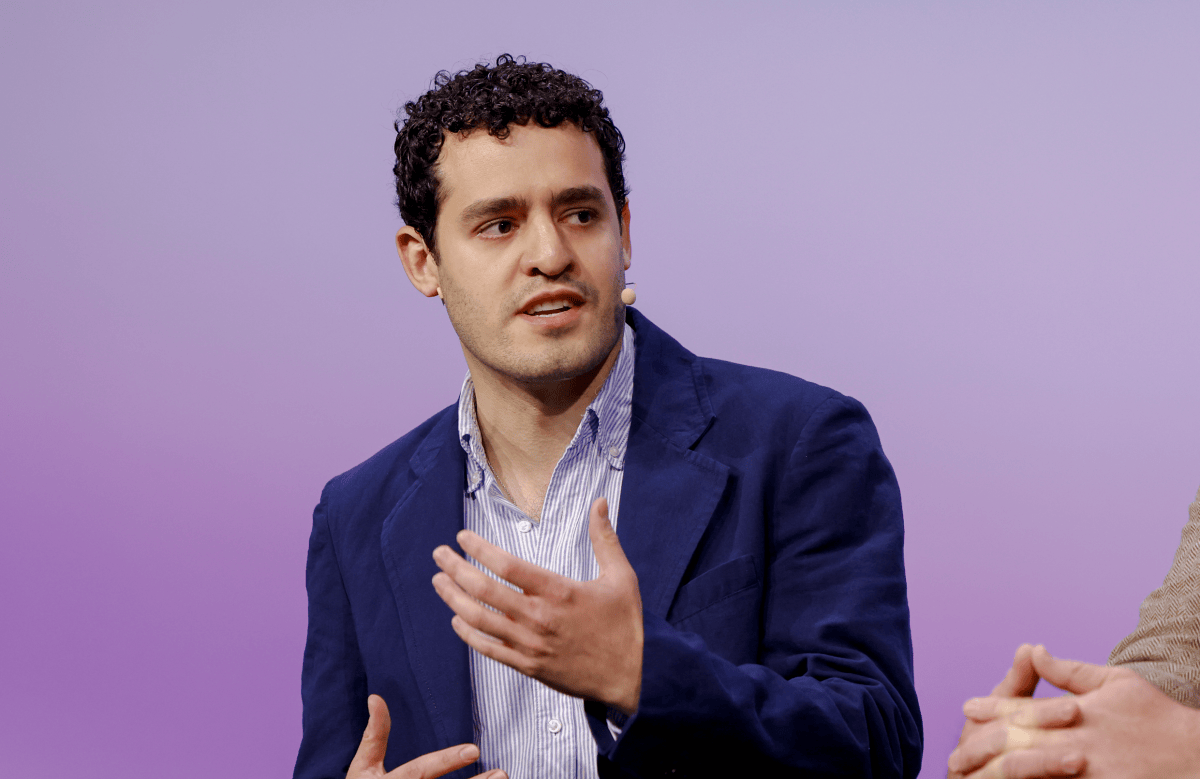
According to the Ramp dataset, spending on tokens grew by a mere 1.5% across August and September. This represents a massive deceleration when compared to July, which saw a 42% spending growth rate over the preceding month. Ara Kharazian, Ramp’s lead economist, noted that the data suggests investor assumptions regarding uninterrupted, breakneck revenue growth for AI companies might be overly optimistic. Kharazian pointed out that nearly all current AI expenditures originate from venture-backed, high-growth technology firms. While this model functions smoothly during continuous spending increases, any broad market slowdown could trigger simultaneous contractions across these dependent companies.
Factors Behind the Flatline
The research highlights that the top 1% of firms—the most intensive AI adopters—experienced a slight spending stutter in August and September, dipping below their summer peaks of roughly $10,000 per employee. Although median firms and the top 10% showed some growth, it was insufficient to offset the plateau among heavy users. Median firms currently spend between $12 and $15 per employee monthly, while the top 10% spend from $600 to $1,000. Kharazian expressed skepticism that standard industries like doctor's offices or car dealerships will ever reach the extreme $10,000 per-employee monthly mark established by the top 1% cohort.
Rather than indicating a drop in demand, the spending slowdown is primarily driven by intense marketplace competition. Price cuts from providers such as OpenAI—which halved API prices for GPT-6 Sol and GPT-6 Luna—and Anthropic—which reduced pricing for Fable 5.1 and Opus 5.5—have simply made utilization cheaper. Anthropic recently noted that these pricing reductions slashed its revenue growth by roughly $600 million. Furthermore, enterprises are becoming much more thrifty. Organizations are implementing stricter internal budgets, utilizing routers to shift tasks to cheaper models, and deploying tools like Jev to handle simple outputs at minimal cost. Notion co-founder Akshay Kothari summarized the trend succinctly, noting that while token usage surges, actual costs remain low.
What it means for developers
For developers navigating this shifting landscape, the current market represents a definitive buyer's era. Falling API prices, aggressive enterprise discounts, and the proliferation of open-source models from Meta, Nvidia, and various international providers mean building and scaling AI applications is more economically viable than before. Developers looking to optimize their tech stacks can try top AI models cheaply through one API at https://apixoai.online. At the same time, because organizations are increasingly cost-conscious and prone to implementing strict usage budgets, developers must focus on efficiency, utilizing model routers, and carefully managing token consumption for long-running tasks.
Market Realities and Future Outlook
These spending dynamics have already begun impacting the broader financial landscape. Recent reports indicate that Anthropic’s potential valuation dropped from an early October estimate of $2 trillion down to $1.2 to $1.3 trillion, alongside expectations of receiving a high junk rating from credit agencies. Similarly, OpenAI lowered its proposed valuation to $1.25 trillion from $1.4 trillion and reduced its latest fundraising targets by approximately $10 billion.
While industry optimists hope that upcoming innovations, such as personal agents introduced by OpenAI, SpaceXAI, Meta, and startups like Instinct, will replicate the revenue-driving success previously seen with AI coding assistants, skepticism remains. Kharazian remains doubtful that personal agents will match the economic productivity of coding tools. Based on commercially advanced products available today, the hypergrowth era of AI spending faces substantial headwinds.
Source: Ramp data shows AI spending stalling just as Anthropic nears its IPO — TechCrunch AI. Written by the Apixo team from that report.
One key for Claude, GPT, GLM, DeepSeek and more. Pay per token with crypto.
Get your API key